
Your Cart is Empty
Becoming a doctor takes years of dedication and a whole lot of sacrifice. When someone finally earns that medical degree, it’s a moment that deserves a gift just as significant.
Jewelry is a classic way to mark this milestone—something beautiful, lasting, and honestly, a bit personal too.
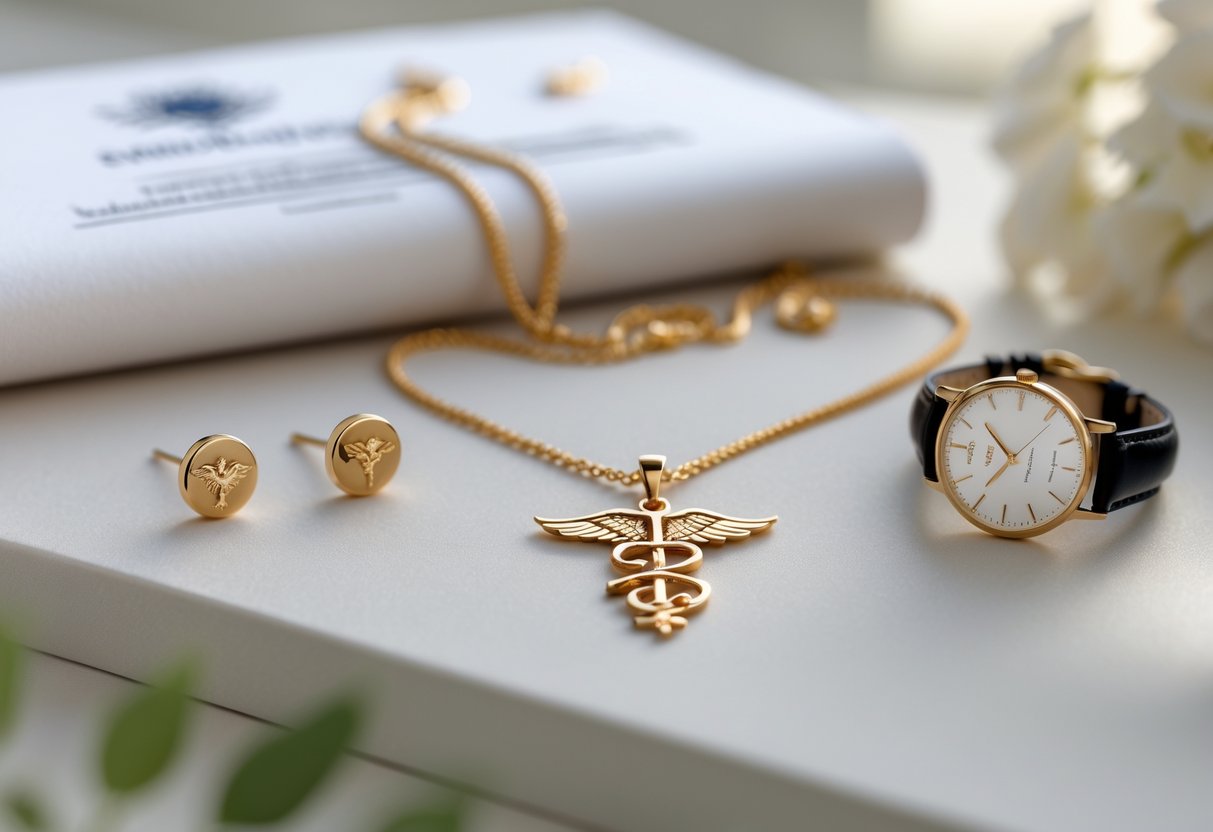
The right piece of jewelry can be both a congratulations gift and a meaningful, wearable reminder of their professional accomplishment. From personalized graduation necklaces to doctoral rings, you’ve got options.
Whether you’re shopping for a male or female doctor, the goal is to pick something that fits their personality and professional vibe. The best pieces? They balance elegance and practicality—so your new doctor can wear them at work or out to dinner.
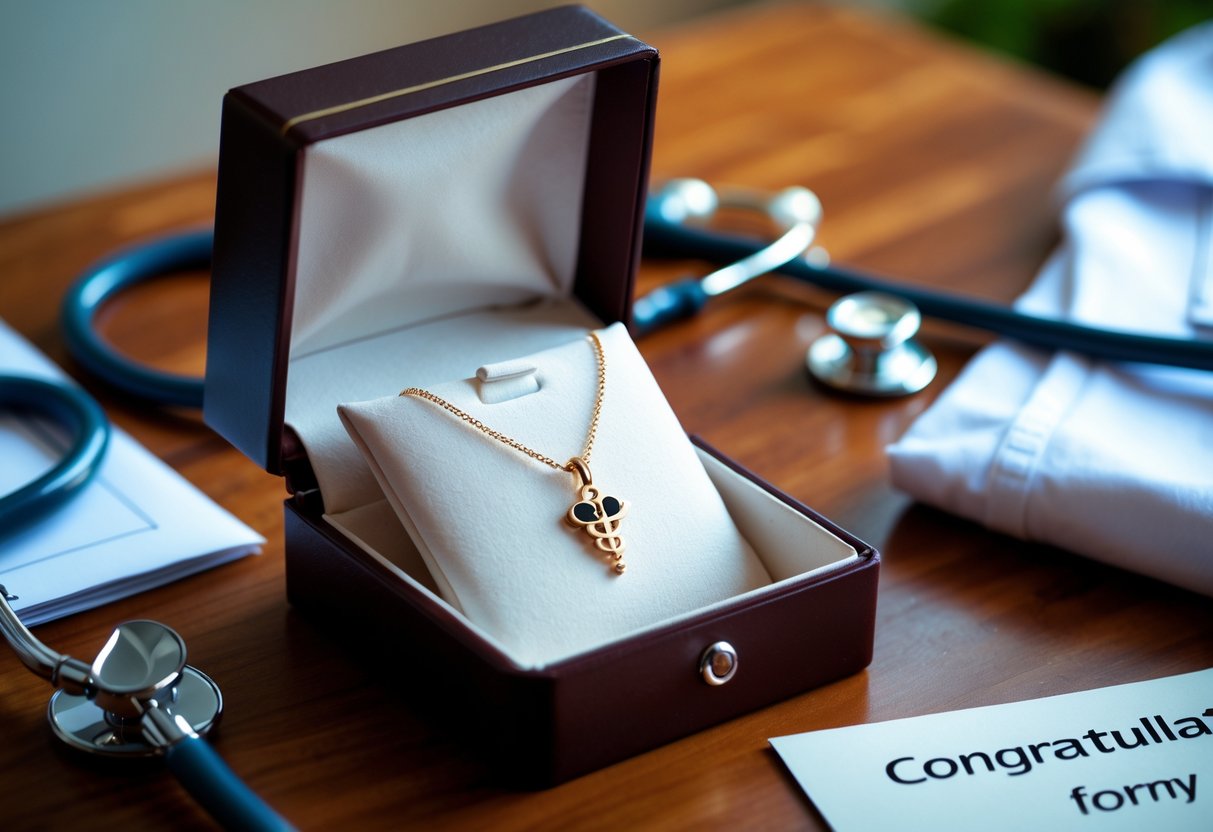
Jewelry is the perfect congratulations gift for new doctors because it blends meaningful symbolism with lasting value. These pieces stick around as daily reminders of achievement, and they’re actually useful in professional settings.
Jewelry’s got this built-in symbolism that just fits with the gravity of a medical degree. A doctoral ring can stand for years of hard work and academic grit.
Medical-themed jewelry pieces include:
These symbols turn accessories into professional badges of honor. They’re a subtle way to say, “Hey, I did it!”
Gifting jewelry for big milestones is a tradition that goes way back. Medical professionals often choose pieces that show off their field and their achievements.
Quality jewelry is built to last—decades, even with daily wear. Doctors are busy folks, so they need gifts that hold up.
Practical benefits include:
Doctors want accessories that fit their work wardrobe. The right jewelry can go from the clinic to a formal event, no problem.
There’s also the investment angle: good jewelry keeps its value. Recipients can wear these pieces daily without stressing about wear and tear.
Personalized jewelry just hits different. Custom engravings turn an ordinary piece into something that’s truly theirs.
Popular personalization options:
Putting in the effort to customize a piece shows real thoughtfulness. The recipient gets that this wasn’t just a last-minute buy.
Personalized jewelry can even become a family heirloom. It’s a piece of their journey, and honestly, that makes it priceless.
If you’re looking at PhD graduation gift ideas for her, jewelry is almost always at the top of the list. It’s beautiful, meaningful, and lasts.
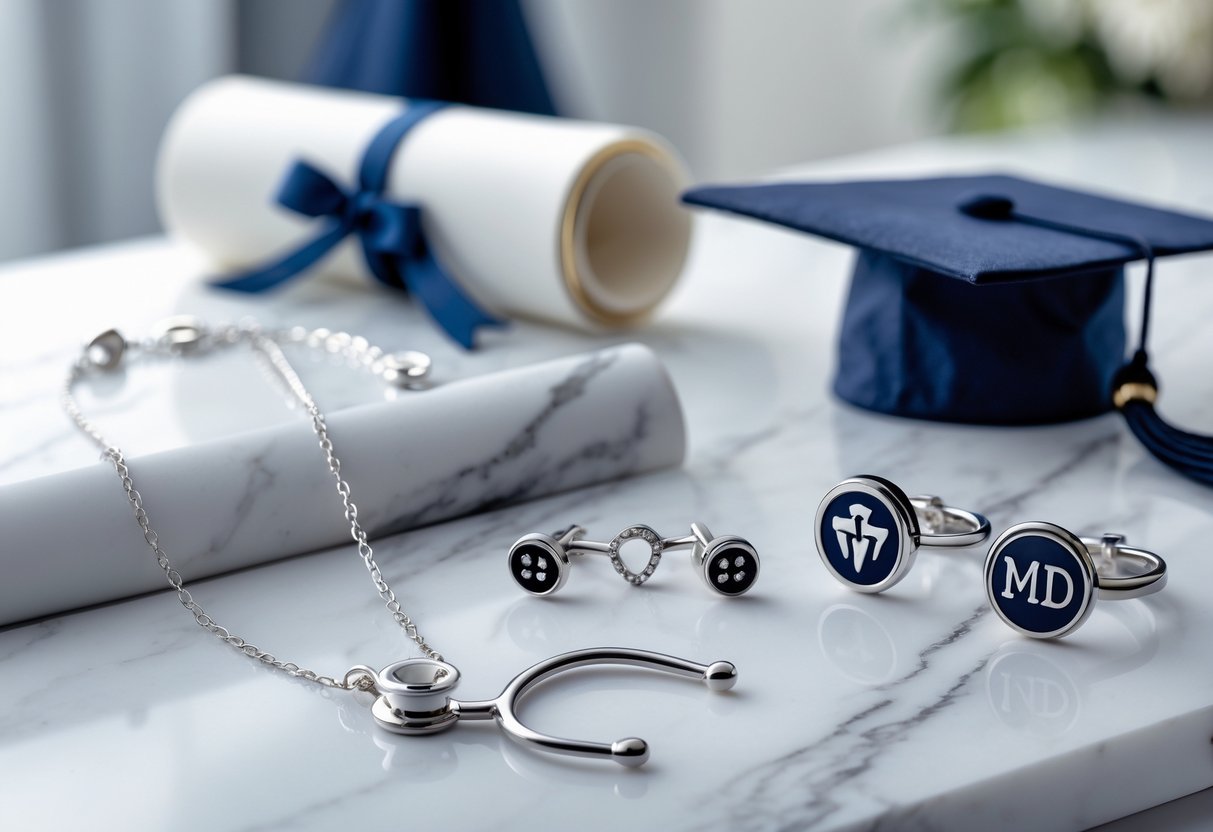
The right jewelry piece can become a lasting symbol of academic achievement. Whether you’re into timeless classics or modern designs, there’s something for every new doctor.
Traditional jewelry is still the gold standard for marking doctoral milestones. Pearl necklaces and stud earrings are a go-to for polished, professional style.
A simple strand of pearls pairs perfectly with a white coat or business suit. It’s elegant, never showy.
Gold and silver watches are both practical and symbolic. They’re a daily nudge of success and look sharp, too.
Signet rings can be personalized with initials or dates. Many grads love these because they work in both medical and academic settings.
Diamond stud earrings are versatile—great with scrubs or something more formal.
Classic chain necklaces in gold or silver are a solid base. The recipient can add meaningful charms over time.
Modern designs mix tradition with a fresh twist. Stackable rings let grads build a collection that’s unique to them.
Layered necklaces add some visual interest but stay professional. Thin chains at different lengths look great under a collar.
Geometric shapes are big in contemporary jewelry. Clean lines, a bit minimalist, and just a little edgy.
Rose gold is warm and suits lots of skin tones. It’s a nice bridge between classic and trendy.
Birthstones or meaningful gems show up in a lot of thoughtful PhD graduation gift ideas. They add a personal connection to the accomplishment.
Convertible pieces are clever—necklaces that become bracelets, for example. More ways to wear, more value.
Minimalist jewelry packs a punch without shouting. Clean lines and simple shapes are perfect for healthcare pros.
Thin band rings in gold or silver are understated and stackable. They look good solo or together.
Delicate chain bracelets add a touch of class without getting in the way of gloves or equipment. Adjustable sizing helps with comfort.
Single-stone pendants on fine chains offer a focal point that doesn’t overpower. Small diamonds or meaningful gems are a safe bet.
Minimal ear cuffs are a modern spin on earrings. They’re subtle and totally workplace-appropriate.
Linear earrings elongate the neck in a gentle way. Simple drops in gold or silver work with all sorts of hairstyles.
Smooth bangles in precious metals feel substantial but aren’t overdone. Wear one or stack a few for a bit more flair.
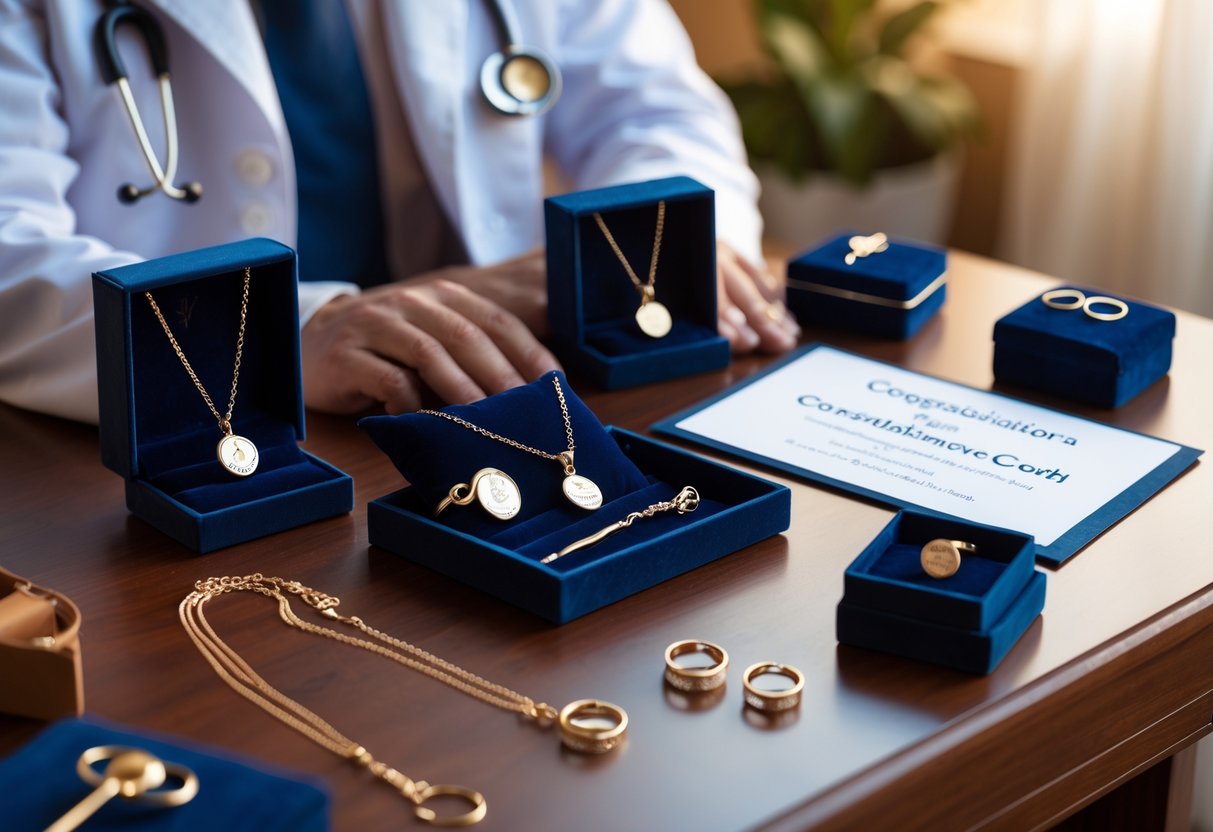
Personalizing jewelry for doctors turns a nice accessory into a meaningful keepsake. It’s all about engravings, meaningful symbols, and metals that fit their lifestyle.
Engraving takes regular jewelry and makes it unforgettable. The graduation date is a popular choice—it’s a permanent badge of their achievement.
Some folks add “MD” or “Doctor” with the recipient’s name. It’s a little formal, but honestly, pretty cool.
Medical school mottos are another solid pick. “Primum non nocere” (First, do no harm) or “Healing begins with compassion” are classics.
Popular Engraving Ideas:
Where you put the engraving matters. Pendants have room for longer messages; rings work best for initials or dates. Bracelets can hold names or short phrases along the band.
Font choice changes the vibe. Script looks elegant but can be tough to read if it’s tiny. Block letters keep things clear, especially on narrow surfaces.
Medical symbols are instantly recognizable and packed with meaning. The caduceus—with its two snakes and wings—is the classic, but the Rod of Asclepius (just one snake) is actually more accurate for medicine.
Stethoscope charms are popular with new grads. They come in different metals, sometimes with little gemstone accents or moving parts.
Meaningful Medical Charms:
Specialty charms are a thoughtful touch. A brain for neurologists, a tooth for dentists, maybe a teddy bear for pediatricians.
Birthstones add a personal spin. They can mark a birth month or the month they graduated. Some folks pick stones for their healing properties, like amethyst or jade.
Metal matters for both looks and durability. Sterling silver is affordable and classic but needs polishing. Gold is timeless and comes in yellow, white, or rose—pick what fits their style.
Metal Comparison for Medical Professionals:
| Metal | Durability | Maintenance | Professional Appearance |
|---|---|---|---|
| Sterling Silver | Good | High | Classic, versatile |
| 14K Gold | Excellent | Low | Elegant, prestigious |
| White Gold | Excellent | Medium | Modern, sophisticated |
| Platinum | Superior | Very Low | Luxurious, hypoallergenic |
Platinum is the top-shelf choice. It doesn’t tarnish or scratch much, and it’s hypoallergenic—great for sensitive skin.
Gemstone choice should factor in the work environment. Diamonds are tough and sparkle under hospital lights. Sapphires and rubies give color and can handle daily wear.
Emeralds are gorgeous but a bit delicate. Pearls are classic, but you’ll want to be careful with chemicals and frequent handwashing. Think about the doctor’s specialty and daily routine before picking a stone.
Some stones carry extra meaning—sapphires for wisdom, garnets for healing, diamonds for strength.
Memorable graduation gifts really shine when they’re customized to the recipient’s journey.
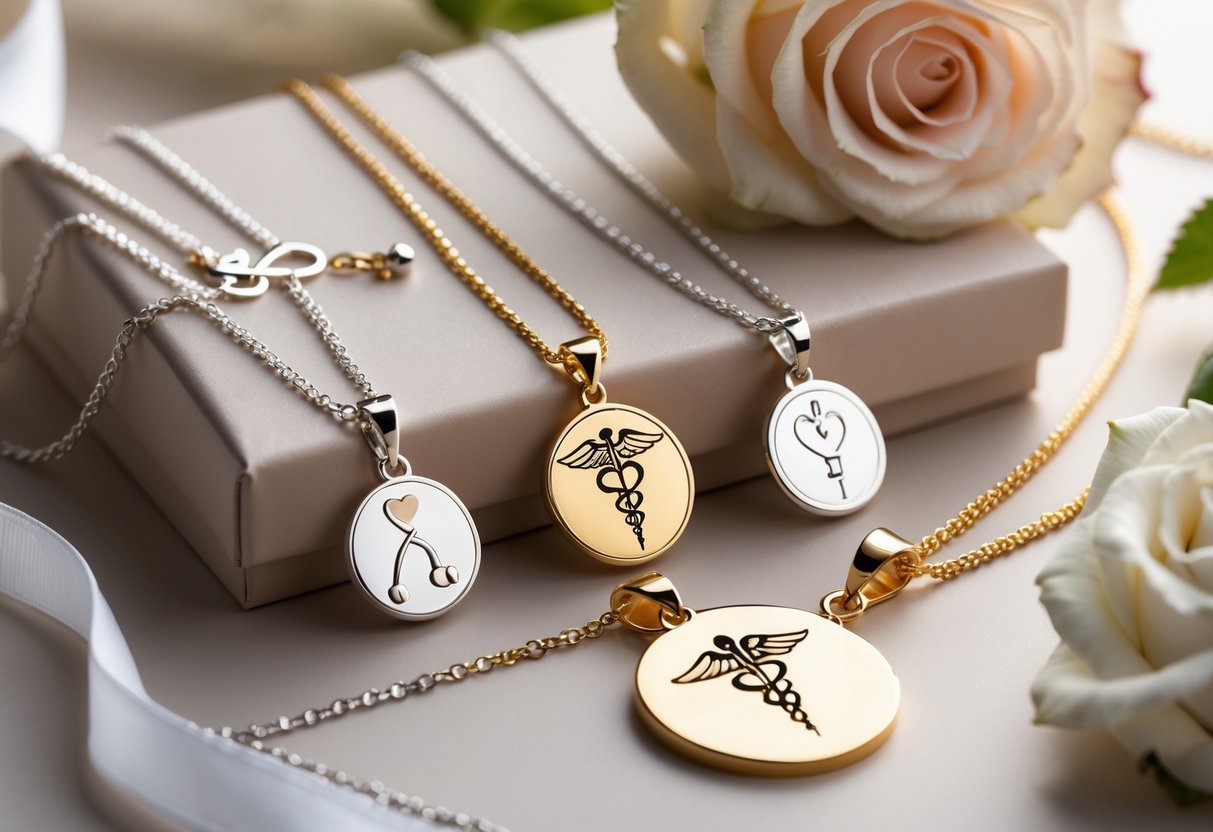
Necklaces and pendants are a sweet spot for new doctors. They blend personal style and professional pride, and you can find designs with medical symbols, initials, or just something that feels meaningful to the wearer.
Stethoscope pendants are probably the most recognizable nod to the medical field. Most of these delicate pieces feature tiny stethoscopes in sterling silver, gold, or rose gold.
You'll find everything from simple, outlined stethoscopes to more ornate versions with textured ear pieces. Some even have little gemstones or diamonds at the chest piece—just for a touch of sparkle.
Popular Design Features:
They're easy to wear at work or off the clock. It's a nice daily reminder of a calling, but they don't shout for attention.
Personalized necklaces celebrate both medical achievement and individuality. Initial pendants—think first name or surname—make for thoughtful PhD graduation gift ideas that actually mean something.
Birthstone necklaces bring color and a personal touch. Stones might be set in medical-themed settings (like a tiny mortar and pestle) or just a simple bezel.
Customization Options:
These have a way of becoming keepsakes. The personal details really make them stand out.
Classic medical emblems like the caduceus or Rod of Asclepius are powerful pendant choices. These symbols run deep in the medical community and stand for healing.
The caduceus is the one with two snakes and a winged staff. The Rod of Asclepius, which is technically more accurate, has a single snake around a plain staff.
Design Variations:
These pieces often spark conversation among colleagues. They show pride in the profession without sacrificing style.
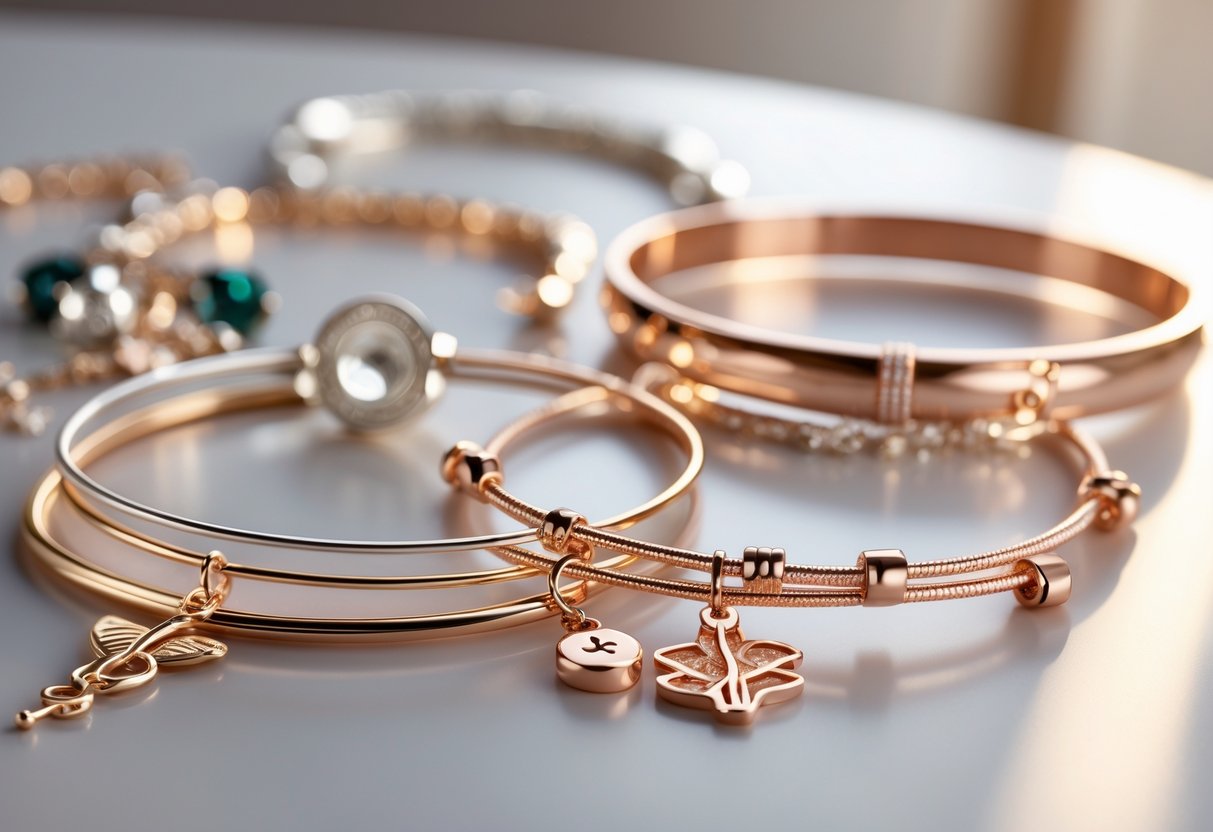
Medical-themed bracelets and bangles are a classy way to honor a new doctor's accomplishments. They blend meaningful symbols with everyday wearability, featuring medical motifs in precious metals that play well with professional outfits.
The caduceus is probably the most recognizable medical emblem for jewelry. Lots of bracelets use this intertwined serpent as a central charm.
Popular medical motifs include:
Charm bracelets are great for customizing with different medical symbols. You can add new charms over time for different milestones.
Link bracelets with engraved medical symbols are a bit more understated. Instead of dangling charms, the symbols are part of the chain itself.
Tennis bracelets with medical-themed spacers add some elegance for formal occasions. The symbols sit between gemstones or crystals.
Adjustable bangles solve the classic jewelry sizing headache. Most medical professionals really do prefer comfortable pieces they can keep on during long shifts.
Key adjustment features:
Cuff bangles with medical engravings are easy to slip on and off, no fussing with clasps. They tend to stay put even on hectic days.
Wire bangles with tiny medical charms are lightweight and almost unnoticeable, but still meaningful.
Stackable bangles are fun too—each one can represent a different achievement or milestone.
Sterling silver is an affordable, classic choice for medical jewelry. It keeps its shine with a little care and suits most skin tones.
Sterling silver benefits:
Gold options come in 14k and 18k, with yellow, white, or rose finishes. Higher karat gold feels more luxurious but needs gentler handling.
Gold-plated pieces have the gold look at a lower price, though they're better for occasional wear since the finish can fade with heavy use.
Two-tone bracelets—mixing gold and silver—add visual interest. Plenty of medical-themed bracelets use this style to highlight certain features.
Price ranges typically fall between:
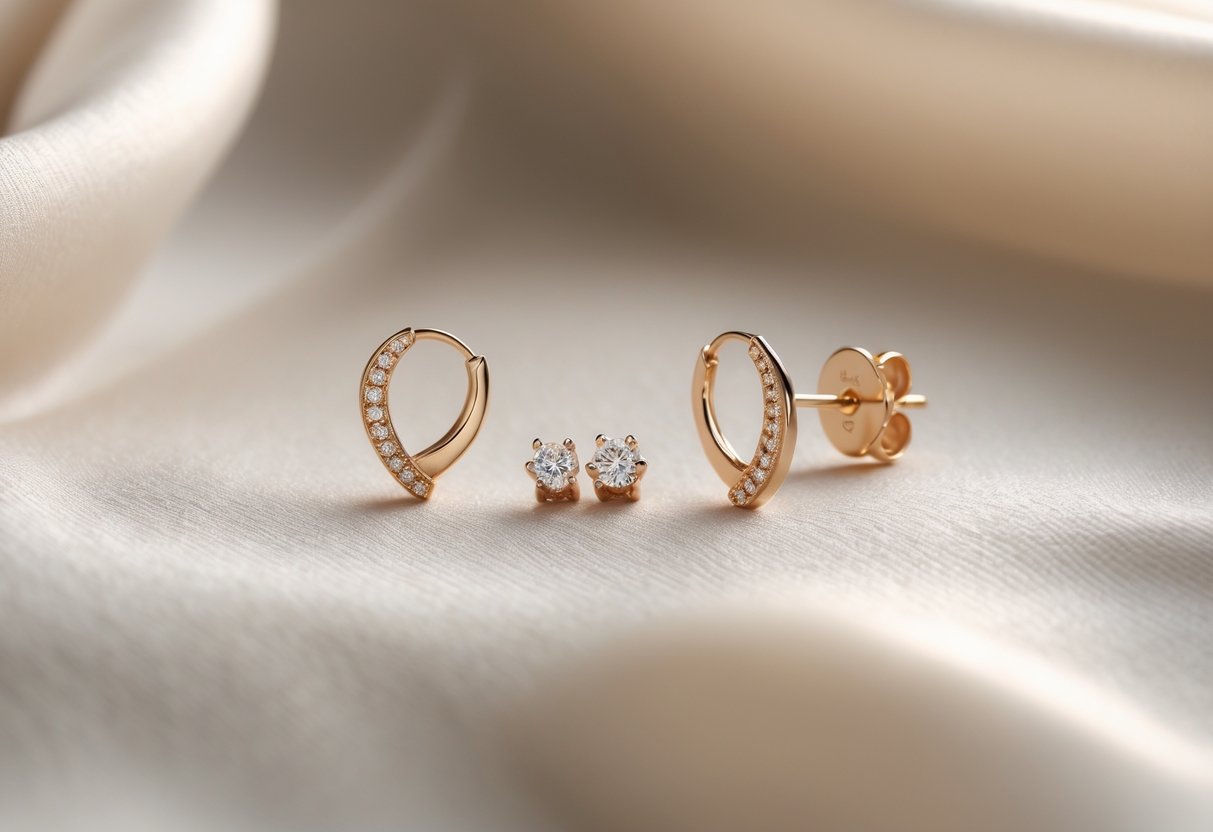
Doctors need earrings that walk the line between professionalism and personal style. The right studs finish off medical attire and nod to achievement.
Medical professionals need earrings that stay put during long shifts and look polished. Small or medium-sized studs are best—nothing flashy, but still elegant.
Gold and silver studs work with just about any scrubs or workwear. 14k gold is sturdy for daily use, while sterling silver has that classic, clean vibe.
Size matters in healthcare. Studs around 4-6mm across are visible but not distracting—and they won't snag on gear.
Secure backings are a must. Screw-back or locking styles keep earrings in place, even during busy shifts or emergencies.
Pearl studs are timeless and bring a little softness to a medical wardrobe. Freshwater pearls in the 6-7mm range look classic and stay the right size for work.
Cultured pearls mean consistent luster and quality. White or cream pearls suit most skin tones and work with both scrubs and street clothes.
Diamond studs are a classic way to mark achievement. Small Aurora diamond studs have hand-engraved details and just enough sparkle.
Carat weight guidelines:
Medical symbol earrings celebrate the profession with a bit of flair. Caduceus or Rod of Asclepius designs in gold or silver are tasteful and personal.
Stethoscope-inspired studs are a subtle nod to the field. They usually use curved lines—enough to recognize the reference, but not so literal they look like costume jewelry.
Custom initial studs let you add a personal touch. Many pick degree initials (MD, DO, DDS) or specialty abbreviations in a nice script.
Birthstone accents give medical-themed earrings a pop of color and extra meaning. Adding a birthstone to a caduceus or cross design makes it unique.
Metal choices like surgical steel are practical for medical pros—hypoallergenic and tough enough for clinical wear.
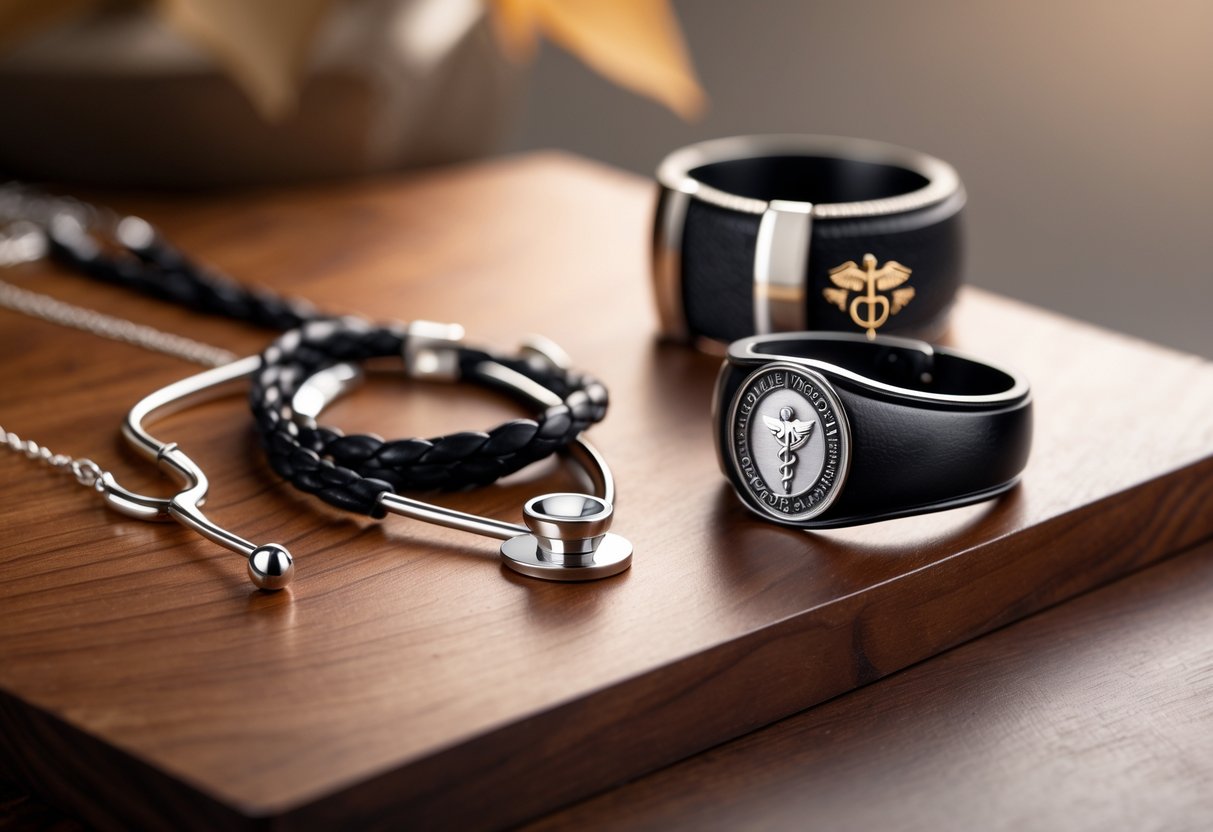
Male doctors tend to look for jewelry that feels both professional and personal. Classic picks like medical cufflinks, personalized accessories, and quality watches make great graduation gifts—something that marks the milestone and fits into a professional wardrobe.
Cufflinks with medical symbols are a subtle way to show off the profession. Popular choices include the caduceus, stethoscope, or anatomical motifs in sterling silver or gold.
High-quality materials mean these can last for decades. Sterling silver cufflinks usually run $50-150, while gold versions can range from $200-500.
Many doctors lean toward minimalist designs that work with both suits and work attire. Simple engravings keep things elegant without being too obvious.
Custom options let you add initials or graduation dates, and some cufflinks have colored enamel for a bit of style.
Personalized tie bars add functional style for doctors who wear ties often. Engraving can include names, initials, graduation dates, or medical school abbreviations.
Tie bars should be about half to three-quarters the width of the tie for a balanced look. Gold-filled and sterling silver options are durable and usually cost $75-250.
Lapel pins with medical symbols or specialty icons are great for white coats or suit jackets. Many choose pins for their specialty, like cardiology or orthopedics.
Quality engraving—whether laser or hand-done—keeps the text crisp over time.
A good watch is both practical and symbolic for doctors. Timing matters in medicine, so a reliable watch is a must.
Swiss movements are known for accuracy and longevity. Brands like Tissot, Seiko, and Citizen have solid options in the $200-800 range.
Features to look for: second hands for pulse checks, water resistance, and clear, easy-to-read faces. Some models add chronographs or date displays.
Strap material matters too. Leather is great for formal events, while metal or rubber handles frequent handwashing better.
Engraving the case back with graduation details makes the watch a keepsake.
The best jewelry gift really depends on the doctor's style and where they work. Some want something classic and understated, others like a bolder look.
Classic professionals usually go for timeless pieces—pearl earrings, simple gold chains, traditional designs. Understated elegance is their thing.
Modern minimalists lean toward clean lines and geometric shapes. Think thin bangles, simple studs, or pendant necklaces with a contemporary twist.
Statement lovers? They're all about unique designs, bright gemstones, or pieces that get people talking. Jewelry is self-expression for them.
Style Matching Guide:
Specialty can play a role, too. Surgeons might stick with minimal pieces, while psychiatrists could opt for something more expressive.
Hospital settings mean practical concerns. Jewelry needs to be safe, hygienic, and fit for patient care.
Infection control rules often limit jewelry in clinical areas—bracelets, dangling earrings, and rings (other than a wedding band) are usually a no-go. It's best to stick with pieces that meet those guidelines.
Hospital-Appropriate Options:
Doctors in private practice have more freedom to wear statement pieces, multiple rings, or bold necklaces.
Academic physicians sometimes prefer sophisticated jewelry for lectures or conferences. Thoughtful and practical presents suit those who move between research and clinical work.
If they wash hands often, wear gloves, or handle equipment, practical jewelry is a must. These little details can make all the difference.
The right packaging can turn a jewelry gift into a memorable celebration of doctoral achievement. Custom touches and thoughtful presentation details help communicate just how big this academic milestone really is.
Premium gift boxes set the stage for a doctoral jewelry gift. Velvet-lined boxes in navy, burgundy, or classic black feel sophisticated and just a bit grand.
Custom jewelry boxes with embossed text add a personal touch. You can go with the recipient's name, graduation date, or even their new "Dr." title on the lid.
Cards should use formal language that matches the moment. Phrases like "Congratulations on your doctorate" or "Celebrating your academic excellence" are always safe bets.
Choose high-quality cardstock in cream or white for a classic look. Foil stamping in gold or silver adds a subtle touch of luxury.
Card placement matters. Put the card right on top of the jewelry box or attach it with a ribbon so the message is seen first.
Boxes with magnetic closures or hinged lids make opening the gift feel special. That extra bit of anticipation never hurts.
Personalized messages make a jewelry gift feel even more meaningful. If you can, mention their field of study or something unique about their research.
Message examples:
Wrapping should match the formality of the occasion. Solid papers in deep blues, purples, or elegant grays usually work best.
Satin ribbons in matching colors keep things neat and polished. If you're up for it, try crafting the perfect congratulations note to go with the gift.
Presentation timing: Giving the gift in person is always ideal. It's just more memorable that way.
Add small touches like wax seals or stickers with doctoral symbols. These details show you put real thought into the presentation.
Finding the right jewelry gift means picking retailers you can trust for quality and authenticity. Online shops offer convenience and tons of variety, while local jewelers excel at personal, commemorative pieces.
Big online jewelry retailers carry wide selections of elegant pieces for doctors. Tiffany & Co. and Blue Nile offer authenticated luxury, complete with detailed descriptions and certificates.
Kay Jewelers and Jared have professional jewelry sections, often featuring medical-themed pieces like stethoscope pendants. Their sites include customer reviews and sizing guides.
Graduation gift collections from specialty shops focus on milestone celebrations. You'll find engraved pieces and accessories made for medical grads.
Amazon and Etsy are good for variety. Amazon offers buyer protection and quick shipping. Etsy is the place for handcrafted, personalized items from independent makers.
Most major retailers provide gift wrapping services and clear return policies for gifts. If you're in a hurry, many also offer expedited shipping.
Independent jewelers are great for unique, personalized pieces that really mark the occasion. They can engrave names, dates, or medical symbols right onto the jewelry.
Local artisans often work one-on-one to design something totally original. Think custom pendants with medical school logos or birthstones paired with professional symbols.
Estate jewelry stores carry vintage and antique pieces with real character. Sometimes, you'll find rare items that just aren't available anywhere else.
Many local jewelers know the medical community and get what's appropriate for professional wear. They'll steer you toward pieces that work in clinical settings but still feel special.
Custom orders usually take 2-4 weeks to complete. Lots of jewelers offer payment plans for pricier custom items, which can be a relief.
Ask for certificates of authenticity for precious metals and gemstones. Reputable retailers provide documentation from places like GIA or AGS.
Check for metal purity marks—look for stamps like 14k, 18k, or sterling silver. Trustworthy shops list these specs in their product details.
Always read the return policy before buying. Good retailers offer 30-60 day return windows and include care instructions.
Browse customer reviews, especially about product quality and shipping. Feedback on sizing and packaging can be surprisingly helpful.
Compare prices at a few shops for the same item. If something's much cheaper, it's probably too good to be true.
Look up retailer credentials—Better Business Bureau ratings and jewelry association memberships are good signs. Established shops list clear contact info and have real customer service.
Picking the right jewelry gift for a new doctor comes down to professional appropriateness and personal style. Classic metals, meaningful symbols, and pieces that balance elegance and everyday wear are usually winners.
Classic watches are a go-to for medical professionals. A good watch with a leather or metal band feels both useful and ceremonial.
Pearl jewelry is always in style. Studs or a simple strand work perfectly for female doctors in professional settings.
Cufflinks with medical symbols or initials are a refined gift for male doctors. They add polish to formal outfits for ceremonies.
A pendant necklace with a small caduceus or stethoscope charm gives a nod to the profession. Delicate designs work well under scrubs or work clothes.
Gold watches—yellow, white, or rose—make excellent graduation gifts. They hold up to daily wear and look sharp.
Simple gold chains suit both men and women. Medium-weight pieces won't interfere with medical equipment.
Gold signet rings with initials or a school insignia feel personal and meaningful. Many doctors wear them for years.
Small gold hoops or studs deliver practical elegance for female doctors. They're professional and meet most hospital dress codes.
Think about the recipient's style and workplace rules. Some hospitals have strict jewelry policies, so keep that in mind.
Watches are the most popular choice for men. Look for clean faces and classic bands in leather or metal.
Doctoral rings are big achievement symbols—years of effort summed up in one piece.
Tie bars or pins are good for those who wear formal attire. Subtle medical symbols or simple designs work best.
Class rings from medical schools carry a lot of meaning. They're a badge of all that hard work.
Charm bracelets can be customized with medical symbols and graduation dates. Recipients can add charms as their career grows.
Engraved pieces with dates or inspirational messages are lasting mementos. Watches, pendants, or cufflinks can all be personalized.
Professional pins with medical society symbols show specialty pride. They're perfect for white coats or formal events.
Budget is key—know what you can spend and what's realistic for gold or custom work.
Think about the recipient's work environment and dress code. Some hospitals restrict certain types or sizes of jewelry.
Style matters more than trends. Go for classic pieces that match what they already wear.
Practicality counts. Pick pieces that stand up to long hours and frequent hand washing.
Upgraded timepieces often mark the shift from student to practicing physician. It’s pretty common for doctors to swap out their old medical school watches at this point.
Medical specialty pins can represent specific achievement areas. These little badges show pride in specializations like cardiology or pediatrics.
Professional rings featuring residency program insignia commemorate completed training. They’re a bit different from standard graduation rings since they represent specialized medical education.
Quality stethoscope charms or clips add a personal touch to everyday medical tools. They blend functionality with a bit of symbolism for new physicians.