
Your Cart is Empty
A printed certificate marks an achievement or milestone with formal recognition. A message card necklace carries words close to the heart every day. Both hold meaning, but only one becomes part of someone's daily life.
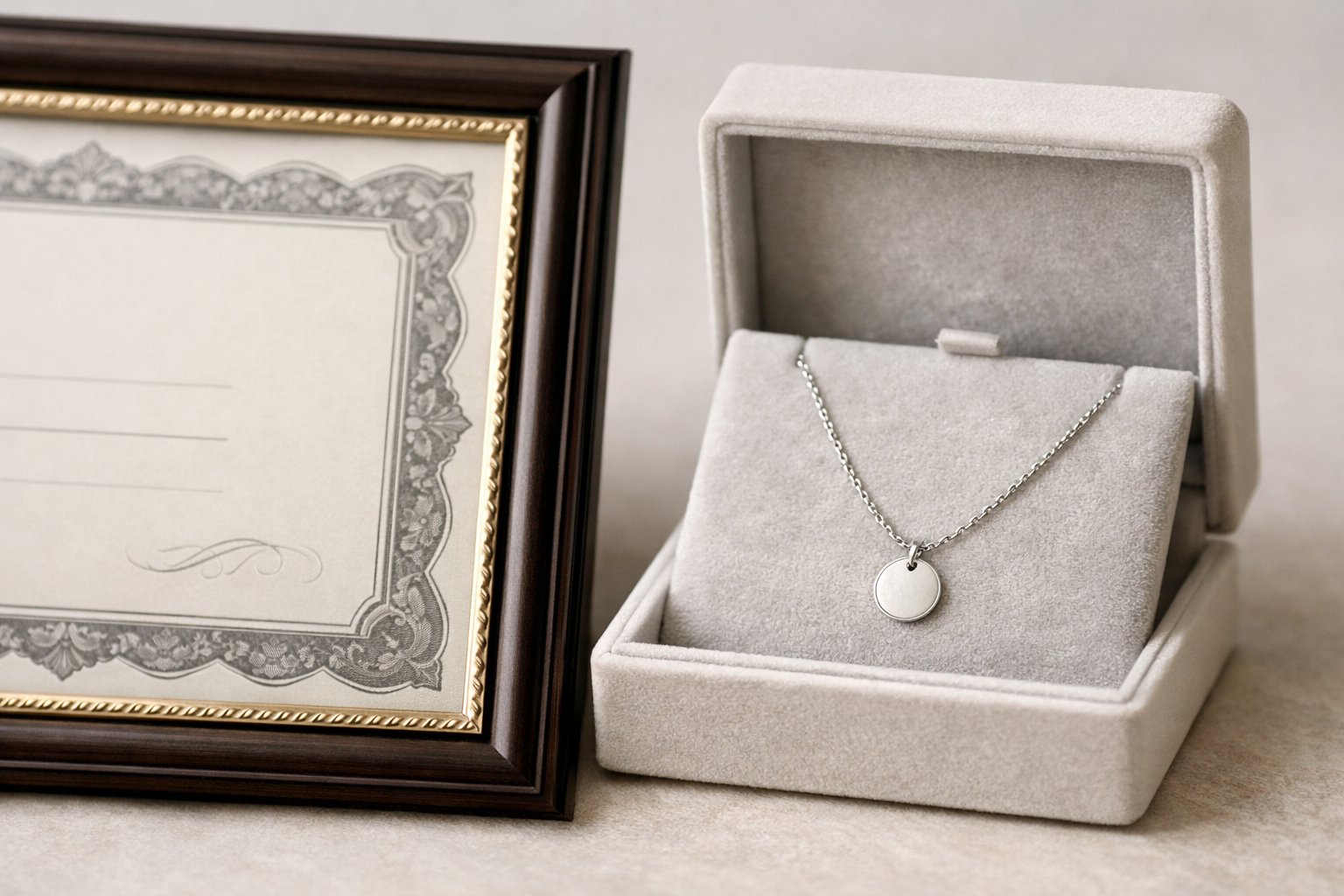
A message card necklace transforms into a true keepsake because it combines personal words with wearable jewelry that stays present in everyday moments, while a certificate typically gets stored away after its initial presentation. The difference lies not in the sentiment behind either gift, but in how each one continues to connect with its recipient over time. Meaningful jewelry gifts with unique message cards offer this ongoing presence that framed documents cannot match.
Understanding what separates a thoughtful gesture from a lasting keepsake helps people choose gifts that align with their relationships. Some moments call for formal recognition. Others need something that travels with the person through ordinary days. For those drawn to wearable sentiment, options like personalized envelope locket necklaces allow messages to remain close without overwhelming the everyday. You can personalize it here.
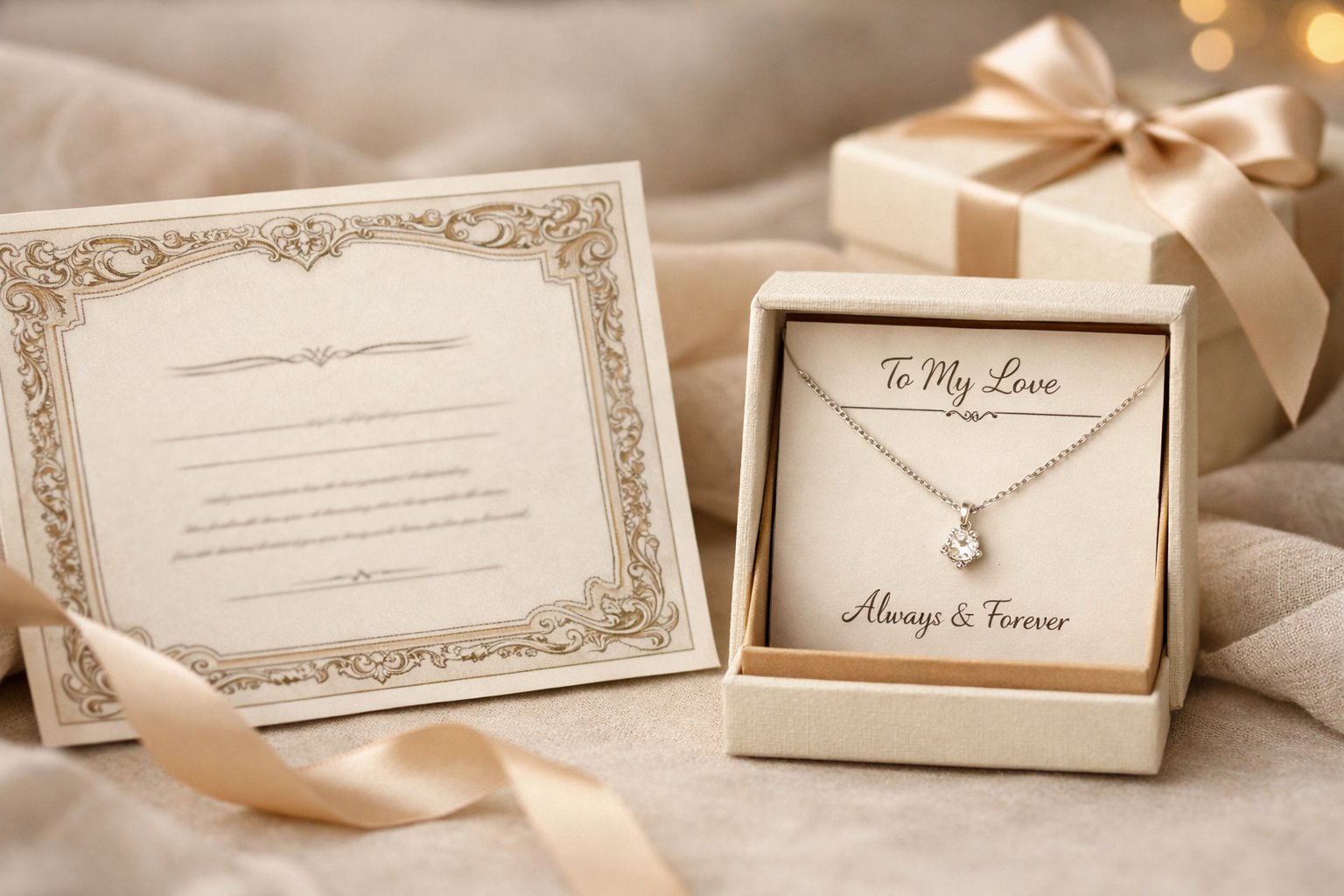
A gift becomes a keepsake when it carries emotional weight that outlasts the moment it's given. This happens through the stories it holds, the value it maintains over time, and the personal details that make it irreplaceable.
A true keepsake anchors itself to a specific memory or feeling. It might mark a graduation, a loss, a birth, or a promise made between two people. The object itself matters less than what it represents.
When someone receives a gift tied to a meaningful moment, they don't just see the item. They recall the context around it. A necklace given after a difficult year holds different weight than one purchased on a whim.
Personalized gifts help turn memories into heirlooms because they're designed around the recipient's life. A message card necklace with a handwritten note becomes a sentimental keepsake when it's tied to something specific. The sentiment doesn't come from the metal or the packaging. It comes from what the giver chose to say and when they chose to say it.
Items like a custom engraved bar necklace can hold coordinates, dates, or initials that only the wearer understands. That privacy adds to the emotional value.
A keepsake doesn't lose meaning when trends change. It stays relevant because its value isn't based on style or function. It's based on what it continues to represent years later.
Materials, message, and how the gift fits into someone's life all matter when determining whether something lasts. A cheaply made item might break or tarnish, which can diminish the memory attached to it. But a well-crafted piece endures physically and emotionally.
Personalized jewelry gifts often serve this role well. They're small, durable, and easy to keep close. A certificate might sit in a drawer, but a necklace gets worn. That repeated contact reinforces the memory.
If someone wants a tangible reminder they can carry daily, a birthstone name necklace offers both beauty and personal significance. The stones and names make it specific to the wearer's story.
Personalization transforms a beautiful object into an irreplaceable narrative. It shifts the gift from generic to singular. When someone's name, date, or message appears on an item, it becomes theirs in a way mass-produced items never can.
This is why meaningful gifts often include custom elements. A standard pendant is jewelry. A pendant engraved with a loved one's handwriting becomes something else entirely. The customization creates emotional resonance that didn't exist before.
For someone who values subtlety over display, a simple design works best. You can personalize it here.
➡️ Explore customizable necklace options
Even small details matter. A date stamped inside a band or initials on a clasp add layers of meaning without making the piece overly sentimental. The recipient knows what it represents, and that's enough.
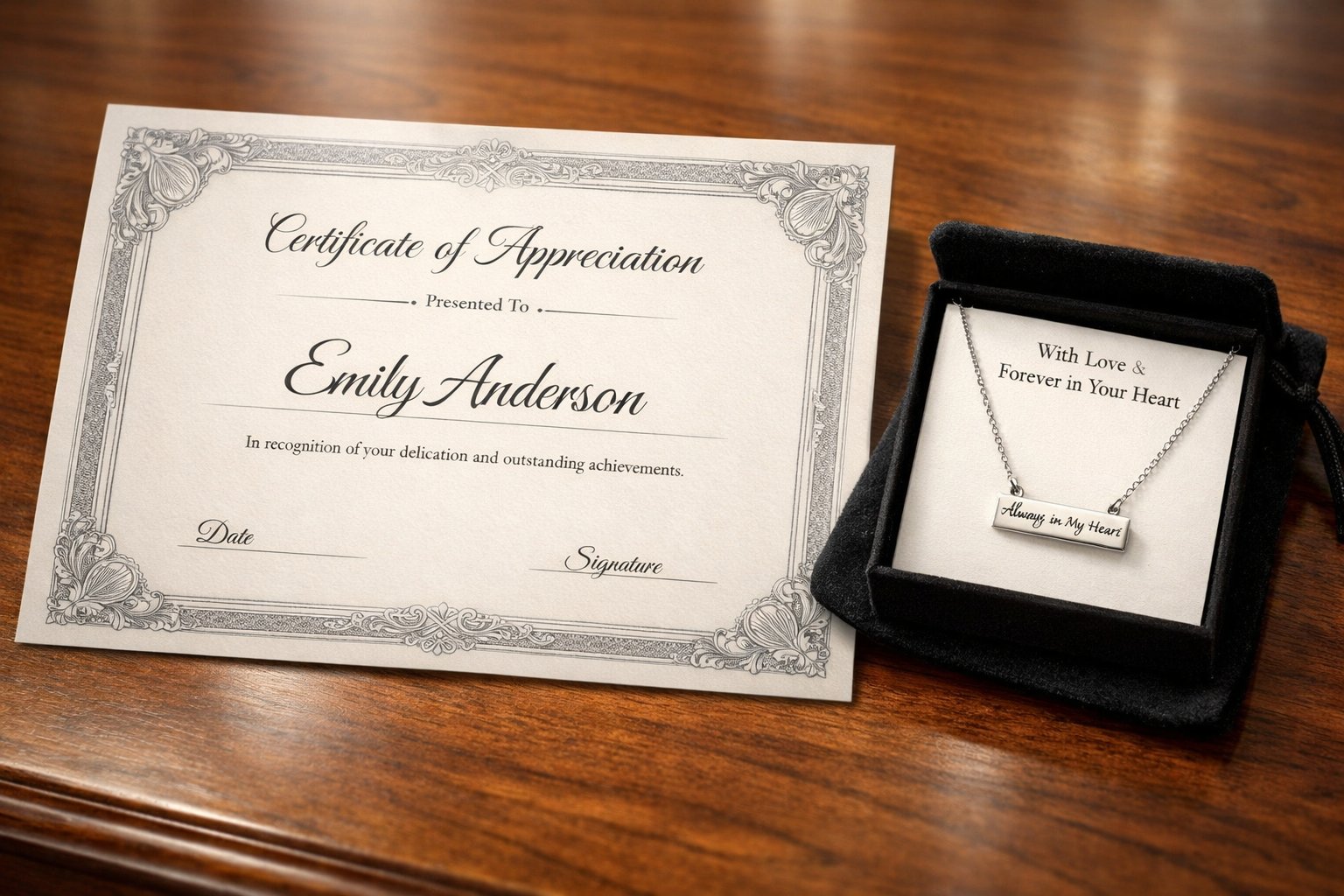
A custom printed certificate is a personalized document that commemorates an achievement, celebrates a milestone, or recognizes someone's efforts in a tangible format. These certificates combine formal design elements with personal details to create something that feels both official and meaningful.
Custom printed certificates serve as formal acknowledgments of accomplishments across many contexts. Schools use them for academic achievements and participation awards. Workplaces present them for employee recognition and training completions. Families create them for personal milestones like retirement celebrations or volunteer work.
The format typically includes specific design elements that signal importance. A certificate displays the recipient's name prominently, includes descriptive text about the achievement, and often features decorative borders or seals. Many include dates and signature lines to add authenticity.
Traditional certificate elements include:
When someone receives certificates for training and recognition, the physical format communicates that their achievement matters enough to be documented formally.
The customization process allows gift-givers to shape certificates around specific moments. They can select paper quality, choose design templates, and add personal text that captures exactly what they want to express. Some opt for premium paper options that give the certificate more weight and durability.
Common customization choices:
| Element | Options |
|---|---|
| Paper Stock | Standard, premium cardstock, parchment |
| Design Style | Formal, casual, themed, minimalist |
| Text Fields | Names, dates, achievements, personal messages |
| Visual Elements | Borders, seals, logos, background patterns |
For those who want something that feels personal without making the moment overly sentimental, a customizable design like this certificate keeps it meaningful yet light. You can personalize it here.
Digital tools and online services have made creating these personalized gifts more accessible than before. Someone can design a certificate from their computer and have it professionally printed within days.
The emotional weight of a certificate depends largely on context and presentation. For someone who values formal recognition, receiving a printed document can feel validating. It transforms an intangible achievement into something they can display or keep in a memory box.
Children often respond with visible pride when they receive certificates. Adults may appreciate them differently, sometimes viewing them as thoughtful gestures rather than keepsakes they'll treasure long-term.
The challenge with certificates lies in their presentation format. They require framing or careful storage to remain in good condition. Without proper display, they often end up filed away or tucked into drawers. This doesn't diminish their initial impact, but it can limit their ongoing presence in someone's life.
Some recipients genuinely cherish certificates as markers of important moments. They frame them for their offices or create dedicated spaces at home. Others appreciate the gesture but struggle to find ways to keep certificates visible without cluttering their living spaces.
The certificate format works best when the achievement itself carries significant meaning and when the recipient has a natural inclination toward displaying formal recognition.
Message card necklaces pair physical jewelry with written words that explain why the piece matters. The card adds emotional context that transforms standard jewelry into something personal.
A message card necklace includes three main parts that work together. The necklace itself features a pendant on a chain, typically made from sterling silver, gold-plated metal, or stainless steel. The pendant might display symbols, engravings, or birthstones.
The message card attaches to the jewelry packaging. Most cards measure around 3x4 inches and include printed or handwritten text. Some retailers offer custom message options while others provide pre-written sentiments.
The presentation comes in a gift box or pouch that holds both items. Message card jewelry from various retailers includes adjustable chains and secure fasteners. The packaging protects the necklace during shipping and creates a complete gift experience when opened.
The card explains the relationship between giver and recipient in specific terms. Without it, a necklace remains decorative. With it, the piece carries intention.
Someone might write about a shared memory, a quality they admire, or encouragement for a difficult time. The words stay permanent even as years pass. Many people keep these cards in jewelry boxes or dresser drawers long after receiving them.
The physical act of reading creates a ritual around wearing the jewelry. Each time someone looks at the card, they reconnect with the feeling behind the gift. This repeated engagement strengthens bonds between people separated by distance or time.
Pre-designed cards feature common phrases for birthdays, graduations, or friendships. These work when the sentiment matches the occasion exactly. The trade-off comes in limited personalization.
Fully custom cards let people write their own messages from scratch. They can include inside jokes, specific memories, or promises that only the two people understand. For relationships between mothers and daughters, personalized jewelry often pairs with cards addressing that unique bond.
If you want something that feels personal without making the moment overly sentimental, a customizable design keeps it meaningful yet light. You can personalize it here.
Some services offer template cards with fill-in-the-blank sections. These provide structure while allowing personal details like names, dates, or locations. The hybrid approach suits people who want guidance but also specific touches.
When someone adds a name or a date to jewelry, it stops being just an accessory. Personalized gifts create deeper emotional connections because they acknowledge the recipient as an individual rather than someone receiving a generic item.
A name pendant carries weight because it represents identity. When someone wears their own name or the name of someone they love, the piece becomes a reflection of a bond that matters. Custom jewelry serves as an enduring expression of affection rather than a temporary gesture.
The choice between a simple name pendant and one with additional design elements often depends on whether the person prefers subtlety or statement. Either way, engraved jewelry functions as a physical reminder of connection. It doesn't need to be elaborate to feel significant.
Some people prefer initials over full names for privacy or aesthetic reasons. Others want dates alongside names to mark specific moments. What matters is that the wearer feels the piece belongs to them in a way mass-produced items never could.
A message tied to a birthday or milestone gives context that a generic card cannot. When someone receives a necklace with "Happy 30th" or "Class of 2026," the piece becomes anchored to that moment in time. Years later, it still holds the memory without needing explanation.
The difference between a standard birthday card and a custom necklace with a meaningful message is durability. Cards get stored away or discarded. Jewelry stays visible. The message doesn't fade when it's engraved.
Occasion-specific personalization works because it captures something fleeting and makes it permanent. A graduation, a new job, or a difficult year overcome—these moments deserve recognition that lasts longer than wrapping paper.
A certificate stays flat and formal, while a necklace rests against the skin and moves through daily life. The way each object holds meaning depends less on what's written and more on how often it's encountered.
A printed certificate lives in a frame or folder. It acknowledges an achievement or milestone with words and signatures, but its role ends once it's displayed or stored. The paper itself doesn't invite touch or daily interaction.
A personalized necklace works differently. It becomes part of someone's routine. They fasten it in the morning, feel its weight throughout the day, and see it in the mirror. This repeated contact builds a quiet familiarity that a framed document can't replicate.
Physical engagement matters:
For someone who wants to carry a message close without announcing it, a custom message necklace offers that privacy. You can personalize it here.
A certificate's message remains fixed in one place. Its words don't change, but they also don't travel. Someone has to go to where it hangs to read it again.
A sentimental keepsake worn as jewelry travels everywhere. The engraved name or date stays visible during ordinary moments—at work, during errands, or while sitting with family. This constant presence means the meaning gets revisited without effort or intention.
Frequency of emotional contact differs:
When someone wants words they can see without seeking them out, jewelry becomes the more intimate choice. A necklace with a birthstone adds another layer of personal reference.
Both custom jewelry and printed certificates offer ways to mark meaningful moments, but the depth of personalization differs. Necklaces allow for tactile details like engraved text and symbolic charms, while certificates rely on visual design and printed words.
A personalized necklace can be crafted from sterling silver, gold-plated metals, or stainless steel. Each material carries its own weight and feel against the skin. Sterling silver offers a clean appearance that doesn't irritate sensitive skin. Gold-plated options bring warmth without the full cost of solid gold.
The pendant shape matters too. A circle represents continuity. A heart speaks to affection. Some people prefer a simple bar pendant that holds a single line of text.
Certificates use paper quality and printing techniques to convey importance. Premium parchment stock with foil stamping creates formality. Standard cardstock works for casual recognition. The printing method determines how long the certificate stays readable over time.
If someone wants something that feels personal without making the moment overly sentimental, a custom design keeps it meaningful yet light. You can personalize it here.
Engraved jewelry transforms when it includes specific dates or coordinates. The day two friends met becomes part of the metal itself. Initials intertwined show connection. An infinity symbol represents something ongoing.
Photographs work differently on each format. Certificates can display full-color printed images alongside text. Necklaces offer photo pendants where a small picture sits behind glass or gets laser-etched into metal. The photo stays close to the wearer's heart.
Symbols carry meaning without words. A hamsa hand offers protection. An evil eye deflects negativity. These shapes tell stories that the wearer understands even when others don't. Certificates can include printed symbols, but they stay flat on paper rather than becoming something someone touches throughout the day.
Combining elements creates richer narratives. A name plus a birthstone plus a meaningful date layers information into custom jewelry in ways certificates cannot replicate.
Friendship jewelry creates lasting bonds through physical symbols that friends can wear daily. The addition of words transforms these pieces into emotional anchors that carry specific memories and intentions.
A friendship necklace gains deeper significance when paired with written words that explain its meaning. The necklace serves as a visible reminder while the message card provides context that makes the piece irreplaceable. Together, they form a complete gift that engages both sight and emotion.
Message card necklaces work particularly well for long-distance friendships. When miles separate close friends, wearing the necklace while rereading the card helps maintain emotional closeness. The card becomes a permanent record of the relationship at that specific moment.
Many people keep message cards in jewelry boxes or frame them alongside photos. The card exists as its own keepsake, separate from but connected to the necklace. This dual nature means the gift continues to offer comfort years after the initial giving.
Some friends choose personalized friendship necklaces that include engravings, birthstones, or coordinating designs. Others prefer simple chains with heartfelt cards that carry all the sentiment.
Written messages create emotional weight that spoken words sometimes cannot match. A card gives the giver time to choose exact phrasing that captures feelings accurately. The recipient can return to these words whenever they need reassurance or connection.
The physical act of reading creates a ritual around the gift. Each time someone opens the card, they reconnect with the emotion behind the gesture. This repeated engagement strengthens bonds between friends over time.
Words also document the friendship at a particular point. Whether celebrating a milestone or offering support during challenges, the message captures that specific moment. The friendship necklace becomes a timeline marker in the relationship's story, holding memories that might otherwise fade.
A thoughtful message transforms jewelry from decoration into a cherished keepsake with lasting meaning. The combination proves especially valuable during difficult periods when friends need tangible reminders of their worth to each other.
Certificates need protection from light and moisture to stay readable, while necklaces require regular cleaning and careful storage to maintain their appearance. Both keepsakes demand different approaches to preservation based on their materials and how often they're handled.
Custom printed certificates deteriorate when exposed to direct sunlight, humidity, or acidic materials. The paper fibers break down over time, causing yellowing and brittleness that can't be reversed.
Acid-free folders or document boxes provide the best long-term storage. These containers prevent chemical reactions that damage paper. Certificates should lay flat rather than folded to avoid permanent creases.
For display purposes, UV-protective glass in frames shields the paper from fading. The frame should include a mat board to keep the certificate from touching the glass directly. Moisture can get trapped between surfaces and create mold or water stains.
Temperature matters more than most people realize. Storage areas should stay between 60-70°F with 30-40% humidity. Basements and attics often have extreme fluctuations that accelerate aging.
Message card necklaces need regular attention to prevent tarnishing and damage. Sterling silver oxidizes when exposed to air, while gold-plated pieces lose their coating through wear.
Basic jewelry maintenance includes:
The card itself requires gentle handling since paper or metal can bend or scratch. Laminated cards resist moisture better than bare paper, but neither should get wet. If someone wants to display handmade jewelry with its original card, keeping both in a shadow box protects them from handling.
Professional cleaning every six months helps maintain metal shine. Jewelers use ultrasonic cleaners or polishing cloths designed for specific metals. Home cleaning solutions can damage delicate finishes or loosen adhesives that hold the message card in place.
The text on message cards fades faster than people expect. Ink exposed to light loses its vibrancy within months, especially on cards that hang in windows or bright rooms.
Digital backups preserve the message even if the physical card deteriorates. Taking a high-resolution photo creates a record that can be reprinted if needed. Some people scan cards and save them in multiple locations for extra security.
Sealed acrylic cases protect cards from oils transferred by fingers during handling. These cases also prevent dust accumulation that can scratch metallic or glossy surfaces. The trade-off is that the necklace becomes less accessible for daily wear.
Rotation helps when someone owns multiple pieces. Wearing the same necklace constantly accelerates wear on both the chain and card. Alternating between pieces gives each time to rest and reduces the frequency of cleaning needed.
The decision between a certificate necklace and a message card piece depends on who will receive it and what moment it needs to hold. Some people want their jewelry to speak openly about what matters, while others prefer something that feels private and close.
Someone who wears their heart openly might appreciate personalized jewelry that displays a message others can see. A certificate necklace works well for them because the printed card becomes part of the presentation. They can frame it, keep it in a journal, or share it with friends who ask about the piece.
A more private person often connects better with a message card necklace. The engraved words stay between them and the giver. They don't need to explain it to anyone else. This type of keepsake feels like a secret they carry rather than a statement they make.
Think about how the recipient handles emotion. Do they post photos of gifts on social media? Do they cry openly at movies? Or do they process feelings quietly, keeping special things tucked away? These patterns reveal which format will feel more natural to them. The right choice lets them wear the piece without feeling exposed or misunderstood.
Graduation calls for meaningful gifts that acknowledge achievement without feeling too serious. A certificate necklace captures that celebratory tone because the printed card looks official and complete. It marks the moment with a sense of arrival.
Weddings suit message card necklaces better. The day already includes so many public declarations. A piece of wedding jewelry with private words feels like a separate, intimate exchange. Brides and bridesmaids often prefer something they can wear again without explaining its origin story every time.
New mothers tend to value both formats equally, but for different reasons. A certificate necklace might feature their baby's name and birthdate in a way they can display. A message card piece might hold a private promise or blessing they return to during hard nights. The choice depends on whether the gift celebrates the baby or supports the mother herself.
The personalized jewelry market is shifting toward pieces that blend physical meaning with thoughtful presentation, and custom and personalized jewelry is growing in demand as people seek gifts that reflect identity and connection. Message card necklaces represent a newer approach that bridges sentiment and simplicity.
Message card necklaces have become a quiet alternative to traditional engraved pieces. They pair a custom necklace with a printed card that carries the real emotional weight of the gift.
Personalized jewelry trends in 2025 show that buyers want pieces that feel meaningful without requiring permanent customization. A message card offers flexibility. The giver can write what matters, change the card for different occasions, or let the recipient keep it separate from the jewelry itself.
These designs work well for:
For someone who values the words more than the metal, a personalized photo necklace with an accompanying card allows both visual and written expression. If the moment calls for something lighter and more adaptable, a simple design with a custom message feels thoughtful without locking anyone into one sentiment forever. You can personalize it here.
Not everyone has access to a jeweler who engraves, and not every budget stretches to cover custom metalwork. Message card necklaces remove those barriers.
They're sold online, ship quickly, and don't require technical knowledge to personalize. The buyer writes the message. The necklace arrives ready to give. There's no waiting period, no proof approval, no risk of a misspelled name etched in gold.
This accessibility matters for people who:
A dainty initial necklace paired with a handwritten note gives the recipient something to wear and something to keep privately. The two elements work together without requiring the expense or commitment of engraving.
Choosing between a certificate and a message card necklace often raises practical questions about durability, emotional impact, and how each option holds meaning over time.
A custom printed certificate can last for decades when printed on quality paper stock and stored properly. The physical weight of certificate paper gives it a formal presence that lighter materials cannot match.
Certificates work best when they mark achievements or formal recognitions. They require careful storage in frames or protective sleeves to prevent yellowing and creasing over time.
The formality of a certificate creates distance rather than intimacy. It signals respect and recognition but rarely invites the recipient to carry it close or revisit it during ordinary moments.
A message card necklace combines the personal touch of written words with jewelry that stays physically close. The card explains the meaning while the necklace becomes part of daily life.
Unlike certificates that get stored away, necklaces remain visible and wearable. The recipient touches and sees the piece throughout the day, creating repeated moments of connection.
Custom necklace cards can display personal messages alongside the jewelry. The card typically stays with the necklace in its box, creating a complete gift that combines sentiment with something tangible to wear.
Adding a name, date, or short phrase to a necklace transforms it from generic jewelry into something irreplaceable. The wearer knows the piece was created specifically for them rather than selected from existing options.
Engraving makes the necklace difficult to mistake for something else. If you want something that feels personal without making the moment overly sentimental, a customizable design like this keeps it meaningful yet light.
You can personalize it here.
Personalization also helps the giver express what might feel awkward to say aloud. A short engraved message can carry weight that a longer conversation might dilute.
The relationship between giver and recipient matters most. Certificates suit professional relationships or formal acknowledgments, while necklaces work better for personal connections.
Consider how the recipient will interact with the gift long-term. Someone who values practical items they use daily will appreciate jewelry more than framed paper.
Think about the message being conveyed. Recognition of achievement calls for a certificate, while expressions of love or friendship need something the recipient can hold close.
Budget also plays a role. Certificates generally cost less than quality jewelry, though custom jewelry cards themselves remain affordable.
Metal quality determines how well a necklace survives daily wear. Sterling silver and gold resist tarnishing better than plated metals that wear through to base material underneath.
Chain style affects durability too. Delicate chains break more easily than sturdier designs, though they often look more elegant.
The pendant material and engraving depth matter for personalized pieces. Shallow engraving on soft metals wears away over time, making the message harder to read.
Design simplicity often outlasts trendy styles. A classic pendant shape remains wearable for years while dated designs end up in drawers.
Custom jewelry serves different emotional needs than traditional keepsakes like certificates or photo albums. A necklace becomes part of someone's appearance and identity in ways that stored items cannot.
For someone who values experiences over objects, a personalized necklace they actually wear holds more meaning than formal certificates. The jewelry integrates into daily life rather than marking a single moment.
However, jewelry cannot replace every type of keepsake. Legal documents, achievement records, and family heirlooms serve purposes beyond sentiment.
The choice depends on what the giver wants the recipient to remember. If the goal is creating daily reminders of connection, jewelry works better than certificates tucked in drawers.