
Your Cart is Empty
Think about the woman you call first when something happens — good news, bad news, the kind of news that doesn't fit into a category yet. You probably don't have to think very hard. Her name arrives before you've finished forming the thought. That's not an accident. That's one of the most well-documented phenomena in human psychology: the particular pull of a close female friendship, and the way it becomes, over years, as essential as anything else in a woman's life.
These bonds don't look the same across every friendship or every stage of life. Some are forged in childhood and held for decades. Others begin in adulthood — over a shared table, a hard year at work, a conversation that ran three hours longer than expected — and become just as foundational. What they have in common is a quality of being known: fully, specifically, without performance. A friend who has that kind of access to you is rare. And what science is increasingly showing is that she's also, in a very real sense, keeping you alive.
This is the thing about female friendships that tends to get underestimated, even by the women who are living them. They feel deeply personal — like something that belongs to you and her alone — and they are. But they're also biological, neurological, communal, and historically powerful in ways that extend far beyond the two of you sitting across from each other with a cup of coffee. Understanding what makes these bonds work the way they do doesn't diminish them. It makes them even more worth protecting.
If there's someone in your life who deserves to feel as seen as she makes you feel, a piece from our love knot necklace collection was made for exactly that — a quiet, lasting symbol of a bond that holds.
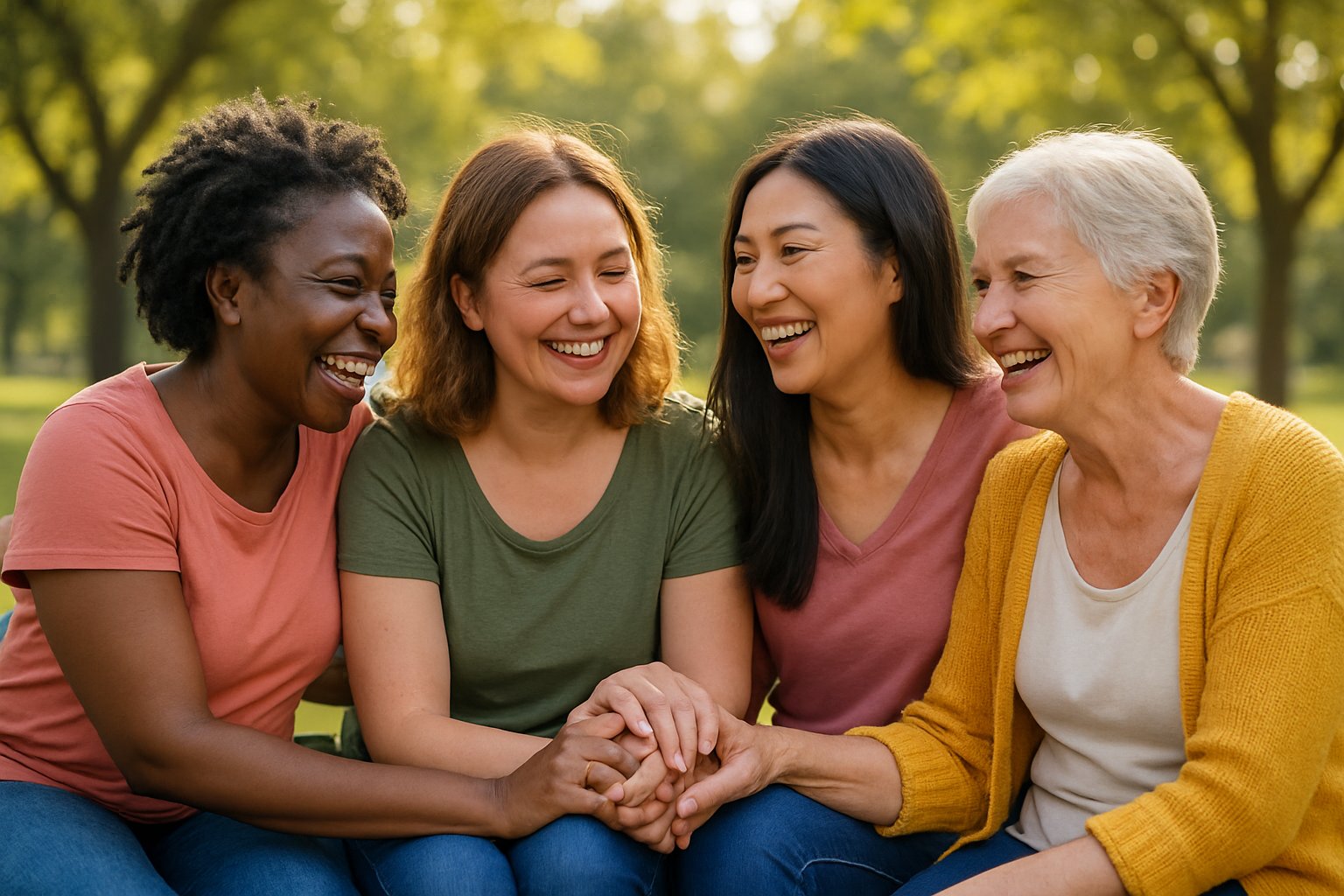
The biology of female friendship is genuinely surprising — surprising enough that it changed how scientists understood human stress response entirely. For most of the twentieth century, researchers assumed that the fight-or-flight response described how all humans reacted to threat or stress. That assumption held for decades, in part because most early stress studies were conducted primarily on male subjects.
Then a team at UCLA, led by researcher Shelley Taylor, noticed something. Female lab workers under pressure behaved differently than their male colleagues. Instead of isolating or tensing for confrontation, they cleaned their workspaces, made coffee, and sought each other out. Taylor and her colleagues began investigating and eventually identified a distinct stress response pattern in women they called "tend and befriend." Under stress, women's bodies release oxytocin — the same hormone involved in mother-infant bonding — and this hormonal surge drives them toward connection rather than isolation or aggression. Estrogen amplifies oxytocin's effects; testosterone dampens them. Which is why the pattern shows up so consistently in women and so much less in men.
This isn't a small finding. It means that the instinct you have to call her when something is wrong isn't just emotional habit. It's your nervous system doing exactly what it was designed to do. And the connection you make when you respond to that instinct — the conversation, the presence, the sense of being with someone who understands — actually lowers your cortisol levels, slows your heart rate, and reduces the physiological damage of stress in real, measurable ways.
Oxytocin also builds on itself. The more time women spend in close social connection, the more oxytocin they produce, which reinforces the desire for more connection. This feedback loop helps explain something that most women recognize intuitively: the longer a close friendship has been maintained, the harder it becomes to imagine life without it. You're not just emotionally attached. You're neurochemically bound.
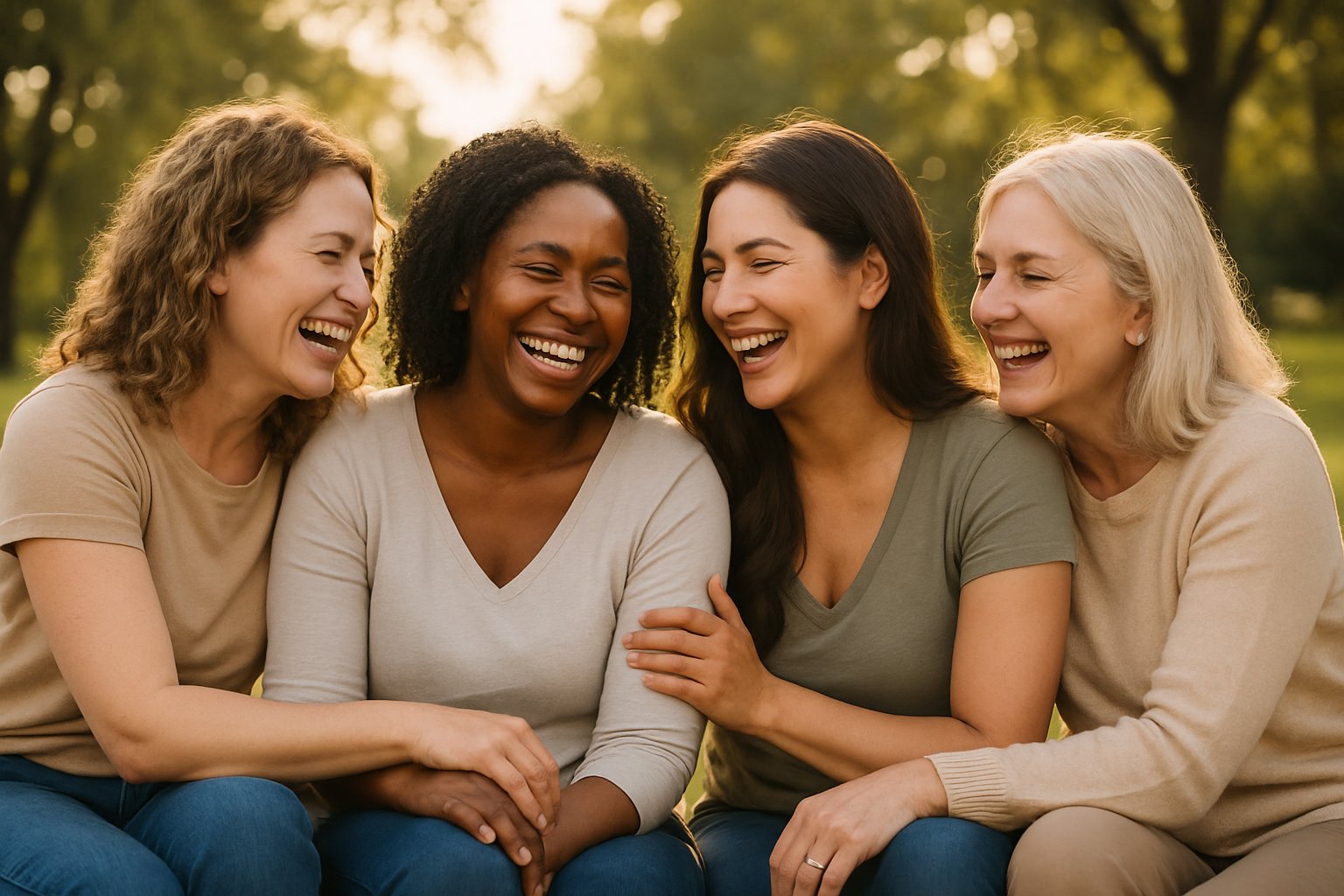
If the biology of female friendship is compelling, the communication patterns are equally remarkable — and equally distinct. Women's friendships are built on a form of emotional fluency that most other relationships don't require and don't develop. It's not just that women talk more, or share more. It's that they've developed, through years of practice, a highly specific set of skills for reading and responding to emotional experience.
Researchers who study interpersonal communication consistently find that women excel at reading facial expressions, interpreting tone, and detecting emotional states that haven't been spoken aloud. A close female friend often knows something is wrong before you've said anything — not because she's psychic, but because she's been paying attention to you specifically, across years of interaction, and she knows your patterns. She knows what your normal looks like. She notices when you're off.
This attunement creates a particular quality of being heard. When you share something difficult with a close female friend, she's not just processing the content of what you're saying. She's tracking your emotional state, reading what's underneath the words, and calibrating her response accordingly. That's why leaving a conversation with her can feel like emotional relief in a way that's hard to replicate elsewhere. She didn't just hear you. She understood you at a level most conversations never reach.
Women also tend to engage in what researchers call co-rumination — working through problems together, in detail, in a shared process rather than a solo one. Done in moderation, this is one of the most effective forms of emotional processing available. It externalizes the problem, brings in a second perspective, and produces the particular comfort of not being alone inside something difficult. It's one of the reasons that a long conversation with a close friend can resolve anxiety that weeks of internal processing couldn't touch.
A guided friendship journal for women can extend this process between conversations — a place to write through what's hard and return to what's been shared, so the emotional work of the friendship continues even when you're not in the same room.
The health research on female friendship is extensive enough to be startling. This isn't soft science or self-help adjacent — it's outcomes research, the kind that tracks populations over years and measures hard endpoints like mortality rates, disease incidence, and recovery times. And what it shows, consistently, is that the women with the strongest close friendships live longer, get sick less often, and recover faster when they do.
A landmark study published in the Journal of the American Medical Association found that social isolation increases risk of heart disease and stroke comparably to smoking fifteen cigarettes a day. Women who report satisfying close friendships show lower rates of chronic inflammation — the kind of systemic, low-grade inflammation that underlies heart disease, cancer, and autoimmune conditions. Their immune systems function more effectively. Their cortisol levels, under equivalent stress, are measurably lower than those of socially isolated women.
Longevity research tells a particularly striking story. Average close female friendships last 37 years, with many extending over 50. Women who stay socially active into their later years show dramatically lower rates of cognitive decline and dementia. The protective effect of regular meaningful social connection on brain health rivals many pharmaceutical interventions — and has none of the side effects.
The mechanisms aren't fully understood, but several pathways are clear. Close friendship reduces cortisol and inflammatory markers directly. It increases oxytocin, which has its own anti-inflammatory properties. It provides the kind of consistent emotional validation that reduces the chronic psychological stress that drives so many physical health outcomes. And it keeps women engaged with purpose, meaning, and the sense of being needed — all of which have documented effects on longevity.
Put simply: your friendships are not a luxury. They are part of the infrastructure of your health. The time you invest in maintaining them is not time taken away from more important things. It may be among the most health-protective things you do.
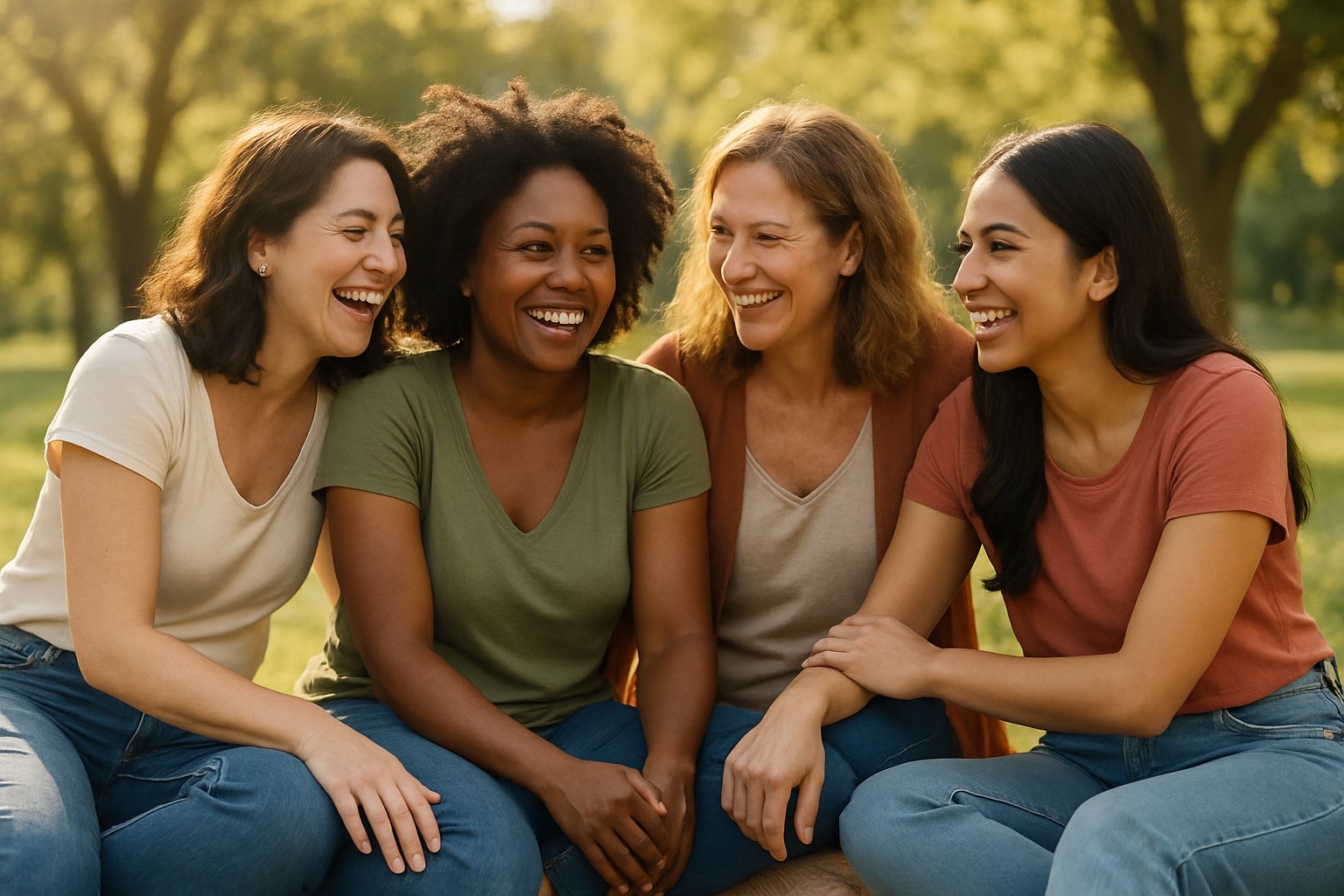
There's a version of female friendship that gets talked about mostly in terms of support — having someone to call, someone who shows up, someone who makes the hard things less hard. And that version is real and important. But it captures only half of what these relationships actually do. The other half is harder to see because it happens slowly, across years, in the accumulated influence of someone who knows you well enough to challenge you, expand you, and reflect back a version of yourself you wouldn't have developed alone.
Women with close friendships consistently report higher self-esteem — not as a feeling but as a structural feature of how they understand themselves. This is partly because close friends provide a specific kind of feedback that's different from what most other relationships offer. A good friend is honest in a way that's rooted in genuine care rather than judgment. When she tells you that you're capable of something you've been doubting, it lands differently than the same words from a stranger or an acquaintance. She knows what she's talking about. She's seen you do hard things. Her opinion carries weight.
Friends also expand each other's worlds in ways that are easy to underestimate. The book she pressed on you. The podcast that changed how you thought about something. The career conversation that helped you see a path you hadn't considered. The way she handled a difficult situation that gave you a template for handling your own. Women in strong friendships are constantly, quietly educating each other — not through formal instruction but through the accumulation of shared attention and genuine interest in each other's growth.
Resilience is another area where the research is clear. Women who face significant life challenges — illness, loss, professional failure, relationship breakdown — recover faster and more completely when they have close female friendships. Not just because of the practical support, though that matters, but because the presence of a friend who has watched you struggle before and knows you came through it is itself a kind of evidence. She's a witness to your history of surviving difficult things. When she says you'll get through this, she's not being optimistic. She's reporting what she's observed.
There are friendships that deserve to be named. Not just felt, but acknowledged — given a form that both people can hold, that persists beyond the conversation where it was given. A gift chosen not because a birthday required it but because you were thinking about her, specifically, and you wanted her to know.
The gifts that accomplish this most effectively are the ones that couldn't have been chosen for anyone else. Not beautiful in general, but beautiful for her — her name, a date that belongs to your history together, a detail that proves someone was paying attention. When a woman receives that kind of gift from a close friend, she's not just receiving the object. She's receiving the evidence of a specific kind of love: the love that notices, and remembers, and translates what it knows into something tangible.
A necklace with her name is small enough to wear every day and significant enough to keep for decades. It becomes part of how she moves through the world — something she touches without thinking, that carries your friendship with it. The right piece doesn't need to be expensive to carry that weight. It needs to be hers, unmistakably, in a way that tells her: you were thought about, and chosen, and you matter to someone who paid close enough attention to get this right.
The occasions that call for this kind of gift aren't only the big formal ones. A graduation, yes — but also the year she finally did the thing she'd been afraid to do. The birthday that felt harder than others. The Tuesday when you just wanted her to know you were glad she existed.
For the friend who deserves to feel chosen — on a milestone or just because — our dangle name pendant collection offers pieces made to be unmistakably hers.
One of the most underappreciated qualities of close female friendships is their durability — not just the fact that they last, but the way they change shape across the seasons of life without losing their essential nature. A friendship that began in childhood and still exists at sixty has been, in some sense, dozens of different friendships. It has survived different versions of both people, different geographies, different priorities, different crises. What continues is something that's been tested and earned.
In childhood and adolescence, friendship is where identity gets formed. Girls learn, through their closest friendships, how to trust, how to be known, how to navigate conflict, how to love someone outside their family. The intensity of these early bonds is appropriate to their purpose: they are the practice ground for all the emotional skills that will serve a woman for the rest of her life.
In early adulthood, friendships require more effort and more intention. The proximity that sustained them in school disappears. Everyone moves — for work, for partners, for reasons they'll sort out later. Maintaining a close friendship across distance and busy schedules becomes an act of deliberate choice. And the friendships that survive this period tend to emerge stronger: both women know, now, that the other chose to stay. That knowledge changes the texture of the relationship in ways that are hard to articulate but easy to feel.
Midlife brings new complexity and new need. Career transitions, aging parents, children leaving, relationships changing — this is one of the periods when close female friendship becomes most essential and, often, hardest to maintain. The women who protect their friendships through this season tend to say, looking back, that those relationships were what got them through it. Not the only thing, but a significant one.
Later life, when schedules finally loosen, often sees friendships deepen again in ways that feel like coming home. Women who've known each other for decades have a shared history that provides a particular kind of comfort — the sense of being known across time, of having a witness to the whole arc of your life. Research consistently shows that socially active older women have better cognitive health, better emotional resilience, and longer lives than those who are more isolated. The investment in friendship, made over decades, pays compound interest.
Close female friendships are among the most nourishing relationships in a woman's life. They are also, sometimes, among the most complicated. Understanding the specific challenges that arise in these bonds doesn't diminish them — it makes it possible to move through the hard parts without losing something worth keeping.
One of the most common sources of difficulty is conflict avoidance. Women are socialized, from a young age, to prioritize harmony in relationships — to smooth over friction, to accommodate rather than confront, to prioritize the other person's comfort over their own honest feelings. This socialization produces women who are often skilled at maintaining surface peace but who suppress resentments that accumulate over time. The result is friendships that feel fine until they suddenly and inexplicably feel not fine at all, and neither person is quite sure when the drift began.
The research of Danielle Bayard Jackson on female friendship dynamics makes an important point here: female friendships are more vulnerable to unacknowledged conflict than most women realize. The expectation of constant agreeableness means that by the time a problem is spoken aloud, it's often been building for months. Women who learn to address friction early — gently, honestly, with the explicit intention of preserving the friendship — tend to come out of those conversations with something stronger than what existed before. The willingness to have the hard conversation is, itself, an act of care.
Not all friendships are worth preserving, and that's worth saying plainly. A relationship that consistently drains rather than replenishes — where the support flows in one direction, where vulnerability is met with dismissal, where the friendship requires you to make yourself smaller — is not benefiting from more patience and accommodation. Ending a friendship that has become toxic is an act of self-respect, and it creates space for connections that are genuinely reciprocal.
Friendships also face the ordinary pressure of changing lives. The friend you were closest to in your twenties may not be the person whose life most resembles yours at forty. This doesn't have to mean loss. It can mean that the friendship evolves — that you hold its history with affection while accepting that its current form is different. Some friendships move from daily intimacy to something more occasional and equally real. What matters is that both people feel the relationship is worth tending, in whatever form it currently takes.
A book on the psychology of female friendship can offer both validation and practical tools for navigating the complicated chapters — the kind of reading that makes you feel less alone in the difficulty and more equipped to move through it.
Knowing that your closest friendships are important is one thing. Making the time and doing the specific work to maintain them is another, especially when life is full and everyone is busy and the friendship is so established that it can feel like it will simply continue on its own. It won't. The friendships that last are the ones where both people keep choosing each other, actively and repeatedly, even when other things are competing for that attention.
What this looks like in practice is less romantic than the word "friendship" tends to imply. It looks like putting the dinner on the calendar instead of leaving it as a vague intention. It looks like sending the message when you think of her instead of waiting until you have time for a proper conversation. It looks like showing up when it's inconvenient — the kind of showing up that proves the relationship is a priority, not just a pleasure.
Rituals are particularly powerful for sustaining close friendships across busy lives. A standing monthly dinner. A once-a-year trip, even if it's just a weekend an hour away. A habit of sending each other something — a article, a song, a photo — when it reminds you of them. These small repeating acts create a structure that keeps the friendship alive in the days and weeks between the long conversations, and they provide the predictability that both people can rely on even when life gets complicated.
Celebrating each other deliberately is also part of this. Not just the major milestones — though those matter — but the smaller ones too. The promotion. The hard decision she finally made. The year she survived something difficult and came out on the other side. Acknowledging these moments, out loud and in a way that feels specific to her, reinforces what the friendship is for: witnessing each other's lives and finding them worth celebrating.
When the celebrating calls for something to give, the most effective gift is always the one that proves you've been paying attention. A personalized photo book that captures the years of the friendship. A piece of jewelry that carries her name or a date that belongs to the two of you. Something she can hold that says: I have been watching your life, and I am proud to be part of it.
The effects of close female friendship extend outward. Not in an abstract way, but in the measurable, structural ways that communities are built and sustained. Women who have strong friendship networks are more likely to volunteer, more likely to organize around local causes, more likely to create the informal care systems — the meal trains, the childcare swaps, the information networks about doctors and schools and lawyers — that hold neighborhoods together in ways that formal institutions don't.
This social capital, generated through friendship, is one of the most undervalued forms of infrastructure in most communities. It doesn't appear in budget documents or strategic plans. But it determines, in significant ways, how supported people feel when things get hard, how connected new residents feel when they arrive, how resilient communities are when they face disruption. The networks that women build through friendship are doing invisible work that would be impossible to replace if they disappeared.
In professional contexts, female friendships have similarly structural effects. Research consistently shows that women in workplaces where they have close female colleagues advance further, negotiate more effectively, and are more likely to advocate for other women's advancement. The network built through genuine friendship — not just professional networking, but actual mutual investment — is one of the most significant career advantages available to women who have it and one of the most significant disadvantages facing those who don't.
Historically, women's friendships have been the backbone of most major social movements. The suffrage movement, the civil rights movement, the modern feminist movements — all of them were organized, sustained, and survived by women whose personal friendships created the trust and emotional resilience to keep going through years of difficult, discouraging work. The friendship between individual women, multiplied across thousands of relationships, produces collective power. This has always been true. It remains true now.
Understanding female friendship as not just personally meaningful but socially significant changes how it's worth treating. It's not an indulgence to maintain these relationships carefully, to invest in them deliberately, to protect them when life gets crowded. It's an investment in something that matters at every scale — from your own nervous system to the strength of the community around you.
The health effects of close female friendship are documented across decades of research and operate through several distinct pathways. Spending time with close friends lowers cortisol, reduces systemic inflammation, boosts immune function, and increases oxytocin — all of which translate into measurably better physical health outcomes. Women with strong close friendships show lower rates of heart disease, faster recovery from illness, and significantly longer lifespans than socially isolated women. The protective effect is comparable, in population studies, to the effect of not smoking.
Tend and befriend is the stress response pattern identified in women by researcher Shelley Taylor at UCLA. When women face stress, rather than fighting or fleeing, they tend to seek out other women and focus on nurturing and caregiving. This response is driven by oxytocin, which is amplified by estrogen, and it produces real physiological benefits: lower blood pressure, lower heart rate, and reduced cortisol compared to facing stress alone. It helps explain why the instinct to call a close friend when something is wrong is so consistent and so functional — it's the nervous system doing exactly what it was designed to do.
Female friendships adapt significantly across the life span without losing their essential quality. In childhood and adolescence, they provide the primary training ground for emotional skills and identity formation. In early adulthood, they require more intentionality as proximity disappears and lives diverge. In midlife, they become especially important during the transitions and pressures of that period, and often need deliberate protection against the demands of career and family. In later life, they tend to deepen again, and research shows they provide meaningful protection against cognitive decline. The friendships that survive these transitions have been tested enough to become foundational.
Conflict avoidance is one of the most significant. Women are often socialized to prioritize harmony over honesty in relationships, which leads to unexpressed resentments building over time rather than being addressed directly. The result can be friendships that feel suddenly and inexplicably strained, when in fact they've been under quiet pressure for months. Learning to address friction early, gently, and with explicit care for the friendship tends to produce closer relationships rather than more distant ones. Life transitions — geography, parenthood, career changes — present the other major challenge, requiring friendships to change form rather than maintain their original shape.
The friendships that last are the ones where both people keep actively choosing each other. In practical terms, this means scheduling time rather than leaving connection as a vague intention, responding to the impulse to reach out rather than waiting for a better moment, and showing up physically when it matters. Shared rituals — a standing monthly dinner, an annual trip, a habit of sending each other things when they come to mind — provide the structure that keeps the relationship present in daily life between the longer conversations. Deliberate celebration of each other's milestones, both major and minor, reinforces what the friendship is for.
The most meaningful gifts are the ones that could only have been chosen for her. Not beautiful or thoughtful in general — but specific to her, in a way that demonstrates genuine attention. Her name, a date that belongs to your shared history, something that references what she cares about or what she's gone through. These gifts communicate something beyond generosity: they communicate that someone has been paying close attention, and that what they noticed was worth marking with something lasting. A piece of jewelry she can wear daily, something with her name or a meaningful date, tends to become the kind of object she keeps for decades and points to when someone asks about the person who gave it.
For the milestone she's reached — or just the ordinary day when you want her to know she's thought of — a piece from our graduation gift necklace collection is designed to carry that meaning forward, long after the occasion that prompted it has passed.
The friendships that matter most in a woman's life tend to be the ones she almost took for granted — the ones that were so woven into the fabric of her days that she barely noticed them until something made her stop and look. Don't wait for that moment. The woman you call first, the one who knows the whole story, the one whose name arrives before you've finished forming the thought — she already knows what she means to you. But she'd probably like to hear it anyway.