
Your Cart is Empty
Think of your oldest friendship — not the one that started most recently, but the one with the longest history. Where did it begin? A classroom, maybe. A neighborhood. A first job where you both felt equally lost. Now think about how different that friendship looks today from what it was then. The shape of it has changed, probably more than once. The way you need each other has changed. Maybe even what you talk about has changed. And yet something continuous runs through all of it, something recognizable even when everything around it has shifted.
That continuity — that quality of a friendship surviving time and change and the many versions of who you've both been — is one of the most remarkable things about close female bonds. They aren't static. They evolve. They go quiet and come back louder. They survive moves and marriages and misunderstandings and decades. Research suggests the average close female friendship lasts 37 years, and many run significantly longer than that. These are relationships that outlast jobs, sometimes outlast partners, and accumulate into something that begins to look less like a friendship and more like a history.
Understanding how these bonds change across the seasons of life — what they need at each stage, where they're most vulnerable, and why some of them last when so many other relationships don't — can change how you tend to the ones you have. It can help you recognize what's worth protecting and give you language for what you've already been living.
Some friendships reach a point where they deserve to be marked with something lasting. Our love knot necklace collection includes pieces designed for exactly that — a physical symbol of a bond that has held across time and change.
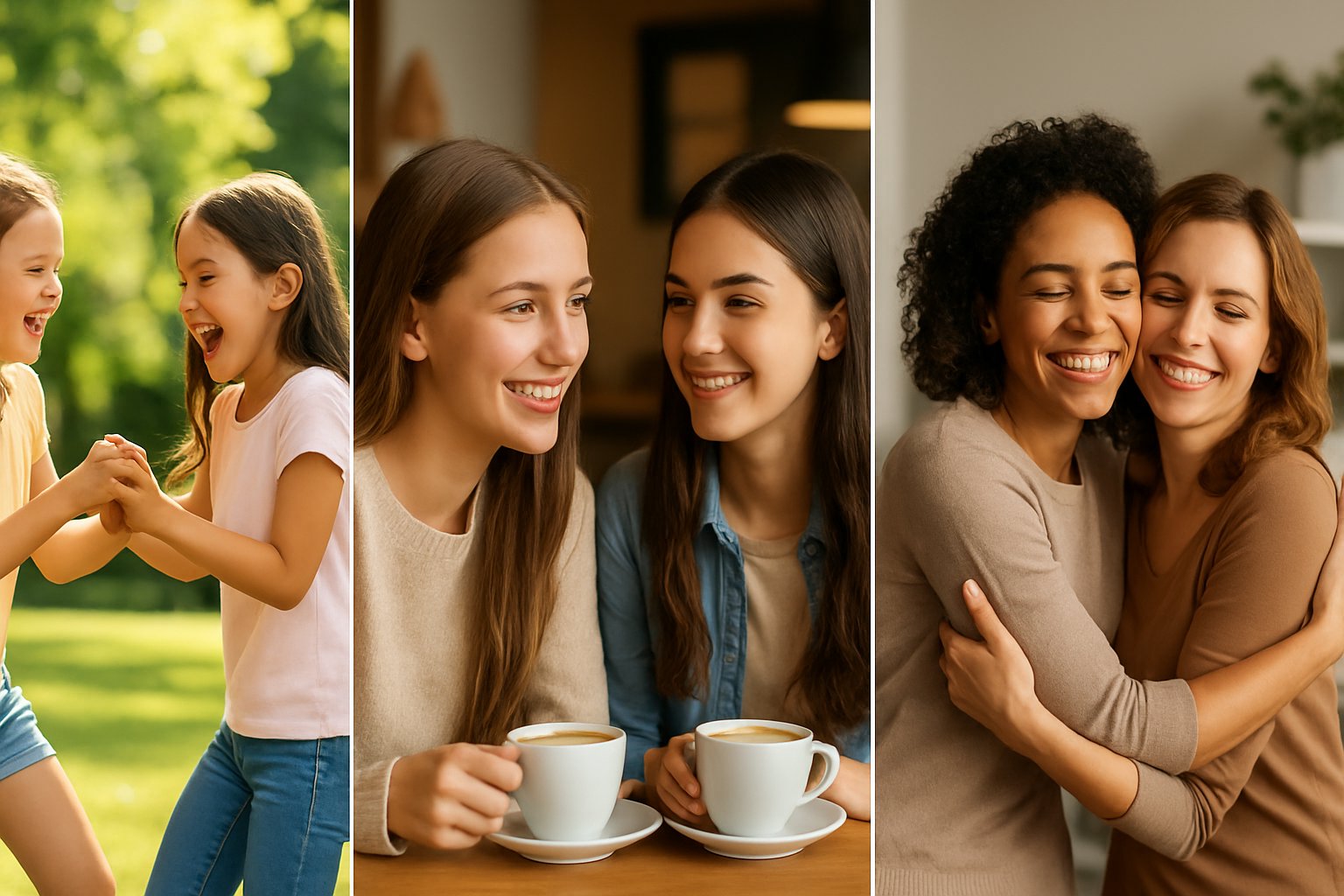
The friendships that form in childhood are doing something far more important than they appear to be doing. On the surface, two girls playing together at recess looks like simple fun — and it is. But underneath it, something more foundational is being built. Early friendships are where girls first practice the emotional skills that will shape every close relationship they have for the rest of their lives: how to trust someone, how to share without keeping score, how to repair a connection after conflict, how to be genuinely interested in another person's interior life.
The key feature of childhood friendship is that it forms almost entirely through proximity and play. Girls at this age bond not by choosing each other based on compatibility but by simply being near each other and finding something enjoyable to do together. The neighbor, the classmate, the girl from the same swim team — the friendship develops not through intention but through repeated contact and the accumulation of shared small experiences. This is actually an efficient and effective system, because it allows for a wide range of early relational experiments without much at stake. You learn a lot about conflict when you're arguing over which game to play, and the consequences of getting it wrong are low enough that you can try again tomorrow.
What girls are also developing through these early friendships is emotional literacy. They learn to read faces. They learn that their friend has a different interior life than their own, with different feelings and different needs, and that paying attention to that difference is the basic requirement for getting along. They learn, through a thousand small moments, that being a good friend means noticing the other person — not just your own experience of the relationship. These are not trivial lessons. They're the foundation of everything that comes after.
A friendship book for girls that explores themes of loyalty and belonging can be a wonderful gift during these years — the kind that reflects and affirms what she's already figuring out about the world.

Something shifts, dramatically and quickly, when girls enter adolescence. Friendship stops being primarily about play and becomes something closer to identity. The peer group stops being a collection of people you spend time with and starts being the mirror through which you understand who you are. This shift is not a phase or an overreaction — it's neurologically appropriate. The adolescent brain is undergoing a fundamental reorganization, and part of what it's doing is reorienting toward social connection as a primary source of both information and reward.
Research consistently shows that around 75% of teenage girls identify their friends — not their parents, not their teachers — as their primary source of emotional support. This isn't a sign that something has gone wrong. It's evidence that adolescent development is working as it should. Girls at this stage are separating from their parents in preparation for adult independence, and the peer group is the transitional structure that makes that separation possible. They need somewhere to land when they step away from the family, and friends are that place.
What this produces, in terms of the quality of adolescent female friendship, is something notably intense. Teenage girls share things with their close friends that they share with no one else — fears, insecurities, secrets, the private inner life that they're carefully curating for presentation everywhere else. This level of self-disclosure is what creates the particular intimacy of close teenage female friendship. It's not performative. These girls are genuinely vulnerable with each other in ways that are rare and important.
The intensity cuts both ways, of course. Adolescent friendships are also the source of some of the most acute social pain women remember from their early lives. The exclusion, the betrayal, the sudden unexplained collapse of a friendship that had seemed essential — these experiences are so sharp partly because the friendships themselves were so real and so needed. The loss of a close friendship in adolescence can feel catastrophic in a way that adult friendships rarely do, because at that stage there's so much else being lost along with the specific person.
The social hierarchies of adolescence — the cliques, the in-groups, the complex management of who is and isn't inside the circle at any given moment — are also part of this landscape, and they require a set of skills that most girls are developing in real time. Navigating them successfully requires the ability to maintain multiple relationships at different levels of closeness, to manage your own desire for belonging without losing yourself entirely to it, and to begin making the distinction between friendships that are genuinely sustaining and ones that are primarily about social positioning. Most girls figure this out, imperfectly and through some amount of pain. But the learning sticks.
The transition from adolescence to adulthood is the first significant test that close female friendships face — and the results are revealing. The proximity that sustained childhood and teenage friendships disappears almost overnight. Everyone scatters. College, careers, cities, relationships — the structural features that kept you in daily contact with your closest friends are suddenly gone, and what's left is just the friendship itself, stripped of the scaffolding that held it up.
The friendships that survive this transition are the ones that turn out to have been real in a way the others weren't. And survival in this context doesn't mean unchanged. Friendships that navigate the early-adulthood scattering often have to reinvent themselves entirely — moving from daily contact to monthly phone calls, from shared physical space to deliberate scheduled time, from casual easy proximity to something that requires planning and intention. This reinvention is uncomfortable while it's happening. It can feel like loss, like the friendship becoming less than it was. Often, what's actually happening is that it's becoming different than it was, which isn't the same thing.
Young adulthood also introduces the particular challenge of balancing friendships with romantic partnerships. This is one of the most common places where close female friendships erode, not through any dramatic rupture but through gradual neglect. Partners take time. New relationships take emotional energy. The friend who used to know everything starts to know only what she's told, and what she's told becomes a highlights reel rather than the full picture. Most women recognize this pattern from inside it at some point — the slow drift from being known to being updated.
What helps here is exactly what feels slightly formal and deliberate: treating friendship maintenance as a genuine priority rather than something that will take care of itself. Scheduling the call instead of leaving it as a floating intention. Showing up for the milestone visit even when the timing is inconvenient. Reaching out when something reminds you of her rather than waiting until you have a block of free time. These small acts of choice are what keep the thread between you intact across the years when life is pulling in a dozen directions at once.
Major milestones in young adulthood — graduations, first real jobs, engagements, moves to new cities — are the natural moments when close friendships get acknowledged and celebrated. A piece of jewelry engraved with a meaningful date, given at graduation or when she gets the job she'd worked for, becomes something she carries forward from that season of her life. It doesn't need to be expensive. It needs to be specific to her, in a way that proves someone was paying attention.
For the friend who just crossed a threshold worth marking, our graduation gift necklace collection offers pieces designed to carry a milestone forward — something she'll still be wearing when she looks back on where she started.
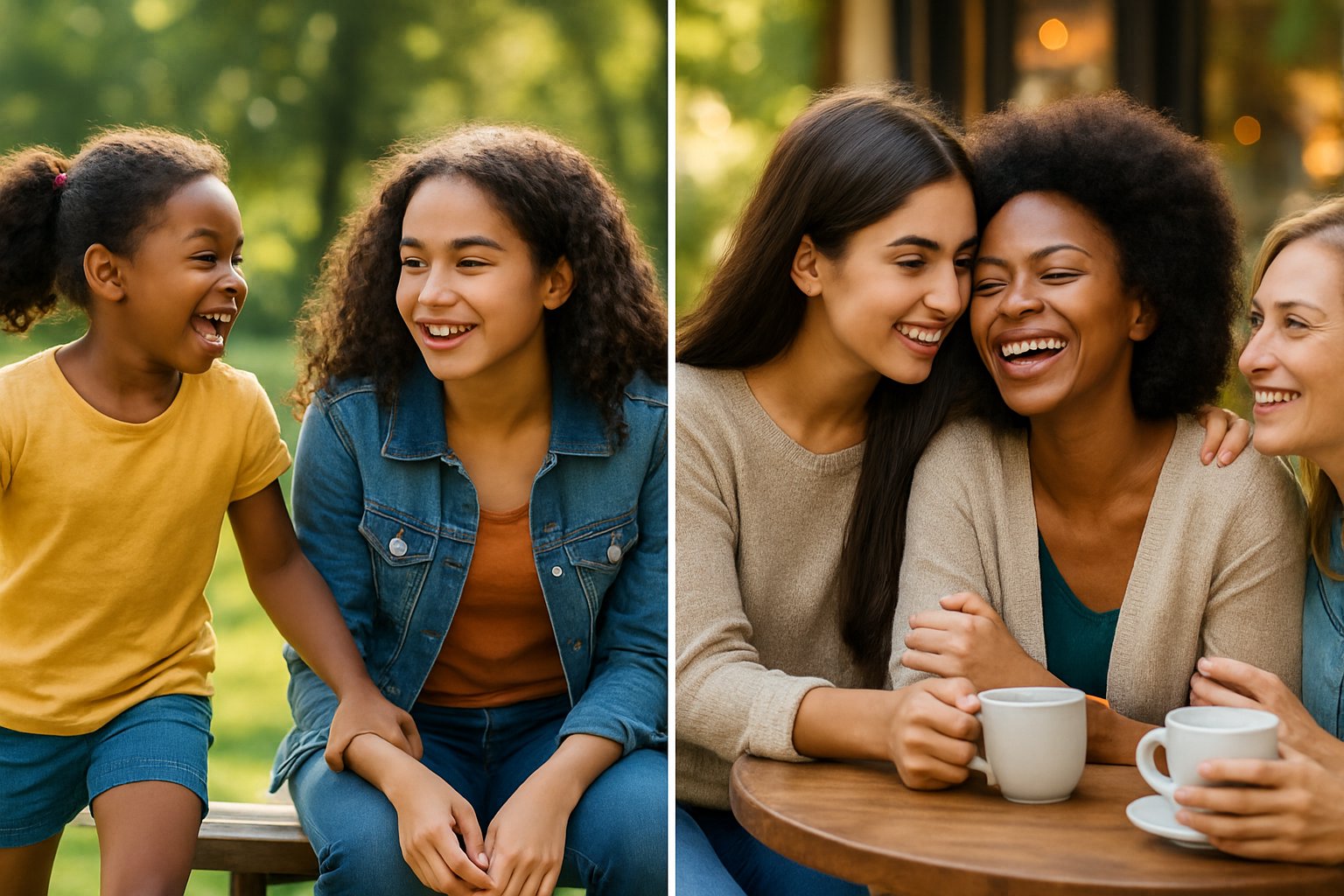
Women in their thirties, forties, and into their fifties tend to describe the same experience of midlife friendship: it's harder than it should be, and the difficulty is almost entirely logistical. The desire for close friendship is still there — often more acute than it was in younger years, when friends were everywhere and connection felt effortless. What's changed is that the time and energy available for sustaining it have been compressed by competing demands that are very real and very heavy. Careers at their most intense. Children at ages that require constant presence. Aging parents beginning to need care. Partners who also need tending. A to-do list that expands faster than it can be addressed.
In this environment, friendships are often the first thing sacrificed, because they're the one relationship that doesn't have a built-in consequence for neglect. The children still need dinner whether or not you called your best friend this week. The work deadline exists whether or not you made the monthly dinner. And so friendship gets deferred, with genuine good intentions to catch up soon, until "soon" becomes six months and then a year and the gap starts to feel too large to bridge without an explanation neither of you wants to have to give.
The women who maintain close friendships through midlife do something that feels slightly counterintuitive: they treat the friendship more like a scheduled commitment and less like a spontaneous pleasure. They put the coffee date on the calendar rather than leaving it as a vague plan. They respond to the text when they see it rather than waiting until they have more time to say something substantive. They show up to the hard moments — the diagnosis, the difficult marriage year, the professional failure — even when showing up is logistically complicated, because they know that those are the moments the friendship will be judged by in retrospect.
Midlife is also the period when the friendship network tends to be consciously curated in a way it hasn't been before. Women at this stage are clear-eyed about which relationships genuinely replenish them and which ones drain more than they give. The large, diffuse social circle of early adulthood narrows, deliberately, into a smaller group of people who actually know each other well. This narrowing can feel like loss if it's framed as loss. It can also feel like clarity — like finally having the friendships that are actually worth having, tended with the care they deserve.
A guided self-reflection journal for women can be a meaningful gift during this season — something that creates space for the kind of thinking that midlife tends to demand, away from the noise of everything competing for attention.
Not every friendship that fades is a friendship worth recovering. Some drift is natural, healthy, and appropriate — evidence that two people have grown in genuinely different directions and that the relationship served its purpose for the season it occupied. Holding every friendship to the standard of permanence creates a kind of attachment that isn't good for either person. Some goodbyes are clean, even when they're sad.
But some friendships fade not because they've been outgrown but because life got busy and neither person made the effort to keep the thread intact. These are worth examining more honestly. A friendship that mattered enormously at one point in your life, that you still think about with warmth and something that resembles regret — that friendship is often not gone. It's just been waiting. And a message sent on an ordinary afternoon, without ceremony, can restart it with surprising ease. The gap that felt unbridgeable often isn't, once someone chooses to bridge it.
Conflict is a more complicated source of friendship loss. Women are often socialized to avoid direct confrontation in close relationships — to absorb friction, smooth over tension, prioritize the other person's comfort over their own honest feelings. This impulse is understandable and sometimes appropriate. But when it becomes a consistent pattern, it produces friendships where unspoken resentments accumulate until the weight of them becomes unbearable. The friendship ends not through any single rupture but through a slow suffocation of things unsaid.
The friendships that survive conflict are almost always the ones where someone chose to say the difficult thing directly, from a place of genuine care for the relationship. "I felt hurt by what happened" is a harder sentence to say than "I'm fine," but it's the one that makes repair possible. Women who learn to address friction honestly — not confrontationally, but honestly — tend to find that the friendships that survive those conversations become more resilient than they were before. The discomfort of the conversation is the price of a deeper trust.
Toxic dynamics deserve separate mention, because they're genuinely different from ordinary conflict or natural drift. A friendship that consistently leaves you feeling worse about yourself — more anxious, less capable, diminished in ways you can't quite name — is not a friendship that more patience will improve. Recognizing this and choosing to step back is not a failure of loyalty. It's an act of self-respect. And the space it creates, for friendships that are genuinely reciprocal, tends to be well worth the difficulty of the transition.
Something remarkable happens to female friendships in later life, something that runs counter to the narrative of decline that tends to dominate stories about aging. For many women, the friendships of their sixties, seventies, and beyond become the most nourishing, most clearly seen, most honestly reciprocal relationships they've ever had. The competing pressures of earlier decades have eased. The need to perform or impress has diminished. What's left is the pleasure of being genuinely known by someone who has known you across time, and the particular comfort of sharing a stage of life with people who understand exactly what it involves.
The health research on friendship in later life is striking. Women with active close friendships in their later years show lower rates of cognitive decline, stronger immune function, and longer lifespans than socially isolated women. The effect size is not trivial — studies suggest that social isolation in older adults carries health risks comparable to smoking. The friendships that feel like personal pleasure are, simultaneously, doing biological work. They're not a luxury. They're maintenance.
Later life also brings genuine losses. Friends die, or become ill, or move to be near family in other places. The social circle that felt so stable can thin more quickly than expected, and the grief of losing a long friendship to death is its own distinct thing — the loss not just of a person but of a witness, someone who remembered you at stages of life that no one else living can recall. These losses are real and they're hard. They make the friendships that remain more precious, and they argue strongly for not deferring the investment in friendship that might be tempting to defer when life is full.
Older women who navigate the social landscape of later life well tend to do a few things consistently: they stay in active contact with the friendships they already have, they remain genuinely open to new ones, and they participate in contexts — classes, volunteer work, community groups, shared activities — where new connections form naturally. The capacity for friendship doesn't diminish with age. What it requires, more than at any earlier stage, is active cultivation rather than passive maintenance.
After all the stages and transitions and changes in form, what actually determines whether a close female friendship lasts? What's the ingredient that separates the friendships that survive decades from the ones that quietly disappear?
The research and the lived experience of women who've maintained long friendships point consistently toward the same answers. Consistency is the first one — not grand gestures but the reliable accumulation of small ones. Showing up when you said you would. Remembering what matters to her. Following up on the things she's told you. These small habits, maintained over time, build something that grand occasional gestures cannot.
Genuine curiosity is the second. A friendship stays alive when both people remain genuinely interested in who the other person is becoming — not just who she was when the friendship formed, but who she is now, in the current season, with its current preoccupations and evolving sense of self. The friendships that stagnate are often the ones where both people have quietly stopped updating their picture of each other, relating instead to a version of the friend that's years or decades out of date.
The willingness to be honest is the third. Not brutally honest, not gratuitously so — but genuinely honest. Willing to say the harder thing when it needs saying. Willing to be vulnerable enough to say when something has hurt, rather than accumulating the hurt in silence. Willing to ask for what you need rather than performing sufficiency. The friendships where this kind of honesty is possible are the ones that actually know each other, and being known — being truly, specifically, non-performatively known by another person — is what makes a friendship feel irreplaceable.
And finally, the willingness to let the friendship change. The friendships that last don't last by remaining the same — they last by being willing to become whatever is needed at each new stage. The friendship that was daily contact becomes monthly calls. The friendship that was intense and confessional becomes warmer and more spacious. The friendship that felt like survival during a hard year becomes something calmer and more joyful when the hard year is over. Holding too tightly to what the friendship used to be is often what kills it. Staying curious about what it might become is often what saves it.
There are moments in any long friendship when you want to mark it — not just feel it, but give it a form that both of you can hold. The anniversary of a hard year survived together. The milestone she finally reached after years of working toward it. The ordinary Tuesday when something reminded you of her and you wanted her to know she's carried with you, without needing a reason.
The most lasting gifts are the ones that couldn't have been chosen for anyone else. Not beautiful in general, but beautiful for her — her name, a date that belongs to your history, a detail that proves attention has been paid. When she receives something like that, she's not just receiving an object. She's receiving evidence of a very specific kind of love: the kind that has been watching, and remembering, and chose to say so in something she can keep.
A piece of jewelry becomes something she reaches for on the days when she wants to feel the weight of the friendship she carries. She doesn't always think of you explicitly when she puts it on — that's how it becomes part of her daily life rather than just an occasion object. But it's there. And occasionally, when something happens and she wants to feel connected to someone who has known her for a long time, she touches it, and the knowledge that you chose it for her, specifically, is still there in the metal.
For the friend whose name deserves to be worn — whose place in your life is specific enough to deserve something made for her alone — our dangle name pendant collection was made for exactly this kind of friendship.
Understanding how female friendships evolve across a lifetime is useful only if it changes what you actually do. And what most of that understanding points toward is this: the friendships worth having require active investment, at every stage, and the investment doesn't have to be large to be effective. It has to be consistent.
In practical terms, this means treating friendship maintenance as a genuine priority rather than a pleasant extra. It means putting the dinner on the calendar instead of leaving it as a floating intention. It means sending the message when she crosses your mind rather than waiting until you have more time to say something worthy of it. It means showing up to the hard moments even when showing up is logistically difficult, because showing up to the hard moments is what the friendship will be remembered for.
It also means being honest with yourself about which friendships genuinely nourish you and which ones you're maintaining out of habit or obligation. The time and emotional energy you have for friendship is not unlimited. Investing it deliberately — in the people who actually see you, who you actually want to see, whose company makes you more yourself rather than less — is not selfish. It's how the best friendships survive long enough to become the ones that carry you.
Long-distance friendships deserve special mention here, because they require the most deliberate investment of any kind. When proximity no longer does the work of keeping you connected, everything depends on intention. The regularly scheduled call. The care package sent when something reminded you of her. The visit planned far enough in advance that both of you actually protect the date. A long-distance friendship gift box — something thoughtful sent without a specific occasion — tells her that the distance has not changed the fact that she's thought about, in the specific and particular way that characterizes a real friendship.
And then there's the question of new friendships, which never stops being relevant regardless of age. The capacity to form new close friendships doesn't diminish — but the conditions that allowed friendships to form easily in youth (proximity, shared context, abundant unstructured time) do diminish, and their absence requires more intentional replacement. Saying yes to things you might normally decline. Staying in the conversation long enough to get past the surface. Following up after the first connection. These small moves are the infrastructure of new friendship in adult life, and they're worth making, because the woman you meet at forty can become someone who knows you just as well as anyone who knew you at fifteen.
For navigating all of this — the transitions, the conflicts, the long-distance gaps, the difficult conversations — a nonfiction book about female friendship can offer both validation and practical insight. The best ones feel like being understood before you've finished explaining what you were trying to say.
Female friendships operate on a level of emotional intimacy and mutual disclosure that most other relationships don't require and don't develop in the same way. Women in close friendships share things with each other — fears, insecurities, the private inner life — that they often don't share with partners or family members. This depth of self-disclosure, combined with the particular quality of attention women bring to each other's emotional states, produces a kind of being-known that feels distinct. The relationship also exists entirely by choice, with no legal or biological obligation, which means its survival is always evidence of genuine mutual investment.
Drift from competing demands, rather than conflict or falling out, accounts for most friendship losses in adulthood. Life gets full, and friendships — unlike children or jobs or partners — don't generate immediate consequences when they're neglected. So they're often the first thing deferred, with genuine intentions to catch up soon, until soon becomes a year and the gap starts to feel too large to bridge without an explanation. The solution is treating friendship maintenance as a scheduled commitment rather than something that will sustain itself on good intentions. The friendships that survive are the ones where someone kept choosing them.
It's not only normal — it's one of the most consistent patterns in the research on adult friendship. Women in their thirties and beyond tend to narrow their social circles deliberately, moving from large diffuse networks toward smaller groups of people they actually know well. This shift from quantity to quality reflects a clearer sense of what genuine friendship feels like and less tolerance for relationships that are primarily performative or obligatory. Most women who've made this shift describe it as clarifying rather than isolating — like finally having the friendships worth having.
Major transitions are where friendships are tested, and the ones that survive tend to do so because both people made explicit choices to preserve them through the change. In practical terms: scheduling regular contact instead of leaving it as a floating intention, being honest about the transition rather than performing as though nothing has changed, and showing up for each other's milestones even when it requires effort. Transitions that create distance — geographic or emotional — don't have to end friendships, but they do require both people to acknowledge what the friendship needs now, rather than assuming it will sustain itself on past momentum.
The most effective first move is almost always the simplest: reach out without waiting for the other person to go first, and do it without requiring the conversation to accomplish more than reestablishing contact. A message that says "I've been thinking about you" — without attached explanations or implicit demands — creates an opening that the other person can meet at whatever pace feels right for them. For more significant conflict, being willing to name what happened honestly, from a place of genuine care for the friendship rather than a desire to win the argument, gives both people something to work with. Most friendship rifts are more repairable than they feel from inside them.
Specificity is everything. The most meaningful friendship gifts are the ones that prove someone has been paying attention — her name, a date that belongs to your shared history, something that references a detail she mentioned in passing and didn't expect anyone to retain. The object matters less than what it communicates: that she has been thought about, specifically and particularly, and that thought was given a form she can keep. A piece of jewelry she can wear daily becomes part of how she moves through the world, carrying the knowledge that someone chose it for her, and that choosing was an act of genuine attention.
The friendships that have shaped you most — the ones that knew you at your most uncertain and watched you become more sure of yourself, the ones that held steady through the seasons when everything else was moving — those friendships don't happen by accident. They happen because two people kept choosing each other, quietly, across years, in ways that often went unremarked. That choosing is worth noticing. And the women you're still choosing, and who are still choosing you — they probably already know. But they'd likely still like to hear it.