
Your Cart is Empty
There's a particular quality to the moment just before someone opens a gift at a milestone birthday — a held breath in the room, a quality of attention that's different from ordinary occasions. The person unwrapping it is not simply receiving an object. They're receiving a message from the people around them about whether this moment, and the life that led to it, has been witnessed. And at a milestone birthday — a 30th, a 50th, a 60th — that question of being witnessed matters more than it does on any other day of the year.
Milestone birthdays are genuinely different from regular annual celebrations, and not just sentimentally. Research in psychology and behavioral economics has documented the particular mental state they produce — a sharpened introspection, a heightened sensitivity to the gap between who you've been and who you're becoming, a natural impulse to evaluate and reorient. The brain treats these round-number ages as psychological thresholds, mental accounting periods where one chapter closes and another begins. That's not folklore. It's the documented "fresh start effect," and it makes the weeks surrounding milestone birthdays among the most emotionally charged of a person's year.
This means the gift you give during one of these moments lands differently than a gift given any other time. It's received by someone who is, at some level, in the middle of a reckoning — looking backward at what they've done and forward at what they still want to do. A gift that meets them in that reckoning, that acknowledges specifically who they are and what this particular crossing means, becomes something more than a birthday present. It becomes part of how they understand their own story.
For the milestone that deserves something she can wear into the next chapter of her life, our dangle name pendant collection offers pieces made to carry that meaning — personal, lasting, unmistakably hers.
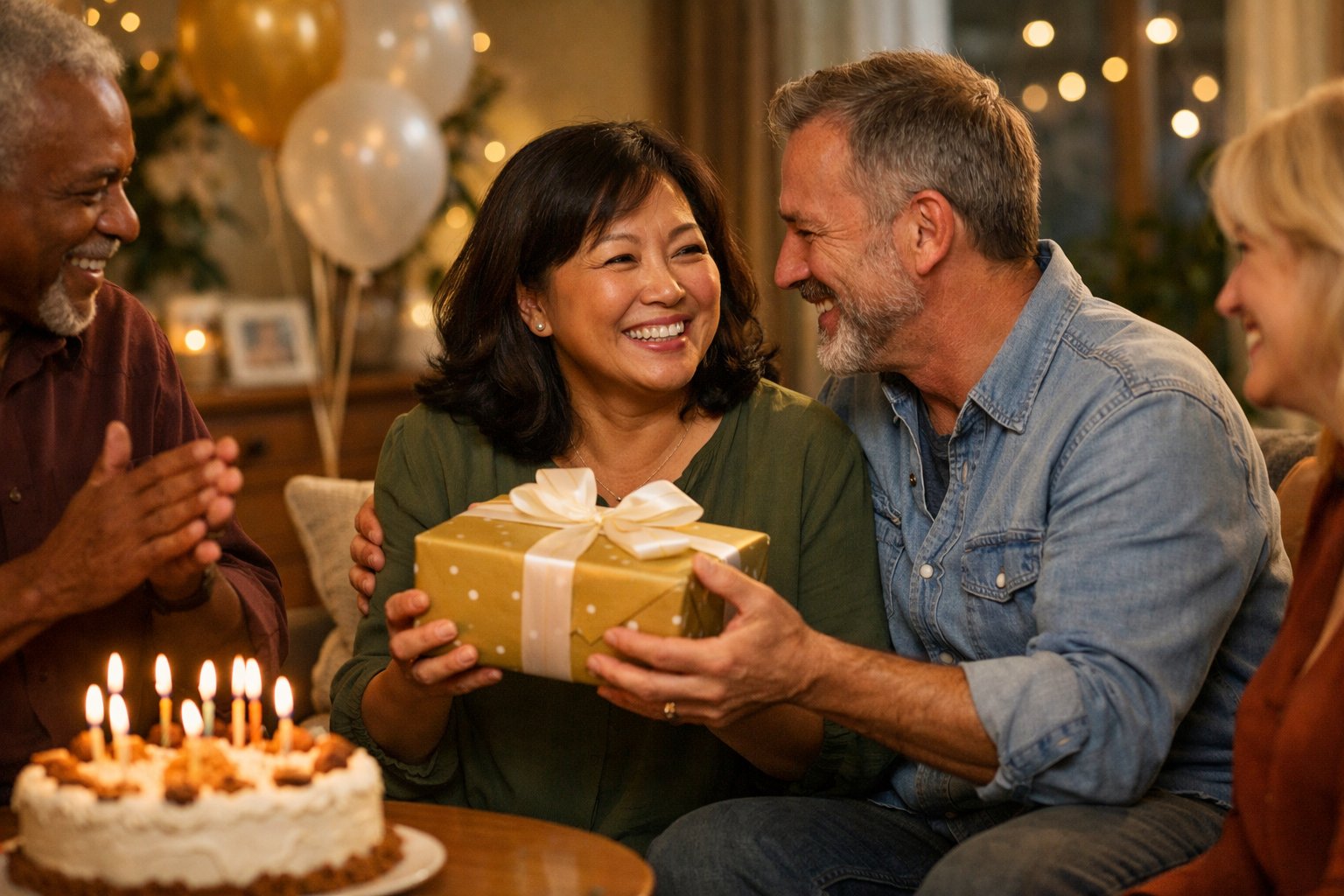
The psychological distinctiveness of milestone birthdays has been studied in surprising depth, and the findings are more concrete than the concept might suggest. Researchers Hengchen Dai, Katherine Milkman, and Jason Riis identified and documented the "fresh start effect" — the tendency for people to pursue aspirational goals at the start of a new temporal period. Milestone birthdays are among the most potent fresh start triggers available, more powerful than New Year's or the start of a new week, because they involve not just a new time period but a new identity category.
The researchers also identified a specific population they called "9-enders" — people in the year before a milestone age (29, 39, 49, 59) — who show particularly intense patterns of introspection and goal-directed behavior. These are the people running their first marathon at 49, finally starting therapy at 39, making the major life change at 59 they'd been considering for a decade. The approaching zero activates something. The mind begins its accounting.
This mental accounting involves a specific psychological process: the separation of "old self" from "new self." People treat the milestone birthday as a permission structure — the person entering their fifties has license to be different from the person who was in their forties. This isn't delusional or wishful thinking. It's a functional mechanism for behavior change, and it's one reason why the goals and intentions people form at milestone birthdays tend to be more durable than the ones they form on ordinary days.
For gift-givers, what this means is that the psychological context in which their gift is received at a milestone birthday is fundamentally different from that of a regular occasion. The recipient is not simply a year older. They are, in a meaningful cognitive sense, in transition — between selves, between chapters, between who they've been and who they're choosing to become. A gift that honors this transition carries with it a quality of recognition that no ordinary gift can carry. And a gift that misses it — generic, impersonal, chosen to fulfill the obligation of the occasion rather than to honor the person — registers that miss more acutely than it would at any other time.
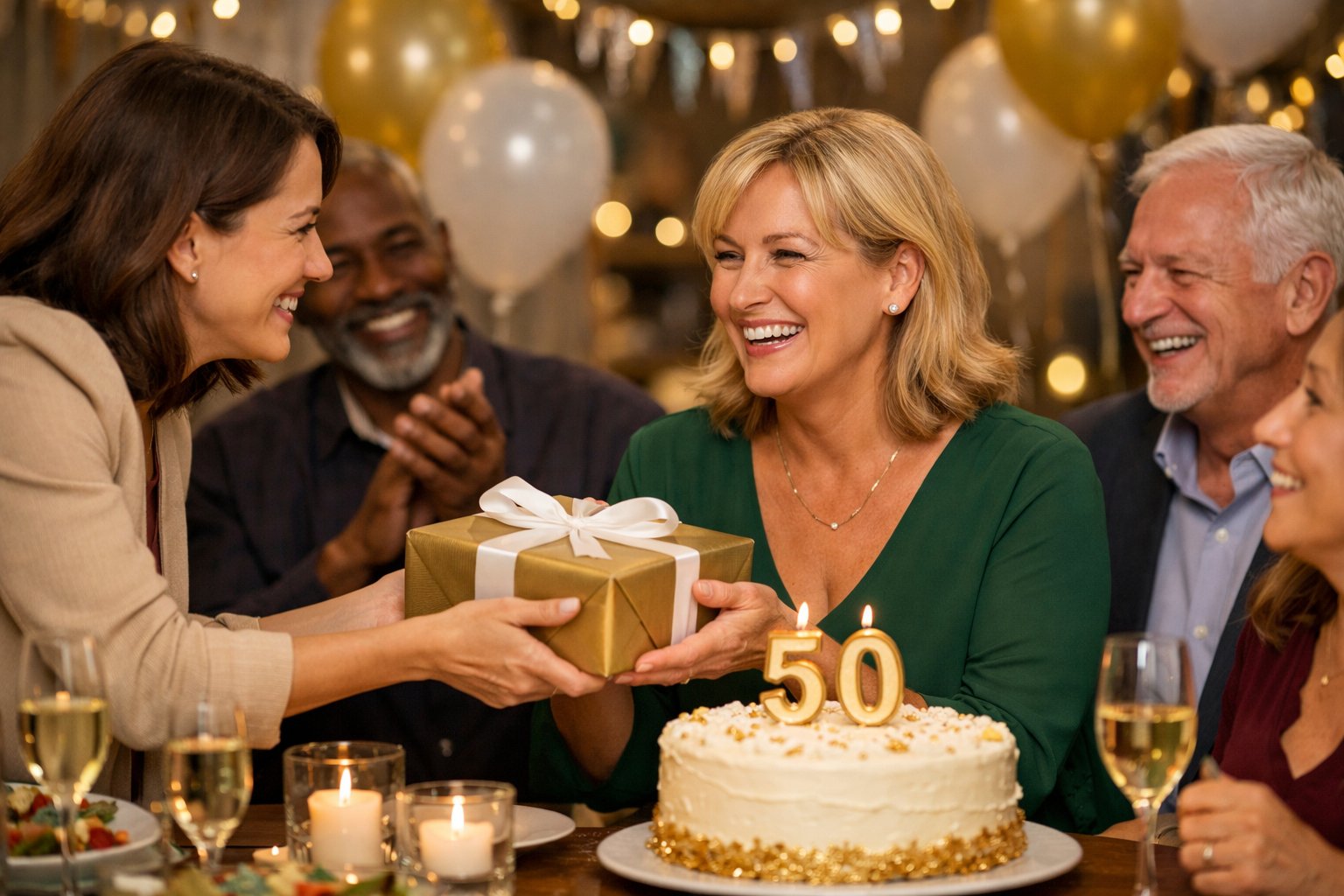
The research on gift-giving and emotional response is consistent across many studies: personalized gifts produce stronger emotional reactions than equivalently priced generic ones, and the gap in emotional impact is larger than most people expect. But the mechanism behind this is worth understanding, because it explains why personalization matters so much more at milestone birthdays than at other times.
When someone receives a personalized gift — something that has their name on it, or references a specific date, or captures a detail about them that only someone paying close attention would know — they're receiving two things simultaneously: the object itself and the evidence that they were specifically thought about. The object is visible; the thought is what lands. What the recipient processes is not primarily "this is a beautiful necklace" but "someone knew me well enough to choose this, and chose to tell me so in a form I can keep."
At a milestone birthday, this effect is amplified by the particular emotional state the occasion creates. The person is already engaged in deep self-reflection — thinking about who they've been, what they've built, whether they've lived according to their own values. Into that reflective state, a gift that says "I see you specifically, I know what this crossing means to you, and I chose something that could only be for you" lands with extraordinary force. It validates the identity formation that's actively underway. It becomes evidence, physical and permanent, that their journey has been witnessed by someone who cared to pay attention.
Contrast this with the gift that could have been chosen for anyone — beautiful in general, appropriate for the occasion, but carrying no signal about this specific person. At a regular birthday, that gift lands reasonably well. At a milestone birthday, it registers its own kind of absence. The person in the middle of their deepest annual reckoning notices, at some level, that the gift has not met them where they are. This isn't ingratitude. It's the sensitivity that the milestone state naturally creates.
A personalized milestone birthday journal — engraved with her name and the year, or including a prompt that speaks to where she is in her life — demonstrates the specific kind of attention that milestone moments call for. She can fill it in the months ahead with the reflections the milestone has already begun to prompt.
When something emotionally significant happens, the brain doesn't just record the event — it encodes it differently than ordinary experience. Researchers call the most vivid of these memories "flashbulb memories": extraordinarily detailed recollections that feel frozen in time, complete with sensory information about the setting, the people present, what was said, and how it felt. Milestone birthday celebrations are among the most reliable producers of flashbulb memories in adult life, precisely because of the emotional charge the occasion carries.
The gift associated with a flashbulb memory doesn't exist in isolation in the brain. It gets encoded alongside everything else: the room, the faces, the feeling of being seen and celebrated. Years later, encountering the object can trigger recall of the entire experience — not as a vague sense of the occasion but as a re-experiencing of the emotional content of that moment. This is why certain gifts are kept for decades, displayed where they'll be regularly encountered, worn on specific occasions when their meaning needs to be accessed. They're not decorative objects. They're memory anchors.
The encoding of these memories is significantly strengthened by two factors: emotional intensity and multi-sensory engagement. Emotional intensity is provided by the milestone context itself — the birthday already carries heightened emotional charge. Multi-sensory engagement is where physical gifts, and particularly wearable ones, have an advantage over experiences or digital gifts. Something she can hold, wear against her skin, and see every morning on her dresser engages memory pathways in a way that an experience certificate or a streaming subscription simply cannot. The physical presence of the object keeps the memory active over time, rather than allowing it to fade as experience memories inevitably do.
This neurological reality is part of why milestone birthday jewelry has been given and kept across cultures for centuries. A piece worn at the threshold of a new decade carries the emotional content of that threshold with it indefinitely. Every time it's worn, some fraction of what that milestone meant is present again.
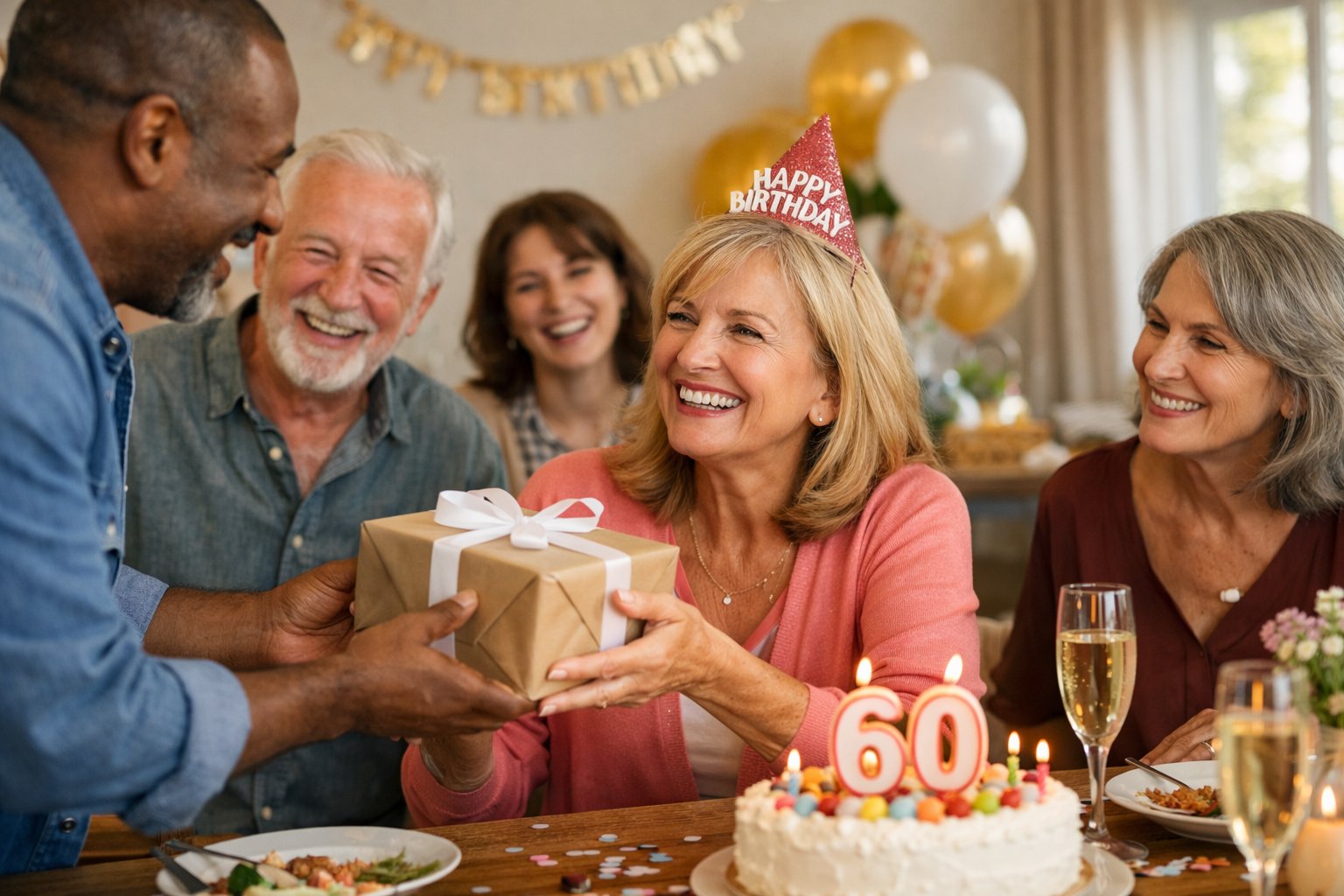
Beyond their function as memory anchors, milestone birthday gifts serve an active role in personal development — one that's less often discussed but clearly documented in the research on achievement recognition and behavioral psychology. Receiving a gift that acknowledges your journey at a milestone moment does something specific to your sense of what that journey has been worth, and what comes next.
The brain's response to achievement recognition involves the release of dopamine — the same neurotransmitter associated with reward and motivation. When external recognition arrives at a moment of internal evaluation, the two reinforce each other in a way that neither produces alone. The milestone birthday is already prompting someone to evaluate their life's progress. A gift that validates specific achievements within that evaluation doesn't just feel good — it creates neurological reinforcement for the qualities and choices being acknowledged. It literally strengthens the neural pathways associated with those achievements and makes the behaviors that produced them more likely to continue.
There's also a forward-looking dimension. Gifts given at milestone birthdays often function as what behavioral economists call "commitment devices" — objects that maintain psychological investment in an intention declared at the time of receiving them. A piece of jewelry given at a 40th birthday with the explicit message "you've earned this, and what comes next is yours to write" becomes a physical anchor to the intention formed in that moment. When she puts it on months later, it recalls not just the occasion but the version of herself she was choosing to become. The gift extends the fresh-start effect forward in time, past the birthday itself.
This is one reason why the most meaningful milestone gifts tend to be chosen with clear attention to both who the recipient has been and who she's becoming. A gift that looks only backward — commemorating past achievements without acknowledging the future — is less powerful than one that holds both simultaneously. The best ones say: I've been watching your journey, and I believe in where it's going.
There's a phrase that comes up repeatedly when women describe the gifts that mattered most to them at milestone birthdays. In various forms, it amounts to the same thing: "She really saw me." Not "she gave me something expensive" or "she surprised me with something I didn't expect," but the quieter, more fundamental quality of having been genuinely perceived.
This perception — being seen, specifically, in one's particular combination of qualities, history, and current chapter — is what distinguishes a milestone gift that becomes a keepsake from one that becomes a drawer item. It's not about the quality of the object. It's about whether the object carries evidence of genuine attention. A piece of jewelry with her name on it that was chosen because you know her name is different from one that was chosen because you know she's been building toward something specific, or because you remember what she said she wanted when she turned forty, or because the date engraved on it is the one that changed things for her. The same form, completely different emotional content.
For the person receiving it, the gift that carries this quality of attention is received into a particularly open state. Milestone birthdays, as we've seen, produce a heightened sensitivity to being seen and acknowledged. The person is already asking, at some level: has my life been witnessed? Does what I've done matter? Is who I'm becoming real to the people around me? A gift that answers yes — concretely, physically, in a form she can hold — provides a kind of relief that goes beyond what any casual gift can offer.
A keepsake box engraved with a meaningful date or phrase offers one way to hold this quality of attention — a place where she can keep the notes, the photographs, the small objects from the milestone year, with something on the outside that proves someone thought carefully about what this crossing meant for her specifically.
A piece from our love knot necklace collection makes a quiet but lasting declaration — that a bond has held through this crossing, and that the person wearing it was seen clearly at the moment she entered this new chapter.
It's worth naming something that tends to go unacknowledged in the cheerful public language around milestone birthdays: these occasions are often genuinely complicated. The introspection they produce is not uniformly pleasant. Turning 40 or 50 or 60 does not simply feel like triumph, however many people are assembled to celebrate. It also sometimes feels like the narrowing of possibilities, the evidence of time's passage, the confrontation with what has and hasn't happened yet. The fresh-start effect and the grief of an ending can exist simultaneously in the same person at the same party.
Research on birthday-related emotional experience finds that negative emotions are more prevalent around milestone birthdays than around regular ones — not instead of positive emotions, but alongside them. The person turning 50 who is genuinely celebrating is often also, at some level, reckoning with what fifty means: the particular quality of time that remains, the distance from certain possibilities, the adjustment of self-concept that comes with an age that has always, until now, seemed abstract. This is not pathology. It's an appropriate response to a significant temporal crossing.
For gift-givers, understanding this means that the most powerful milestone gifts are not necessarily the most celebratory ones. A gift that acknowledges both the achievement and the complexity — that says "I know this is significant, and I know it's complicated, and I see you in both of those things" — meets the recipient where they actually are rather than where the occasion's public script says they should be. That quality of honest witness is one of the rarest things anyone can offer, and when it arrives in a physical form that can be kept and returned to, it provides a particular kind of comfort that simple celebration cannot.
This is also why the words that accompany a milestone gift matter as much as the gift itself. A card that names what she's navigated, that acknowledges the weight of the crossing alongside the worth of what she's built, can transform even a simple gift into something she keeps for decades. The object and the words together create a more complete witness than either provides alone.
Given everything the research and lived experience of milestone birthdays reveals, it's possible to identify with some precision what separates a gift that gets kept for decades from one that gets appreciated and forgotten. The qualities that matter most have almost nothing to do with price and everything to do with attention and intention.
Specificity is the first. The gift that works at a milestone birthday is the one that could only have been chosen for this person, at this moment. It references something about her life that a generic gift cannot reference: her name, a significant date, a quality she's been cultivating, a threshold she's just crossed, a detail that only someone paying close attention across years of knowing her would notice. The specificity is the message. It communicates: I was thinking about you specifically, not about what to give a person turning fifty, but about what to give you at fifty.
Durability is the second. Physical objects that can be worn or displayed or returned to have an advantage over experiences or consumables at milestone moments, because they remain present over time and continue to carry the memory of when they were received. This doesn't mean expensive — it means made to last, made to be seen regularly, made to be touched. Something she'll still have on her dresser or around her neck in ten years, when the milestone it marked has become part of her history and its meaning has only deepened.
Acknowledgment of both the past and the future is the third. The most powerful milestone gifts hold both directions simultaneously — they honor what has been accomplished and signal belief in what's coming. A piece of jewelry engraved with the year she turned 50 carries the past in its inscription; the care with which it was chosen for her particular style and meaning carries the future in its intention. Together, they create the specific quality of being witnessed at a crossing: seen as someone who has journeyed here, and believed in for the journey ahead.
Each milestone birthday carries its own particular emotional flavor, and the gifts that resonate most deeply tend to be calibrated to the specific psychological territory that each decade represents.
The 18th and 21st birthdays mark the transition into adulthood — legal, psychological, and social. The person crossing this threshold is simultaneously excited by the freedom ahead and overwhelmed by its implications. Gifts that acknowledge her arriving at herself — something with her name, something that recognizes she is now entering her own life as her own person — resonate with the particular combination of pride and uncertainty this crossing involves. She is becoming something she has been moving toward for years. The gift that honors that becoming, rather than simply celebrating the date, will carry more meaning than any practical or generic alternative.
The 30th birthday is often the first milestone that produces genuine reckoning rather than pure celebration. The person turning 30 is frequently encountering, for the first time, the gap between how she imagined this moment and how it actually looks. She may have expected to feel more established, more certain, more arrived than she does. Gifts that acknowledge the journey honestly — that say "you have built something real, even if it doesn't look exactly as planned, and you are exactly where you need to be" — land with particular force. A personalized necklace marking the 30th birthday becomes an anchor to this moment of recalibration, a reminder that the crossing was real and was witnessed.
The 40th is often the decade of coming into one's own — the milestone where many women report feeling, for the first time, genuinely comfortable with who they are. The self-consciousness of earlier decades has begun to ease. There's a growing alignment between internal experience and external presentation. Gifts that honor this arrival — that recognize the work of becoming comfortable in one's own skin as an achievement worth marking — carry the specific weight this milestone deserves.
The 50th and 60th birthdays bring with them a different quality of reckoning: the relationship with time. The person crossing these thresholds is navigating a more explicit awareness of how much has passed and how much remains, and what she wants to do with what's ahead. Gifts that honor both the depth of what she's accumulated and the fullness of what's still possible — that treat this crossing as the beginning of something rather than only the closing of something — provide the particular encouragement these decades need. Something engraved with the year, worn close to the body, chosen for her specifically rather than for a generic woman of fifty: this is the kind of gift that she returns to over the years ahead and finds still carries weight.
Milestone birthdays are not only private psychological events. They're social ones — occasions when the people in someone's life gather, collectively, to acknowledge that a crossing has occurred. This social dimension is not incidental to what makes milestone celebrations meaningful. It's central to it.
The act of gathering to honor someone at a milestone tells her something she cannot tell herself: that her existence and her journey matter to the people around her. This external validation, provided at the specific moment when she is most intensely engaged in self-evaluation, has a different quality than the same words offered at any other time. It arrives into the reckoning, not around it.
Group gift-giving at milestone birthdays can amplify this effect when it's done with genuine coordination and intention — when the group chooses something that reflects collective knowledge of who she is and what this crossing means for her. It can also diminish it when the coordination produces something generic, chosen for convenience rather than meaning, that communicates collective effort without individual attention. The group size is less important than whether the result carries the quality of witness.
The words spoken at milestone celebrations also carry unusual weight. The toast that names something specific about her journey, the card that captures what the assembled people actually feel rather than what the occasion's script suggests they should feel, the letter left with the gift that will be read again in quiet — these accompany the physical gift into the long memory of the milestone and become inseparable from how it's carried forward.
Understanding the social dimension of milestone birthday gifts means treating the occasion not as a logistical event to be managed but as a rare opportunity to give someone a genuine experience of being seen by the people who matter most to her. The gift is the most portable, most durable carrier of that experience. What it says, in the months and years after the party is over and the flowers have wilted, is what she'll return to when she needs to remember that her life has been witnessed and her journey has been worthy of celebration.
For the milestone that calls for something lasting — something she can wear into every year that follows — our graduation and milestone gift collection offers pieces designed to carry the weight of the crossing forward, long after the occasion has passed.
Given everything above, it's worth addressing directly what tends not to work at milestone birthdays — not to catalog failures but because understanding the misses clarifies what matters.
Generic gifts — however beautiful or expensive — miss the specific psychological need of milestone moments. A luxury item that could have been chosen for any woman, at any birthday, tells the recipient that the occasion was acknowledged but she, specifically, was not thought about with care. At a milestone birthday, when she is more attuned than usual to whether she's been seen, this registers more clearly than it would otherwise.
Practical gifts, when chosen primarily for utility rather than meaning, face a similar problem. Useful things are welcome at many occasions. At a milestone birthday, they tend to feel thin — unable to carry the emotional weight the moment generates. This is not about impracticality being a virtue. It's about the fact that what the milestone state is asking to be met is emotional recognition, not practical assistance. A gift that provides one without the other has not fully met the moment.
Gifts that reflect the giver's taste rather than the recipient's miss in a different way. At milestone birthdays, when people are deeply engaged in questions of identity and authentic selfhood, receiving something that reflects who someone else thinks they should be rather than who they actually are produces a particular kind of deflation. It's a missed connection in the moment when connection matters most.
None of this is meant to paralyze. The antidote to all of these misses is the same simple thing: genuine attention. Paying attention, across the time you've known her, to who she actually is and what this particular milestone means in the particular arc of her particular life. That attention, translated into a physical form she can keep, is what every milestone birthday is waiting to receive.
Milestone birthdays — particularly those ending in zero — activate what researchers call the "fresh start effect": a psychological state in which the brain treats the upcoming age as the beginning of a new chapter rather than simply another year. This produces heightened introspection, more intense evaluation of life progress and goals, and a sharpened sensitivity to identity and meaning. The person turning 40 or 50 is not simply a year older. They are, in a documented cognitive sense, in transition — and that transition creates an emotional context that regular birthdays simply don't generate.
The difference is specificity. An appropriate gift acknowledges the occasion. A meaningful gift acknowledges the person — their specific journey, their particular crossing, what this milestone means in the context of their life. Personalized items, especially those that carry her name or a significant date or a detail that proves someone was paying close attention, communicate that she was thought about as an individual rather than as a recipient of a birthday obligation. This distinction lands with unusual force at milestone birthdays, when the person is already in a heightened state of asking whether she's been genuinely seen.
Physical objects that are worn regularly serve as memory anchors — they keep the emotional content of the occasion they were received at accessible over time. Every time she puts it on, some fraction of what that milestone meant is present again. Unlike experiences, which fade from memory, or consumables, which disappear, a piece of jewelry remains and continues to carry its meaning decades later. When it's personalized — engraved with her name, a meaningful year, or a date that belongs to her story — it carries that meaning with particular fidelity, because it was made to be irreplaceable.
The most effective approach is to choose a gift that holds both the celebration and the complexity simultaneously — one that honors the journey honestly rather than simply performing cheerfulness. A card that names what she's navigated, alongside a gift that acknowledges the weight of the crossing as well as the worth of what she's built, meets her where she actually is. Avoid gifts that presuppose she feels only celebratory about the milestone. The witness that matters most is the honest one — the person who sees her in the full complexity of the moment, not only in the version the occasion's public script requires.
Research consistently shows that the emotional impact of a gift correlates far more strongly with its perceived thoughtfulness — the sense that it was chosen with specific knowledge of the recipient — than with its monetary value. An expensive generic gift communicates less at a milestone birthday than an inexpensive one chosen with genuine attention to who she is and what this crossing means for her. The investment that matters is the investment of attention, not money. That said, a gift that will last — that is made well enough to remain present and meaningful for years — serves the milestone memory better than something disposable, regardless of cost.
Choosing for the occasion rather than for the person. Milestone birthdays generate a clear social expectation — gift something significant for a significant birthday — and many givers respond to that expectation by selecting something that meets the general standard rather than something that meets the specific person. The result is a gift that is entirely appropriate and almost entirely forgettable. At a milestone birthday, when the recipient is more attuned than usual to whether she's been genuinely seen, that miss registers clearly. The remedy is simply to think about her — specifically, in her current chapter, with her particular history — and let what you know guide what you choose.
Milestone birthdays arrive infrequently, and they don't ask much of the people around the person celebrating. They ask only what the best gifts always ask: that you were paying attention. That you saw who she is and what this crossing means, and chose to say so in a form she can keep. The occasion will pass. The party will end. The candles will be blown out. What stays is what was chosen with care, and what it communicates, for years afterward, about the quality of witness she was given at the threshold of her new chapter.