
Your Cart is Empty
Packing away newborn clothes brings up feelings that catch many parents off guard. The tiny onesies that once swallowed a fresh newborn now sit folded in a pile, each one holding a memory of those early weeks that already feel impossibly far away. Pairing vacuum-sealed storage bags from Amazon with a personalized keepsake necklace creates both a practical system for preserving outgrown clothes and an emotional anchor that honors this bittersweet milestone.
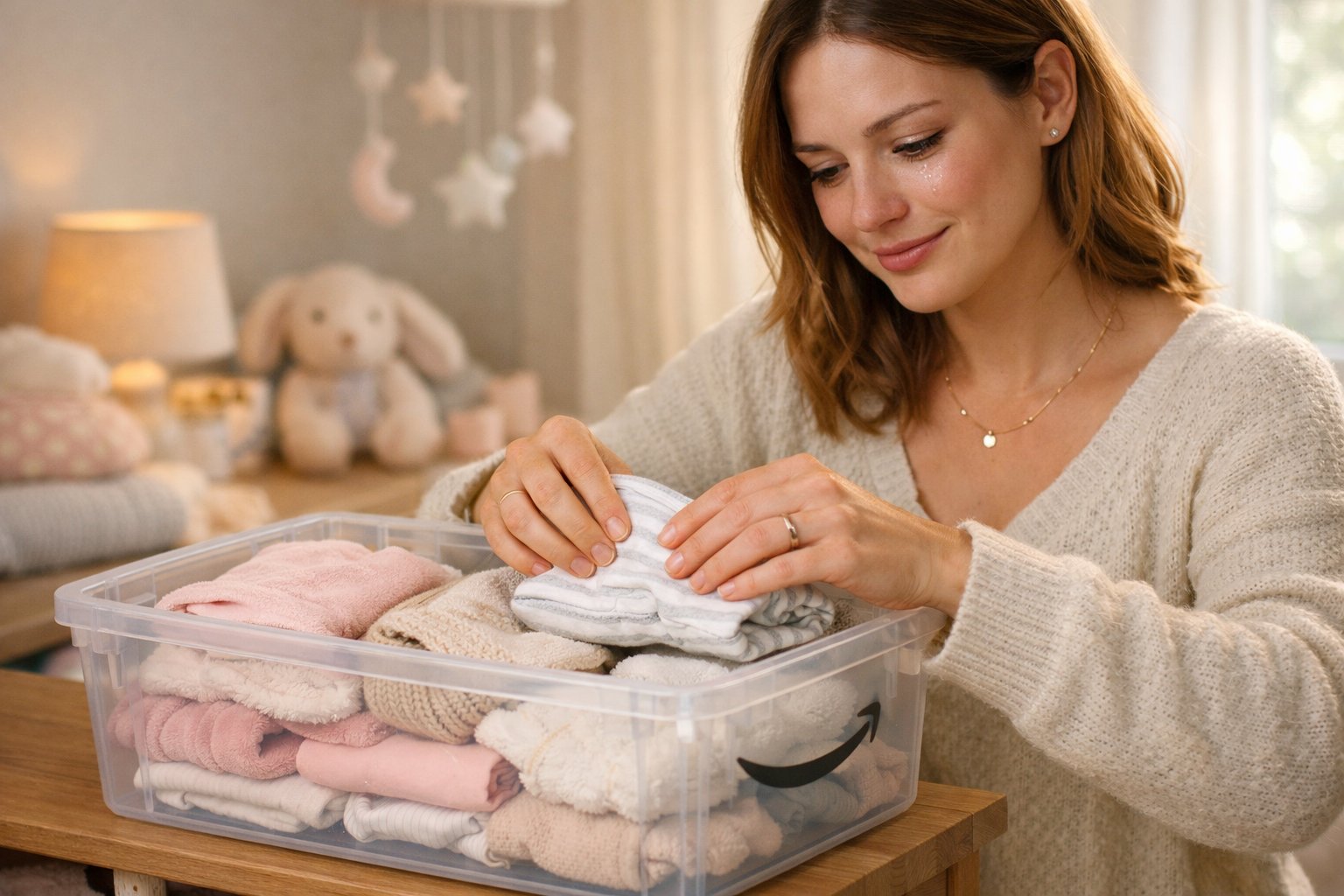
The transition feels harder than expected because it marks the end of something irreplaceable. She smooths out the wrinkles one last time, remembering the hospital outfit or the sleeper from those 3 a.m. feedings. Some mothers have cried while editing videos of this process, and others find themselves unsure whether to donate or keep everything.
A handmade initial necklace or custom birthstone piece gives her something to wear close while the clothes go into storage. Meanwhile, airtight plastic containers protect fabrics from moisture and insects, especially in basements or garages where conditions can damage cardboard boxes. Organizing by size and season makes it easier to find what she needs later, whether for another baby or simply to hold onto a few special items that tell the story of those fleeting newborn days.
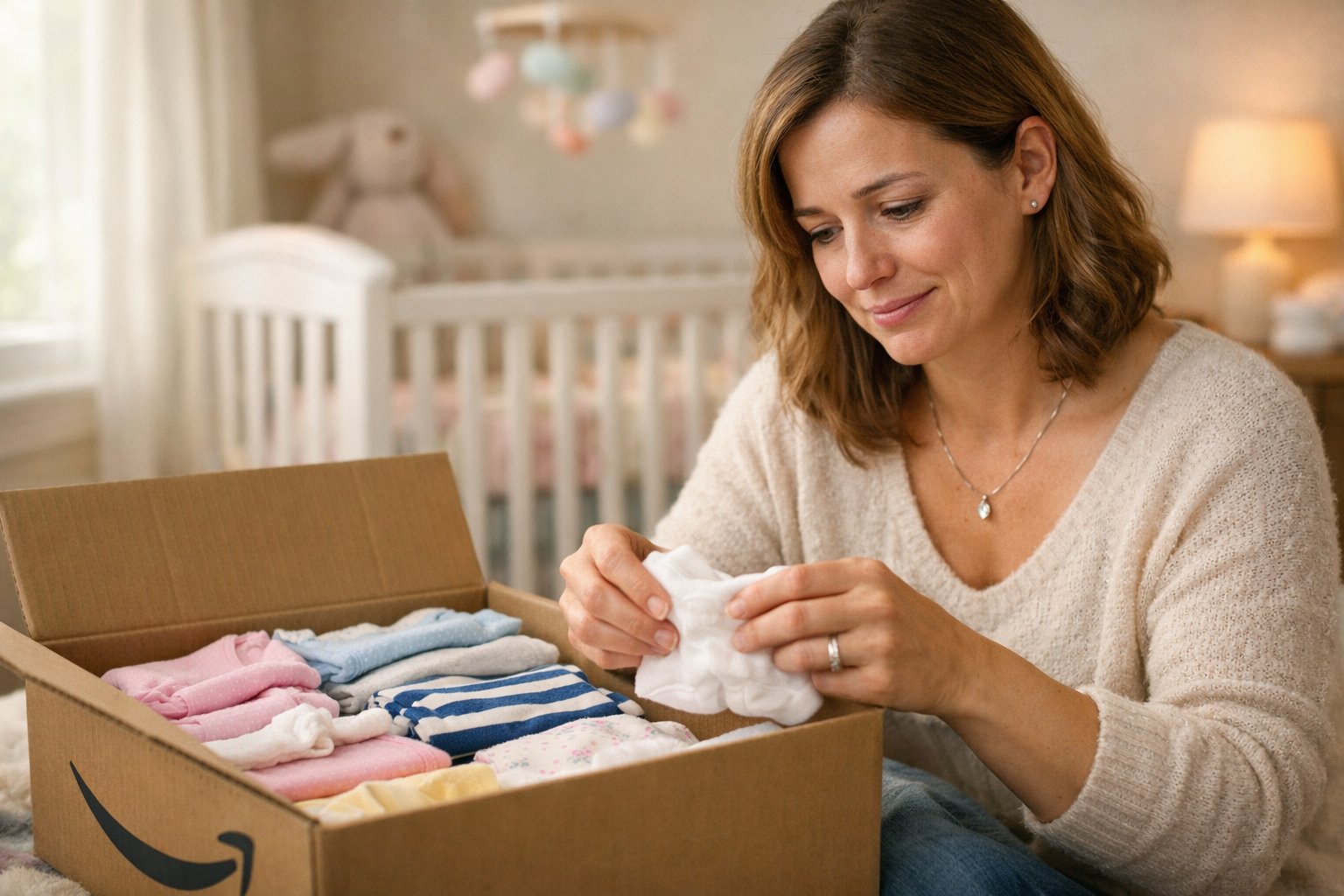
Parents often feel blindsided by the grief that surfaces when folding away tiny onesies and sleepers. The act becomes less about organization and more about acknowledging how quickly those early weeks disappeared.
The first time a mother realizes her baby no longer fits into newborn sizes, something shifts. Packing away baby clothes brings waves of joy mixed with heartache, as each item represents days that felt endless but somehow vanished.
One mother waited over a year to move her daughter's newborn clothes from the nursery closet to storage bins. She couldn't bring herself to do it sooner. The clothes served as proof of how fast everything was changing, and she wasn't ready to accept that reality.
Many parents cry while folding away tiny newborn clothes because it forces them to confront the temporariness of each stage. Some babies skip newborn sizes entirely and move straight into three-month clothing, which adds another layer of sadness to what parents thought they'd experience.
A customized baby name necklace offers a way to keep that connection to the newborn phase close while acknowledging growth. It's something that stays constant even as everything else changes.
Baby clothes carry more than fabric and buttons. They hold specific memories of first holidays, beach trips, and quiet midnight feeding sessions. Each piece triggers a distinct recollection.
The outfit from baby's first Easter, complete with a bonnet and knee-highs, reminds a parent of when their child looked like a doll next to the holiday basket. The monogrammed swimsuit brings back the image of tiny toes touching sand for the first time.
Then there are the pieces with tags still attached. The pajamas with too many buttons that seemed perfect in the store but proved impractical during 3 AM diaper changes. These unworn items carry their own type of regret and learning.
Common emotions parents experience:
For mothers unsure about having another baby, a personalized keepsake box helps preserve these feelings without keeping every single garment.
No one prepares new parents for how difficult this seemingly simple task becomes. The bittersweet reality of packing away dresser drawers full of outgrown clothing hits harder than expected.
Some mothers describe it as a tender inventory of a season that changed them fundamentally. The feelings aren't just about the clothes but about wondering if they cherished those foggy early days enough. Parents question whether they held their baby close enough or took enough photos.
These emotions deserve acknowledgment rather than dismissal. Crying while sorting through onesies doesn't mean something is wrong. It means the parent loved those days deeply, even the exhausting ones.
If she wants something that carries her baby's name forward through every stage, a custom birthstone necklace becomes a touchstone for processing these transitions. You can add to it with each child if more come along.
➡️ New Mom Personalized Necklace
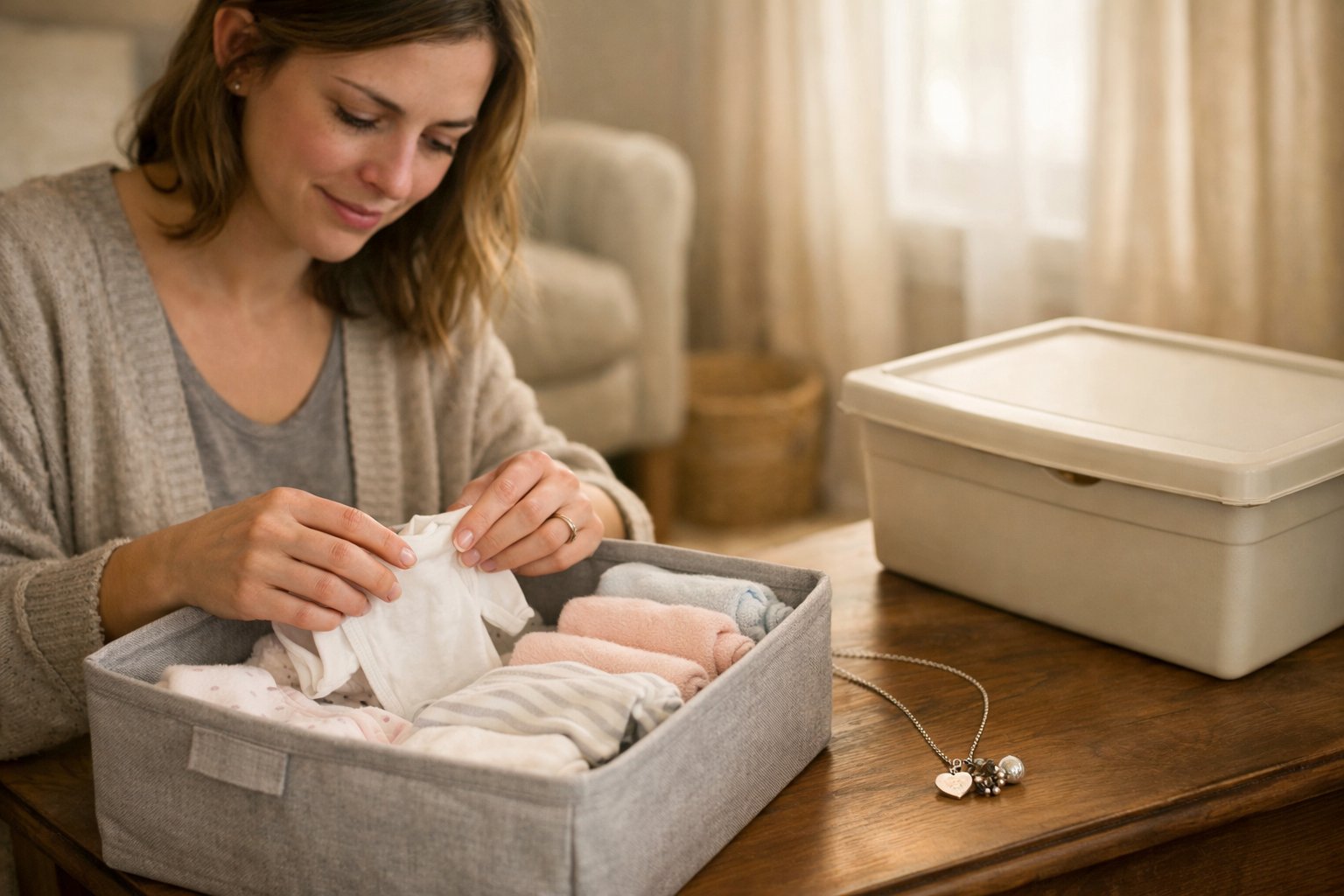
Small, intentional acts can transform painful milestones into moments of honor and release, giving structure to emotions that feel too big to hold alone.
She doesn't need an elaborate ceremony. She needs something simple that acknowledges what's ending.
Casper ter Kuile's approach to everyday rituals shows how ordinary moments become sacred through intention. When she folds each tiny onesie for the last time, she might say one thing she'll remember about this phase. The weight of her baby in that specific sleeper. The milk stains that never quite washed out.
Some mothers light a candle while they pack. Others play a specific song that captures the bittersweet ache of watching someone grow. The ritual doesn't erase the sadness. It gives it a container.
A personalized keepsake necklace with her child's name or birthstone becomes part of this transition. She wears something tangible when the clothes go into storage.
If she wants to mark this passage with words that feel personal to her story, a custom print that names this chapter helps her see this moment as complete rather than lost. She can design it with dates or a phrase that matters.
Physical gestures anchor grief when words feel impossible.
She might tuck a handwritten note into the storage bin, telling her baby what she loved about these months. Some mothers include a photo of their child wearing the outfit they're packing away. Others save one item separately in a custom shadow box where they can see it without unpacking everything.
The act of choosing which pieces to save creates its own meaning. She's not just storing fabric. She's deciding which memories get protected space.
Transforming everyday activities into soulful practices doesn't require following someone else's script. She knows what feels true. Maybe she takes one last photo of herself holding the smallest sleeper. Maybe she lets herself cry while folding without rushing to feel better.
A necklace can hold the weight of a moment she's not ready to let go of, turning an invisible feeling into something she can touch. The right piece becomes a quiet companion through transitions, especially when paired with careful storage of those tiny clothes.
She needs something that speaks to her without saying too much. Photo necklaces and personalized pendants work because they hold specific memories rather than generic symbols.
A locket can carry a tiny photo from those first days. An engraved bar necklace might hold a birth date or the exact time her baby arrived. Some mothers choose customizable name jewelry that spells out their child's name in delicate script.
The material matters too. Sterling silver ages gracefully and doesn't irritate sensitive skin. Gold-filled pieces last longer than plated options without the full cost of solid gold.
She should consider what feels right against her skin each day. A piece that's too delicate might make her anxious. Something too chunky might not layer well with her regular wardrobe.
Birthstone accents add color and meaning without overwhelming the design. She can choose her child's birthstone or combine multiple stones if she has more than one child.
Coordinate engravings work beautifully for mothers who want precision. The exact latitude and longitude of the hospital where she gave birth creates a meaningful custom piece only she fully understands.
Handwriting engravings capture something machine fonts cannot. If she has a card from the hospital or a journal entry from those early days, that actual handwriting can be etched onto dangle name pendants or flat disc charms.
Some mothers include tiny footprints or handprints. Others choose a single initial paired with a small charm that represents their child's personality as it emerges.
If she wants something unique that reflects her exact feelings about this moment, a customizable design like this personalized milestone necklace keeps it meaningful without making the moment overly sentimental. She can personalize it to mark this specific transition.
➡️ Design your custom milestone piece here
The necklace should acknowledge what's ending while celebrating what's beginning. A piece that marks newborn days pairs well with storage solutions that preserve those clothes for later reflection.
She might choose a design that includes the phrase "first chapter" or simply the year. Jewelry made for mothers often balances sentimentality with everyday wearability, which matters when she's still in the thick of parenting.
The necklace becomes most powerful when she puts it on the same day she seals those storage boxes. It creates a deliberate moment rather than just another task on her list. She's not just packing things away. She's choosing what to carry forward.
A bestselling design often works because other mothers have already tested its durability through sleepless nights and constant wear. She needs something that survives daily life, not just sits in a jewelry box.
The length matters for this pairing too. A longer chain sits away from grabbing baby hands. A shorter piece stays close to her heart but might need to be removed during nursing or close contact.
Fabric bins with clear windows keep clothes visible while protecting them from dust, and airtight containers work best for long-term keepsakes that need protection from moisture. Cotton bags offer a gentler option for delicate fabrics but don't seal out air the way plastic does.
Fabric storage boxes with lids make it easier to store baby clothes without losing track of what's inside. The clear window panels let her see which sizes or seasons are tucked away without opening every container. These collapsible bins stack neatly in closets or under cribs, saving space in rooms that already feel too small.
She might choose bins in soft gray or cream that blend into the nursery instead of bright plastic totes that look out of place. Some parents label each bin by size or season, so when the time comes to pull out 6-month clothes, there's no guessing. The lids keep dust off tiny onesies and sleepers while they wait.
For storing baby clothes long-term, sturdy handles matter because these bins get moved around more than expected. Baby clothes storage becomes simpler when containers fit inside existing furniture or slide under beds. She's not just packing things away—she's creating a system that makes the next phase feel manageable instead of overwhelming.
Airtight plastic containers protect special outfits from moisture, insects, and yellowing over time. They seal completely, which matters for clothes she wants to save for years or pass down someday. The downside is that some fabrics need to breathe, especially delicate cotton or hand-knit pieces that might develop mildew in completely sealed spaces.
Cotton storage bags feel softer and more breathable, making them better for natural fibers that shouldn't sit in plastic for months. They work well for short-term storage or clothes she plans to use again within a year. But they don't block dust or pests as effectively as hard-sided containers with rubber gaskets.
She might use both depending on what she's saving. The coming-home outfit or a special gift from grandma deserves an airtight keepsake box that keeps everything pristine. Everyday clothes that rotate between siblings do fine in breathable fabric bins that make frequent access easier.
Washing everything first prevents stains from setting in over time, while sorting by both size and emotional value makes retrieval easier later. Protecting delicate fabrics now means those special pieces survive for future babies or keepsakes.
Every item needs a final wash before storage, even pieces that look clean. Body oils and milk residue that seem invisible now will oxidize into yellow stains over months or years.
She should use a gentle, fragrance-free detergent and skip the fabric softener. Softeners can leave residues that attract insects and break down elastic over time.
Each piece needs to dry completely before packing. Even slight dampness invites mildew, which ruins fabric and leaves an impossible smell to remove. Hanging items in sunlight for a few hours works well for stubborn moisture.
Stain treatment matters most right now. She can apply a paste of oxygen bleach and water to any spots, let it sit for an hour, then wash again. Those tiny spit-up marks she barely notices today become permanent brown shadows if left untreated.
Some mothers add cedar sachets between layers to repel moths naturally. They protect wool and cotton without harsh chemicals that might irritate sensitive skin years from now.
Most parents organize baby clothes by size first, then add season labels for easier access. A box marked "0-3 months, summer" tells her exactly what she needs without opening five containers.
She might discover that sorting baby clothes by size alone doesn't account for her memories. The outfit from the first doctor's visit deserves separate treatment from everyday onesies.
Creating a small sentiment box solves this. She can store truly irreplaceable pieces in their own container with acid-free tissue paper. This might include the coming-home outfit, the dress from a special occasion, or the tiny socks she pulled off a hundred times that first week.
Season matters more than many parents expect. A baby born in February won't need those 3-6 month summer clothes until August, when different sizes might fit better anyway. Labeling prevents pulling out winter sweaters in July.
Size Categories to Consider:
Hand-knit items and delicate fabrics need extra protection from moths and moisture. Natural fibers like wool, silk, and cotton breathe better in fabric storage boxes than vacuum-sealed bags for long-term keeping.
She should wrap embellished pieces in acid-free tissue paper before storing. Buttons, sequins, and embroidery can catch on other garments and create pulls or tears. The tissue creates a soft barrier.
Vacuum-sealed bags save space but create problems for anything with texture. Knit blankets lose their shape, and embroidered details get crushed flat. These work better for basic cotton pieces that handle compression.
Clear plastic bins with tight-fitting lids keep moisture and insects out while letting her see contents at a glance. She can stack them in a closet or under a bed without losing track.
Some fabrics fade in direct light, even when stored. Keeping containers away from windows protects colors for future use. Silk and bright dyes are most vulnerable to light damage.
If she wants something that feels personal without making the moment overly sentimental, a handmade keepsake box keeps it meaningful yet light. You can personalize it here.
➡️ Custom Memory Box with Engraved Name
Creating a system for storing baby clothes transforms an overwhelming emotional task into something more manageable. Simple labeling and thoughtful grouping help parents preserve memories without feeling buried by the weight of each tiny outfit.
She writes the date and size on each label, giving structure to what feels like chaos. A simple note about where that outfit went—first trip to the park, the day she smiled at grandma—turns a storage box into something sacred without making it precious.
Some parents photograph each piece before packing it away. The image captures the memory while the physical item rests safely out of sight.
What to include on labels:
Clear plastic bins let her see what's inside without opening everything when emotions run high. She can stack them in the closet and know exactly which phase of babyhood sits in each container. A handmade memory journal placed on top documents what each box holds.
She separates the coming-home outfit from the everyday onesies because not everything carries the same weight. The pieces that witnessed first moments deserve their own space, while the practical clothes that survived twenty wash cycles can live together in a different container.
Organizing by emotional significance rather than just size makes more sense when baby clothes organization becomes about honoring a transition. She might keep hospital blankets separate from sleepers, or set aside anything worn during holidays.
Common grouping categories:
The process itself becomes part of letting go. Each decision about where something belongs helps her acknowledge what that tiny outfit represented. If she wants something that feels personal without making the moment overly sentimental, a custom keepsake keeps it meaningful yet light. You can personalize it here.
Some items might eventually become part of something she can wear herself—a meaningful gift to my daughter that carries forward instead of staying boxed away. The storage isn't permanent. It's just a gentle pause between what was and what comes next.
The physical space she chooses matters as much as the container itself. Temperature swings and hidden moisture can turn precious onesies yellow or musty, while the right spot keeps fabrics fresh for years.
She needs a cool, dry place away from extreme temperatures. Attics and basements work only if they have climate control, but most don't protect against heat or dampness. Under-bed storage, closets, or guest room wardrobes create safer environments.
Direct sunlight fades colors over time. She should keep bins away from windows or use opaque containers that block light completely.
Adding silica gel packets or cedar blocks inside each bin absorbs moisture naturally and keeps pests away without harsh chemicals. For baby clothes storage that spans years, these small additions make a real difference. Climate-controlled spaces between 60-75°F with low humidity preserve fabric best.
If she wants to mark this transition with something tangible, a personalized keepsake necklace with her baby's name or birth date creates a quiet way to carry this chapter forward. It acknowledges what she's feeling without needing words.
The most damaging mistake is storing unwashed clothes. Invisible milk stains, spit-up, and body oils turn into permanent yellow marks over months. Every piece needs washing with fragrance-free detergent and complete drying before packing.
Overstuffing containers causes wrinkles and stresses fabric fibers. She should leave space for air circulation and use airtight plastic bins rather than cardboard boxes that attract bugs and absorb moisture.
Scented products seem helpful but actually cause problems. Mothballs contain harsh chemicals, and fabric softeners leave residues that draw pests. She'll want to skip both entirely when storing baby clothes for another child or grandchildren someday.
Forgetting labels creates frustration later. Waterproof labels with size ranges and seasons save her from digging through every bin when she needs something specific.
Letting go of baby items requires both emotional awareness and physical organization. The goal is to honor the memories without letting them overtake living space or emotional energy.
She opens the closet and sees three bins of clothes her daughter wore for maybe six weeks total. Each outfit holds a specific memory—the onesie from the hospital, the sleeper from the first night home, the tiny socks that kept falling off. But keeping everything creates a home that feels stuck in the past rather than present for the child who needs her now.
Combining style with functionality means finding storage that doesn't hide away sentiment but integrates it thoughtfully. A clear storage bin with dividers lets her see what she's saved without unpacking everything each time she feels that pull toward the past.
Some mothers find that a custom name necklace with their child's name and birthstone keeps the connection close without requiring physical space. It becomes something she wears during the transitions—packing away clothes, moving to a bigger car seat, watching her baby become a toddler.
For the items that truly matter, a personalized memory blanket made from favorite onesies transforms clutter into something functional. It gives those tiny clothes a second life without taking up drawer space.
The practical answer is to keep five to ten pieces. The emotional answer is more complicated.
She might save the coming-home outfit, one special gift, and something that captures the baby's personality during that fleeting newborn phase. Everything else can serve another family. A customized photo book preserves the visual memory of every outfit without requiring a storage unit.
Thoughtful interior design means creating spaces that work for current needs, not past moments. The baby doesn't need her to keep everything. She needs her mother present and unencumbered by guilt over what gets donated.
If she wants something that feels personal without making the moment overly sentimental, a personalized keepsake ornament with her baby's first Christmas or birth details keeps it meaningful yet light. You can add the specific details that matter most.
➡️ Shop customizable keepsakes
This transition asks for more than organization or storage solutions. It calls for emotional presence, gentle acknowledgment, and the kind of support that reminds her she doesn't have to move through this alone.
The ache of packing away newborn clothes hits differently when she realizes how few people talk about it openly. She might feel silly for crying over tiny onesies, but the tears aren't really about the clothes. They're about time she can't hold onto and a phase that's already slipping away.
Reaching out to other mothers who've been there can shift everything. A text to a friend who's further along, a conversation with her own mother about what she felt during similar moments, or even reading honest accounts from other parents can help her feel less isolated in the grief.
Online communities offer spaces where mothers share these exact moments without judgment. She might find comfort in knowing others also sobbed while folding impossibly small sleepers or kept one outfit they couldn't bear to store away. These connections don't fix the sadness, but they make it feel more normal and less lonely.
When she shares what she's feeling, something shifts. The people around her, whether partners, friends, or family who want to help, can't support what they don't know about. Letting them in on this specific grief creates room for the kind of care that actually lands.
A friend might offer to sit with her while she sorts through the clothes, not rushing or minimizing, just being present. Her partner might suggest keeping one special piece in a shadow box instead of packed away. Her mother might share her own story of putting away baby things and feeling the same unexpected wave of loss.
This kind of meaningful support during the postpartum period extends far beyond the newborn days. Mothers need people who understand that transitions keep happening, each one carrying its own weight. Community doesn't erase the tenderness of these moments, but it can hold space for them.
She might push herself to finish quickly, to just get it done and move on. But rushing through doesn't honor what's actually happening. This is a moment worth pausing for, worth treating with the same gentleness she'd offer a friend going through something hard.
Self-kindness here might look like taking breaks when the emotions feel too big. It might mean keeping out one favorite outfit in a memory box that she can look at whenever she wants. It might mean acknowledging that feeling sad doesn't mean she's not grateful for where they are now.
A simple piece of personalized jewelry can serve as a quiet reminder during these tender transitions. If she wants something that holds the memory without making it heavy, a necklace engraved with her baby's name or birthdate keeps them close. It becomes something she can touch when she needs to feel connected to those earliest days. You can find custom options here.
She doesn't need to make this easier or faster. She just needs to let herself feel it.
The space between what was and what will be holds its own kind of weight. It asks for both reflection and ritual, quiet acknowledgment and intentional steps forward.
She might not recognize it yet, but folding away those tiny sleepers is its own form of honoring the space between endings and new beginnings. The tears aren't just about what's finished. They're about everything that happened in between—the sleepless nights, the way she learned her baby's cries, the strength she didn't know she had.
Growth often shows up in the smallest details. The confidence in her hands now compared to those first shaky diaper changes. The way she can soothe without panic. The muscle memory of midnight feedings.
Change unfolds in natural cycles, and this transition marks real transformation. Her body changed. Her identity shifted. Her capacity expanded in ways she's still discovering.
A personalized mother's necklace with her child's name or birthstone becomes a tangible marker of this metamorphosis. It doesn't erase the sadness of packing boxes. It holds space for both the loss and the becoming.
Marking moments of change with ritual gives endings the weight they deserve. This doesn't require grand gestures. It might be as simple as writing a letter to her newborn self, tucking a favorite onesie into a memory box, or lighting a candle while she seals the last storage bin.
Small ceremonies create closure without forcing it. Some mothers take one last photo in the nursery before rearranging it. Others plant something that will grow alongside their child.
A custom keepsake necklace engraved with "Mom est. 2026" or a small footprint charm serves as a daily reminder that she's carrying this chapter forward, not leaving it behind.
The ritual itself matters less than the intention. When she's open to letting things unfold rather than controlling how she should feel, the transition becomes gentler. She gets to decide what stays, what goes, and what gets worn close to her heart.
Parents often wonder how to preserve these fleeting moments without feeling overwhelmed by emotion or clutter. These questions address the practical and emotional sides of honoring a baby's earliest days.
A memory box holds more than items. It holds the weight of time.
Parents often save the hospital bracelet, the first hat worn in those early hours, and a soft blanket that still carries a trace of that newborn scent. Some tuck away a favorite onesie or special outfit that marked a milestone.
A lock of hair from the first haircut rests beside tiny footprints. A card from a visitor who came to meet the baby. The announcement card sent to family.
These pieces don't need to be perfect. They just need to mean something.
Comfort comes from holding something tangible when memories start to blur. A mother might choose a custom necklace engraved with her child's name or birthdate.
She wears it close to her heart on days that feel heavy. It reminds her that even as her child grows, those early moments remain part of who they both are.
Some parents create a small photo album dedicated only to the newborn weeks. Others keep a journal where they wrote down the overwhelming questions and small victories of those first days. Reading back through those entries brings both laughter and tears.
A keepsake doesn't erase the ache of transition. It just makes it easier to carry.
Not every piece needs saving. That's the first truth a parent learns when facing a pile of tiny clothes.
She might choose the outfit worn home from the hospital. The sleeper with the stain that won't come out but holds the memory of a late night feeding. The hand-me-down passed from a relative who's no longer here.
Some parents create a memory quilt from squares of special clothing. Others fold a few select pieces and place them in a decorative storage box that fits on a closet shelf.
The goal isn't to keep everything. It's to keep what speaks.
Fabric needs to breathe, even when tucked away. Airtight plastic bins trap moisture and can yellow delicate materials over time.
A cotton storage bag or acid-free tissue paper protects better. Some parents use cedar chests that smell of wood and time.
For smaller items like hospital bracelets or the umbilical cord stump, a wooden keepsake box with compartments keeps things organized. Clear plastic photo boxes work too, allowing a quick glance without opening.
Whatever the container, it should be something she doesn't mind looking at. Because she will look, probably more than she expects.
A piece of jewelry becomes a quiet companion through the years. A mother's ring with her child's birthstone catches the light as she reaches for her growing toddler.
She touches it when she needs to remember who she was in those first weeks. When everything felt impossible and perfect at once.
Some mothers choose a locket that holds a tiny photo from the hospital. Others prefer a simple pendant engraved with initials or coordinates from the birth place. If you want something that feels personal without making the moment overly sentimental, a customizable design like this keeps it meaningful yet light. You can personalize it here.
The jewelry doesn't replace the baby clothes in storage. It just carries them forward.
She doesn't have to pack everything away in one afternoon. Transitions happen slowly, in waves.
Some parents keep one special newborn outfit hanging in the closet for a few extra months. Just to see it there. When they're ready, they fold it with intention and place it somewhere safe.
Writing a letter to her child about those early days helps process the feelings. She might tuck it into the memory box or keep it in a baby journal where she's been tracking milestones.
On hard days, she can hold that necklace or bracelet and remember that loving her child means letting them grow. The newborn phase ends, but what it created in her heart doesn't.