
Your Cart is Empty
Watching a child take their first steps is one of those moments that lives quietly in the heart long after it happens. Maybe it was across the living room floor, or maybe it happened at daycare and she saw it through a screen. Either way, something shifted. The world got a little bigger for that tiny person, and suddenly she's wondering how to hold onto something that can't really be held.
The best gifts for this milestone are personalized keepsakes like engraved frames or handprint kits, supportive developmental toys such as push walkers, comfortable first walking shoes, or meaningful experiences like professional photo sessions that honor both the moment and the journey ahead. These aren't just things to buy. They're ways to say that this moment mattered, even if no one else was there to see it.
It's not about making the gift grand or showy. It's about marking a baby's first steps in a way that feels true to what actually happened. Something small can carry all the weight of what she felt when those wobbly legs found their balance for the very first time.
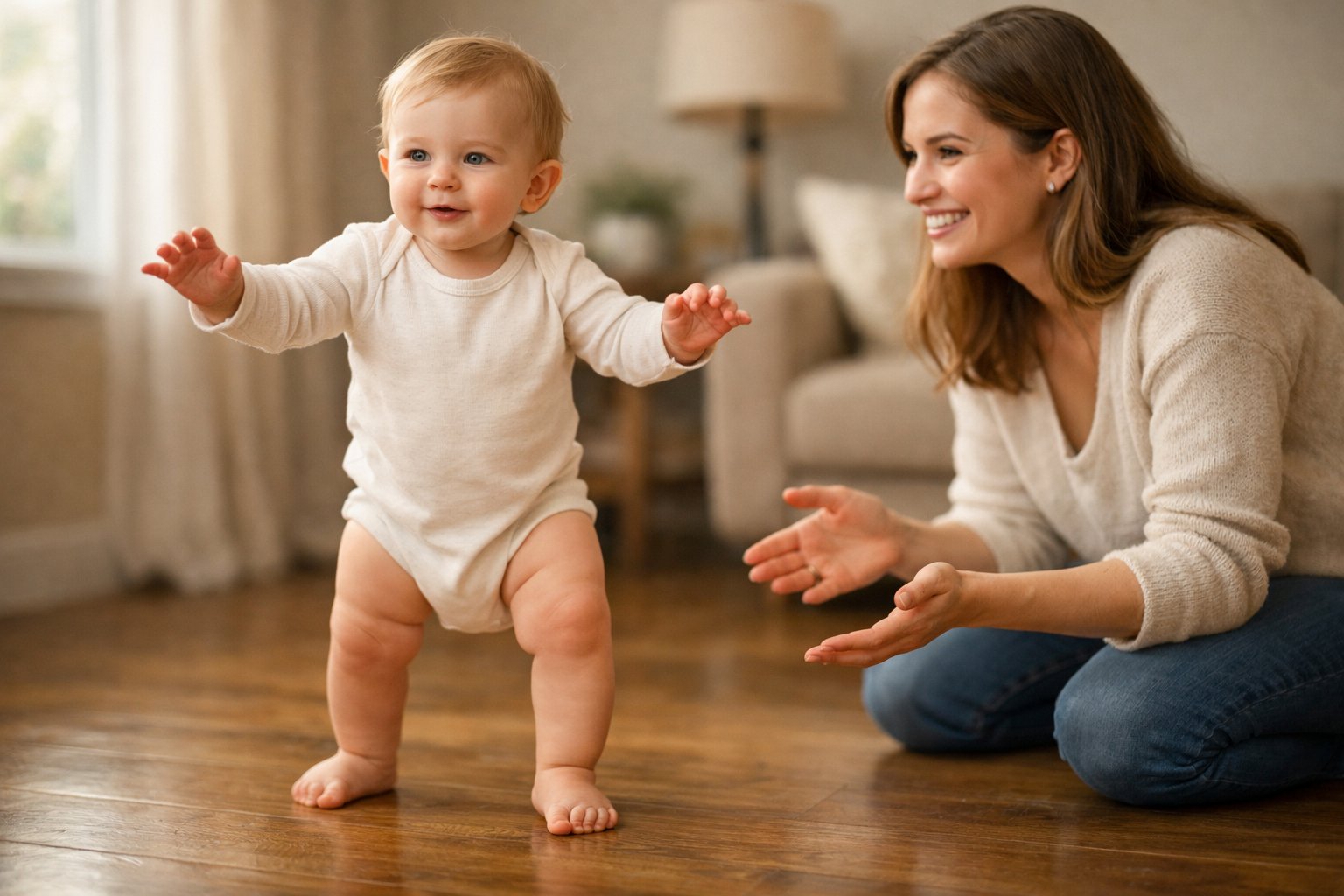
When someone watches a child take their first steps, they hold a memory that lives beyond photographs. The moment itself is fleeting, but the feeling of being present for it creates something lasting between parent and child.
The bond between parents and children deepens in these ordinary-extraordinary moments. When Lauren Pontiff watched her daughter's first steps through a daycare livestream, she cried not from missing it, but from seeing how her daughter's teacher celebrated with such genuine joy. The teacher's reaction showed that love can surround a child even when a parent cannot be physically present.
Being there matters differently than we expect. It's not always about standing in the room. It's about carrying the weight of that moment forward, about remembering how small feet looked when they lifted from the ground for the first time.
Parents who witness first steps often describe feeling proud and terrified at once. The child who just learned to stand is now moving toward independence. In nearly half of two-parent families, both adults work full-time, which means many milestones happen with caregivers present instead of parents. This doesn't diminish the parent-child connection. It expands the circle of people who care.
First steps represent more than physical development. They signal a child's growing confidence and willingness to take risks. Each wobble contains determination. Each successful step builds on the last.
Parents often want to mark this moment in a way that feels right. A custom ornament with the date and child's name keeps this memory visible without making it precious to the point of fragility. Something you can touch each year reminds you how small those feet once were.
The feeling parents describe isn't just pride. It's witnessing potential unfold in real time. One moment the child needs support for everything. The next, they're launching themselves across the room with arms spread wide for balance.
Some families choose to document milestones with personalized keepsakes that capture the actual size of those first-walker feet. These physical reminders bring back not just the image, but the feeling of being there.
A baby's first steps represent more than physical achievement. They signal a shift in how the child experiences the world and how parents begin to navigate new territory in their relationship with developmental milestones.
Most babies begin walking independently between 12 and 15 months, though the normal range extends from 9 to 18 months. This variation reminds parents that each child follows their own timeline in reaching this moment.
The path toward walking begins much earlier than those first wobbly steps suggest. Babies spend months strengthening muscles through tummy time, rolling over, and sitting up independently. They pull themselves up on furniture and cruise along walls, building the balance and coordination needed for independent movement.
Key developmental stages include:
Parents who witness this moment often feel a mix of pride and something harder to name. It's the first visible sign that their child is moving away from them, even if just by a few steps.
Independence arrives in small increments after those first steps. The child who once needed to be carried everywhere can now choose where to go. They stumble toward what interests them rather than waiting to be brought there.
Parents find themselves creating safe spaces for exploration instead of containing their child in one spot. Sharp corners get padded. Breakable items move to higher shelves. The house transforms around this new mobility.
Some parents choose to mark this invisible milestone with something tangible. A personalized blanket embroidered with the date captures the moment without making it feel performative. Others prefer a custom photo keepsake that holds the memory.
If she wants something that honors the moment without overwhelming it, a simple design keeps it meaningful.
She can personalize it here.
The emotional shift matters as much as the physical one. Parents begin to see their child differently once walking becomes routine. The baby phase closes, even though the child remains small.
Not every achievement comes with a photo opportunity or a crowd of witnesses. The quiet moments when a child shows empathy for the first time or solves a problem independently carry just as much weight as those celebrated first steps.
Parents carry an unspoken catalog of moments that no one else sees. The first time a toddler shares a toy without being asked. The morning a preschooler buttons their own shirt after weeks of trying. These invisible growth markers in child development often slip past without acknowledgment, yet they reveal profound shifts in a child's inner world.
When these achievements go unrecognized, parents can feel isolated in their joy. A working mother who missed her child's first steps on daycare livestream discovered that the visible milestone mattered less than the countless invisible ones she witnessed daily. The moments that happen without an audience need validation too.
Creating a tangible reminder helps parents honor what cameras miss. Something like this personalized milestone journal gives those quiet achievements a permanent place. If documenting feels meaningful without adding pressure, it becomes a gentle way to remember.
Recognition shapes how children understand their own progress. When a parent pauses to acknowledge that their child tried a new food or managed big feelings differently, that attention reinforces the behavior in ways praise for obvious achievements cannot.
The act of noticing teaches children what matters beyond performance. Supporting early development means celebrating effort as much as outcome. A child who hears "I saw how you kept trying" learns persistence holds value even when success stays small or private.
Parenting transforms when parents start documenting what they see. A simple way to mark these moments is with something like this custom milestone card set, where parents can note the date and the specific behavior that caught their attention. It creates space for reflection without demanding perfection.
The gift itself doesn't need to hold the memory—it just needs to make space for it. What matters is whether it reflects the quiet weight of the moment or offers something useful that still feels tender.
She might not want something fragile that sits on a shelf. Some mothers prefer gifts that fold into daily life—a soft blanket that wraps around both of them during storytime, or a simple journal where she can scribble down the date, the wobble, the look on her child's face.
Intentional gifting means choosing something that aligns with how she'll actually use it. A framed photo print feels different than a locket. One lives on the wall; the other travels with her. She may want something customized with her child's name, or she might prefer something unmarked that honors the feeling without announcing it.
If she values the practical, consider items that serve a purpose but still carry warmth. A personalized step stool her child will use for years holds more meaning than decor. It becomes part of the next milestone too.
Choosing a gift with thoughtfulness starts with observing what she values—not what other people celebrate. Does she take photos of everything, or does she let moments pass quietly? Does she keep mementos, or does she prefer clean spaces?
A custom keepsake box works for someone who saves everything. For someone else, a small engraved bracelet with a date might feel less overwhelming. The gift doesn't need to name the milestone out loud. Sometimes a simple charm or handmade ornament says enough.
She may also appreciate something for herself—a necklace with her child's birthstone, or a photo book she can add to over time. If you want something that honors the moment without making it too heavy, look for gifts for first time moms that acknowledge her role without sentimentalizing it. The right gift feels like recognition, not performance.
Engraved pieces and handmade treasures turn fleeting childhood moments into something she can hold when the years move too fast. They honor the bond between parents and children without needing words.
A frame engraved with the date of those first steps becomes more than decoration. It holds the exact moment she realized her baby was no longer quite so small.
Jewelry for mothers can carry initials, coordinates from where he first walked, or a short phrase only she understands. Some choose necklaces with children's names that dangle close to the heart.
Popular engraving options include:
Photo engraved jewelry captures his face at that exact age. She wears the memory against her skin, where no one else needs to understand its weight.
Something stitched by hand carries intention that factory-made items cannot match. A personalized memory box holds the tiny shoes he wore that day, the outfit she dressed him in that morning.
Handmade keepsakes made from his actual footprints or handprints preserve the scale of his smallness. These pieces remind her how much has already changed.
Quilts sewn from his baby clothes transform outgrown fabric into warmth she can still wrap around herself. Each square holds a different stage of his becoming.
For mothers wanting something that captures this specific threshold, a clay impression or resin piece keeps his tiny dimensions exact. She touches it years later and remembers the wobble, the determination, the pure joy of watching him discover he could move through the world on his own terms.
The right gift can give a new walker the tools to keep going while making the experience safer and more fun. From sturdy support toys to proper footwear, these practical choices help build confidence during those wobbly early days.
Push toys give toddlers something stable to hold onto as they practice walking. Unlike seated baby walkers, which the American Academy of Pediatrics warns against, standing push toys help develop upper leg muscles correctly while letting children control their own pace.
A wooden push toy with weight in the base works best. It won't tip or roll away too fast when a child leans on it. Some parents choose options like the Chomp & Clack Alligator, which makes sounds with each step and keeps things playful.
Activity walkers with buttons, gears, or music panels serve double duty. They support walking practice while offering activities that encourage cognitive development. These toys often grow with the child since they can sit and play with the panel even before they're ready to push it around.
For something more personal, a custom name puzzle walker lets her learn letters while building strength. It's the kind of gift that says someone paid attention to this specific child, not just the milestone.
You can add their name here.
Most children don't need shoes until they're walking outside regularly. Barefoot walking indoors helps toddlers develop balance and strengthen foot muscles. When shoes do become necessary, fit matters more than style.
The best first walking shoes have these features:
Shoes should have about a thumb's width of space between the longest toe and the shoe's end. Toddler feet grow fast, so checking fit every few months matters.
Some families mark the occasion with personalized baby shoes that can be kept as keepsakes after being outgrown. Soft-soled moccasins or canvas sneakers work well for early walkers who still need to feel the ground beneath them.
Developmental milestones include more than just walking. The months after those first steps bring rapid growth in language, problem-solving, and coordination.
Activity cubes combine multiple games in one toy. A wooden activity cube might include bead mazes, shape sorters, and turning gears. These toys work hand-eye coordination while keeping busy toddlers engaged.
Musical instruments designed for small hands help with rhythm and listening skills. Simple items like drums, xylophones, or shakers let children explore cause and effect. An activity table with music features gives them something to stand at while playing, which builds leg strength between walking sessions.
Nesting cups, stacking rings, and simple puzzles teach spatial relationships. These quiet toys balance out the louder, more active options. She might appreciate a personalized storybook that includes the child's name and celebrates their new mobility.
Books with simple words and bright pictures support language development during this stage. Reading together creates calm moments in days filled with constant movement and exploration.
Sometimes the best way to honor a milestone is through shared moments rather than objects. Experiences that create lifelong memories strengthen the bond between parents and children while marking developmental progress.
A parent who just witnessed those wobbly first steps might consider enrolling their little one in a toddler movement class. These sessions help children build coordination and confidence while providing structured time for connection. Music classes introduce rhythm and social interaction at this crucial developmental stage. Many programs welcome children as young as 12 months.
Swimming lessons offer another meaningful option. The water supports a child's body as they learn to move independently. Parents stay close, building trust while their toddler explores new physical abilities.
Local recreation centers and community programs often offer parent-child classes specifically designed for this age group. Some parents find that art classes or cooking lessons become cherished weekly rituals. The activity itself matters less than the dedicated time spent together.
A personalized class schedule can be kept in a custom baby milestone book to track each new achievement. It becomes a record of all the moments spent learning side by side.
A trip to the zoo takes on new meaning when a child can walk from exhibit to exhibit. She points at animals with growing excitement. She moves at her own pace instead of viewing the world from a stroller.
A membership to a local museum or zoo removes the pressure to see everything in one visit. Families can return as often as they want. Each trip becomes an opportunity to watch their child explore with increasing independence.
Nature walks through parks or botanical gardens let toddlers practice their new walking skills on different terrains. She stops to examine leaves. She navigates around tree roots. These outings build both physical ability and curiosity about the world.
Some families plan a special outing to a children's farm or petting zoo. A toddler who can walk up to animals herself experiences a different kind of wonder than she did when carried. If she wants to remember the day, a personalized photo blanket can hold images from that first big adventure. It gives her something soft to return to when the day becomes a memory. She can add photos here.
A first step isn't just about balance or movement. It's about trust, courage, and a threshold crossed that can never be uncrossed. Professional photography and home videos each offer different ways to hold onto what happened in that brief, beautiful second.
A professional session gives parents something they can't create on their own: a version of this moment where everyone is fully present. No one is holding a phone or worrying about framing or light.
The photographer watches for what matters. The wobble. The wide eyes. The outstretched arms waiting to catch.
These images become something more than documentation. They're proof that someone else saw it too. That it was real and worth remembering.
For parents who want something tangible and handmade, a custom photo album or frame can hold these images in a way that feels deliberate. A personalized keepsake book lets her add notes about what happened before and after the steps, the words she whispered, the way her heart felt too big for her chest.
If she wants something that marks the day without feeling overly formal, a simple print on textured paper works. It doesn't need to be framed right away. Sometimes the best memories live on a shelf for a while before finding their place.
The shaky phone video shot from the floor often captures more than any planned session ever could. It holds the sound of her voice, the gasp, the laughter that breaks through tears.
Candid moments like these don't need polish. They need to exist somewhere safe where they won't disappear into a camera roll that never gets opened.
She can save them to cloud storage or create a private folder that's easy to find. Some parents print stills from videos and tuck them into custom photo journals alongside written memories.
A simple video compilation made annually helps her see how much has changed. She doesn't need expensive software. Just clips stitched together with dates and a song that means something.
For those who want a physical reminder, a personalized ornament or small keepsake with the date engraved keeps the milestone visible without demanding too much space. It's for parents who need something they can hold when the years start moving faster than they're ready for. You can personalize it here.
Parents know their children best, and that knowledge matters when watching how a child grows and learns. Recognizing when development follows typical patterns and when it might need support helps families act quickly if concerns arise.
Watching a child at home gives parents the clearest picture of development. Developmental milestones cover four main areas: thinking skills, communication, social interactions, and physical movement.
Some parents track these moments in baby books or journals. Others prefer milestone cards that mark each new skill. A custom photo book lets families gather pictures and notes about their child's growth in one place.
Parents notice the small things that doctors might miss during short appointments. How a child responds to sounds, reaches for toys, or reacts to family members tells a story about development. These everyday observations matter more than any single doctor visit.
If something feels off, that feeling deserves attention. Trust develops over time as parents learn their child's patterns and personality.
The American Academy of Pediatrics recommends developmental screening at 9, 18, and 30 months, plus autism screening at 18 and 24 months. Parents should ask for screening anytime they have concerns.
Red flags include not meeting multiple milestones, losing skills the child once had, or gut feelings that something needs attention. Early intervention services work best when families act quickly.
Parents who notice delays can take two steps. First, ask the pediatrician for a referral to a specialist. Second, contact the state's early intervention program to learn about available services.
She doesn't need to wait for permission to seek help. Speaking up about concerns shows strength, not worry. Most states offer free evaluations for children under three, and how to help your child starts with getting the right support in place.
The first steps open a new chapter where the focus shifts from marking the moment to supporting what comes next. Parents find themselves moving from celebration into the steady work of helping children develop emotionally and intellectually.
The weeks after first steps bring new challenges. Toddlers will fall often as they practice walking. Parents should clear low tables of sharp objects and secure furniture to walls.
Creating safe spaces matters more than buying special equipment. A parent might set up cushioned areas where the child can practice without fear. Simple activities like walking to fetch a toy build confidence.
She notices her child wants to climb everything now. Short step stools or foam blocks give controlled ways to practice. Walking outdoors on grass or soft surfaces helps develop balance differently than indoor floors.
Some parents find a photo blanket creates a safe play space while celebrating the milestone. It marks the transition from where they were to where they're going. You can design one that shows their journey.
Reading aloud every day builds vocabulary and attention span. Even 10 minutes matters. The child doesn't need to sit still for the entire story.
Physical connection remains important even as independence grows. She might carry her child less now, but holding hands during walks maintains closeness. The bond between parents and children deepens through these small daily touches.
Eye-level conversations make toddlers feel heard. Getting down on the floor to play shows the child their world matters. Simple games like rolling a ball back and forth create shared moments without screens or distractions.
Bedtime routines offer natural bonding time. A consistent pattern of bath, story, and song helps children feel secure. These quiet moments let parents connect after busy days.
Ways to stay connected:
A personalized growth chart tracks physical changes while becoming part of the child's environment. Some parents photograph their child by it monthly. The ritual itself becomes the gift.
Parents often wonder how to honor these quiet turning points without making them feel performative or overstated. The answers below offer gentle approaches to celebrating growth in ways that feel authentic and lasting.
A handprint and footprint kit preserves the exact size of those tiny feet at the moment they began their walking journey. The clay is non-toxic and simple to use at home.
These kits create a tangible memory without requiring a big production. Parents can tuck the finished impression into a memory box or frame it simply for the nursery wall.
Some families choose to record the date and a brief note about the day on the back. Others leave it unmarked, letting the impression speak for itself.
A baby memory book with guided prompts removes the pressure of deciding what to write. The Little Blossoms memory book offers sections for recording moments without demanding lengthy entries.
Parents can jot down single sentences or paste in photos from their phone. The book grows quietly alongside the child, capturing both the developmental milestones and the small moments that happen between them.
Some mothers find comfort in voice memos recorded on their phone, speaking softly about what they noticed that day. These audio snippets become their own kind of archive, preserving not just what happened but how it felt in real time.
First walking shoes matter more for their gentleness than their style. The Stride Rite Soft Motion sneaker supports natural foot development with rounded soles and memory foam that adapts to each step.
Pediatricians often recommend shoes that bend easily at the ball of the foot. Stiff soles can interfere with the way a child learns to balance and shift weight.
A personalized picture frame engraved with the date holds space for a photo without overwhelming the moment. If someone wants something that feels personal without making the moment overly sentimental, a customizable design like this keeps it meaningful yet light. They can personalize it here.
A custom name print for the nursery wall offers a simple visual anchor. Many Etsy and Amazon Handmade artists create watercolor designs that feel soft rather than declarative.
These pieces sit quietly in the background of daily life. They become part of the room's atmosphere rather than a focal point that demands attention.
Some parents commission a simple illustration that marks the month or season of first steps. The artwork serves as a placeholder for the memory without requiring explanation to visitors.
A professional photo session captures expressions and details that parents might miss in the rush of the day. Skilled photographers who work with young children know how to create images that feel natural rather than posed.
The resulting photos often show the parents' faces as much as the child's. These images document the relationship and the mood of that particular season of life.
Parents can also keep a simple digital folder on their phone labeled by month. Scrolling back through these unfiltered snapshots often reveals more than formal portraits ever could.
The smaller moments between major milestones deserve recognition too. When a baby first plays peek-a-boo or waves goodbye, parents might simply speak it aloud to their partner or write a single sentence in a journal.
These inchstones build toward the larger achievements. Noticing them helps parents stay present with the pace of their particular child rather than comparing to others.
A milestone blanket offers a gentle way to mark changes month by month. The baby lies on the fabric while parents take a quick photo, creating a visual timeline without elaborate setup.
Some families prefer a simple wall calendar where they jot brief notes. Years later, these offhand observations often carry more emotional weight than formal documentation.