
Your Cart is Empty
Blended families create unique relationships that require intentional effort to nurture and strengthen. A bonus daughter brings her own experiences, emotions, and needs into a stepparent's life. Finding the right words to build trust and connection can feel challenging at first.

Telling a bonus daughter "I'm proud of you" helps reduce her fear of failure, increases self-esteem, and strengthens the bond between stepparent and child. These simple words carry weight because they focus on acceptance rather than performance. When a stepparent expresses pride in who she is and the effort she puts forth, it sends a clear message that she belongs and matters.
The relationship between a stepparent and bonus daughter grows stronger when affirmation becomes part of daily life. Whether celebrating small victories or supporting her through challenges, words of pride impact her growth and confidence in lasting ways. A thoughtful personalized gift from Zazzle or a meaningful journal from Amazon can also help express these feelings in tangible ways.
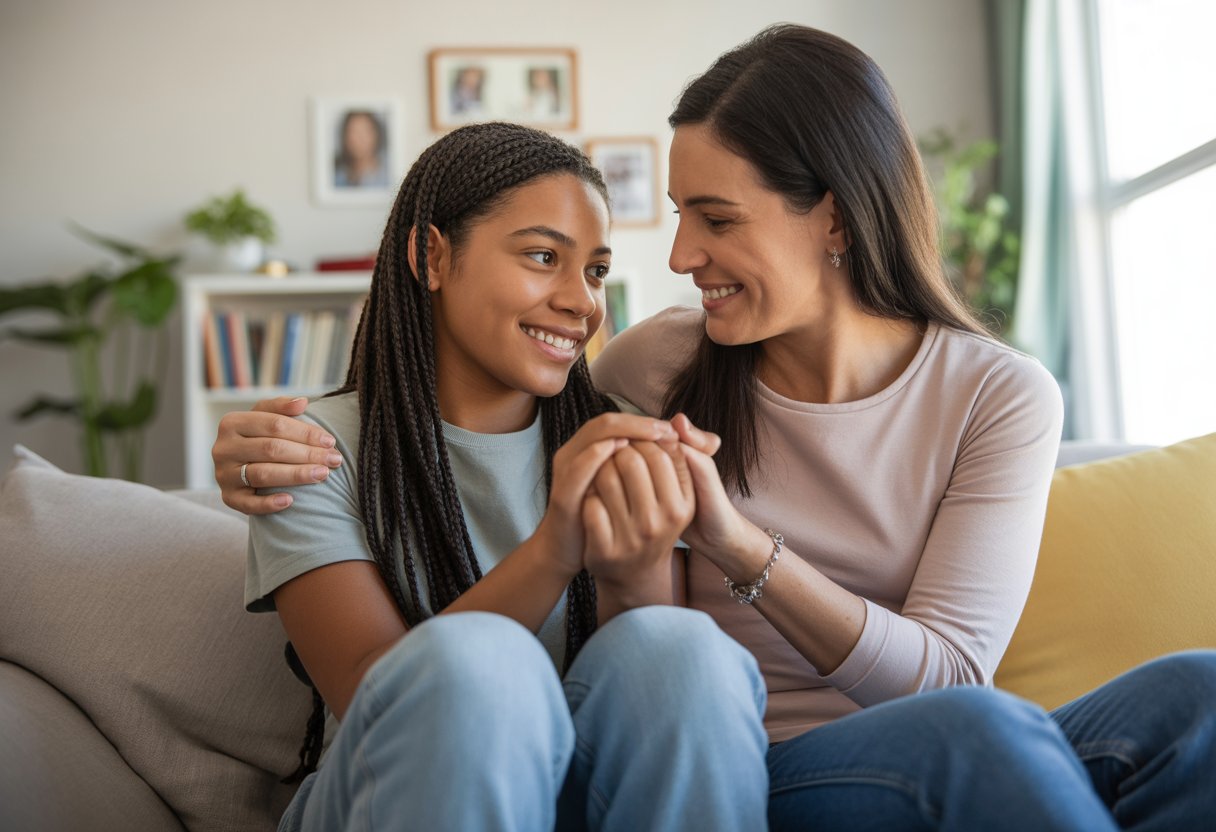
A bonus daughter enters a family through remarriage or partnership, bringing her own history, feelings, and needs. This relationship requires understanding her unique position and the careful work needed to build real connection and trust.
A bonus daughter is a child who becomes part of a family when a parent forms a new relationship. She is not a biological child but holds an important place in the family structure. This term focuses on addition rather than replacement.
The bonus parent-daughter relationship differs from biological parenting. It develops over time rather than starting at birth. There is no automatic bond based on shared history or genetics.
Key aspects of this relationship include:
The bonus daughter may feel caught between families. She might worry that caring for a bonus parent means being disloyal to her biological parent. These feelings are normal and deserve respect.
Some bonus daughters embrace the new relationship quickly. Others need years to feel comfortable. Both responses are valid and should not be rushed.
Bonus daughters face emotional challenges that biological children may not experience. They often deal with grief over family changes, even when the new relationship is positive. Loss of the original family structure affects children deeply.
She may struggle with feeling like an outsider in her own home. Family jokes, traditions, and routines that existed before she arrived can make her feel excluded. Creating new shared experiences helps address this need.
Common emotional needs include:
Bonus daughters need consistent emotional validation to feel secure. They watch how bonus parents treat them compared to biological children in the household. Fair treatment matters more than equal treatment since needs vary.
She may test boundaries to see if the bonus parent will stay committed. This behavior is not personal but reflects her need for security.
Trust grows through small, consistent actions over time. Showing up for events, remembering details about her life, and keeping promises all matter. Reliability creates safety in the relationship.
A bonus parent should respect existing family structures. Speaking respectfully about the biological parent builds trust. Trying to replace or compete with that parent damages the relationship.
Ways to build belonging:
Personalized items like custom stepfamily gifts or books about blended families can help her feel included. Physical reminders of her place in the family provide comfort.
The bonus daughter needs to see that her presence adds value to the family. Pointing out what she brings to the household reinforces this message. Her unique qualities and contributions deserve recognition.

Bonus daughters need to hear words of affirmation that validate their place in the family. Expressing pride carries weight that goes beyond casual encouragement, especially when it comes after a struggle or meaningful achievement.
When a stepparent says "I'm proud of you," it creates a foundation for emotional security. These words tell a bonus daughter that someone notices her efforts and values who she is becoming.
Children who hear genuine praise develop stronger emotional resilience and self-love. The impact goes deeper than temporary happiness.
Parental affirmation shapes how young people see themselves. A bonus daughter might question where she fits in a blended family structure. Hearing "I'm proud of you" answers that question with clarity and warmth.
Key emotional benefits include:
The phrase works best when paired with specific reasons. Instead of generic praise, stepparents can say "I'm proud of you for staying patient with your younger siblings" or "I'm proud of how you handled that difficult conversation."
Blended families create unique challenges for children navigating multiple households and parental figures. A bonus daughter may feel invisible or unsure of her importance in the new family structure.
Saying "I'm proud of you" strengthens relationships by affirming progress rather than just noting presence. It tells a bonus daughter that her stepparent pays attention to her growth.
Recognition matters more in blended families because loyalty conflicts can make children hesitant to accept affection from stepparents. When a bonus daughter hears these words, she learns that accepting love from a stepparent doesn't diminish her relationship with her biological parents.
Ways this phrase helps bonus daughters feel valued:
Personalized gifts like custom bonus daughter frames from Zazzle or books about blended families from Amazon can reinforce these verbal affirmations with tangible reminders of belonging.
Many adults grew up in homes where praise was absent or rare. Breaking this pattern requires intentional effort to speak words of affirmation that previous generations never received.
Stepparents who make a habit of expressing pride create a new family culture. This change affects not just the bonus daughter but future generations who will learn to offer encouragement freely.
Using phrases like "I'm proud of you" prevents parents from overvaluing talents or making unhealthy comparisons to others. The focus stays on personal growth and effort rather than competition.
Generational silence around emotions often stems from discomfort or lack of modeling. Stepparents can choose differently by making affirmation a regular practice. This decision helps bonus daughters develop healthy self-worth that isn't tied solely to achievement.
When stepparents prioritize these conversations, they teach bonus daughters to value themselves and eventually pass this gift to their own children.
Affirmations build a foundation for how bonus daughters see themselves and their place in blended families. The right words at the right time can strengthen self-worth and help them develop a healthy sense of identity.
Children who grow up hearing "I'm proud of you" often develop stronger self-esteem and emotional resilience. A bonus daughter needs to hear specific praise that acknowledges her unique qualities and efforts. Instead of generic compliments, parents should point out concrete achievements and character traits.
Specific affirmations work better than vague ones. Saying "I'm proud of how you helped your sister with homework" carries more weight than a simple "good job." These detailed observations show that someone is paying attention to her actions and values what she brings to the family.
A positive lunchbox note or unexpected text message can brighten her day. Small reminders of pride and appreciation add up over time. They create a mental library of positive memories she can draw from when facing challenges.
Ways to deliver affirmations:
Bonus daughters often wrestle with questions about where they fit in their blended family. They may wonder if they're truly accepted or just tolerated. Regular affirmations directly address these fears by confirming their value and place in the family structure.
Self-doubt creeps in during moments of stress or change. A bonus parent who consistently says "I'm proud of you for standing up for yourself" or "I'm here to listen, whenever you want to talk" creates a safety net. These phrases tell her that someone believes in her abilities even when she doesn't.
The timing of affirmations matters. Catching a bonus daughter before she spirals into negative self-talk can prevent deeper insecurity from taking root. When she makes a mistake, focusing on effort rather than outcome preserves her self-esteem. "I'm proud of how hard you tried" acknowledges her work without making success the only measure of worth.
A bonus daughter is figuring out who she is within a complex family dynamic. Affirmations that recognize her individuality help her build a separate identity from her biological parents and step-parents. She needs to know she's valued for being herself, not just for meeting expectations.
Identity development requires space to explore interests and make choices. When a bonus parent says "I'm proud of you for trying something new," it gives her permission to experiment without fear of judgment. This freedom strengthens her sense of self-worth and encourages healthy risk-taking.
Parents who use words of affirmation effectively understand that each child responds differently to praise. Some bonus daughters need frequent verbal affirmation, while others prefer actions or gifts. Books about building confidence, available through Amazon, can provide additional strategies for supporting her growth.
Key affirmations for identity development:
Recognizing the work a bonus daughter puts into her goals matters more than the final results. Focusing on her determination, problem-solving skills, and willingness to try new things builds lasting confidence and teaches her that growth comes from persistence.
Process praise focuses on the steps taken rather than the end result. When a parent tells a bonus daughter "I noticed how hard you practiced" or "Your planning made a difference," they highlight specific actions she controlled. This approach develops a growth mindset because it shows her that effort leads to improvement.
Research shows that children who receive process praise become more willing to tackle difficult tasks. They learn that struggle is normal and valuable. A bonus daughter who hears "You kept trying different approaches until you found one that worked" understands that her methods matter more than natural talent.
Process praise examples:
These statements teach her to value her own actions. They build resilience because she learns that setbacks are just part of learning, not signs of failure.
Support shouldn't wait for report cards or trophies. A bonus daughter needs to hear positive words during regular activities and daily challenges. Noticing when she helps with chores, shows kindness to siblings, or handles frustration well reinforces valuable character traits.
Parents can offer praise for moments like completing homework without reminders, speaking up about her needs, or trying a new food. These small victories deserve recognition. A simple "I appreciate your effort" during ordinary moments shows her that her dedication matters in all situations.
Daily encouragement might include comments about her creativity, responsibility, or problem-solving. Writing notes for her lunch box or sending quick texts acknowledging her contributions keeps communication open. These gestures prove that pride isn't reserved for major accomplishments but exists in everyday life.
Confidence grows through consistent recognition of small steps forward. A bonus daughter who hears "You handled that well" after a difficult conversation or "I noticed your improvement" after practicing a skill develops trust in her abilities. These moments don't require major celebrations but simple acknowledgment.
Parents can point out specific behaviors that show growth. Mentioning when she remembered to pack her bag, completed a task independently, or stayed calm during stress teaches her to recognize her own progress. This awareness becomes internal motivation.
Daily confidence builders include:
Regular positive feedback creates a foundation where she feels secure taking risks. She learns that mistakes don't define her and that growth happens through consistent effort rather than perfect performance.
When you tell your bonus daughter you're proud of her, you build trust and create emotional safety. These words strengthen your relationship over time and show her that she has a reliable support system in her life.
Words of pride create immediate emotional connections. When a stepparent tells a bonus daughter they're proud of her, it signals acceptance and validation.
Expressing pride effectively means being specific about what made you proud. Instead of saying "I'm proud of you," try "I'm proud of how you handled that difficult situation with patience." This approach shows you pay attention to her actions and care about her growth.
The key elements of effective pride statements include:
These conversations create space for deeper talks. A bonus daughter who hears regular expressions of pride feels more comfortable sharing her struggles and victories. She learns that her stepparent notices her efforts, not just her results.
Regular expressions of pride build a home environment where a bonus daughter feels valued. This acceptance doesn't depend on perfect grades or winning awards.
When stepparents express pride in character traits like kindness, persistence, or creativity, they send a powerful message. The bonus daughter learns she's appreciated for who she is, not just what she accomplishes. This unconditional acceptance strengthens the family bond.
Gratitude works alongside pride to create this atmosphere. Thanking a bonus daughter for helping with chores or being thoughtful toward siblings reinforces positive behaviors. These small acknowledgments add up over time.
A bonus daughter who feels accepted shows more confidence in family settings. She participates more in family decisions and shares her opinions freely. Personalized gifts that celebrate her role in the family further demonstrate this acceptance.
The impact of expressing pride extends far beyond childhood. Bonus daughters who receive consistent encouragement develop stronger self-esteem and better coping skills.
These relationships often grow stronger as the bonus daughter matures. Adult stepdaughters frequently cite words of pride from their stepparents as pivotal moments in their relationship. The early investment in expressing pride pays dividends for decades.
Research shows that people who receive regular emotional support perform better in their goals. This applies to bonus daughters who hear they're valued and supported.
The relationship becomes reciprocal over time. Bonus daughters who felt proud of become adults who express gratitude back to their stepparents. They maintain closer relationships with their blended families throughout their lives.
Books about blended families often emphasize this long-term perspective. Building these bonds takes consistent effort, but the results create lasting family connections that weather life's challenges together.
Expressing pride becomes more meaningful when paired with specific details, supportive actions, and regular acknowledgment. These practical approaches help bonus parents communicate genuine appreciation that strengthens their relationship.
General statements lack the impact of detailed praise. Instead of simply saying "I'm proud of you," bonus parents should reference specific actions or qualities.
For example, "I admire how you handled that difficult conversation with your friend" carries more weight than vague compliments. Mentioning what the bonus daughter actually did shows real attention and care.
Details about achievements make the praise feel earned. "Your dedication to practicing piano every day has really paid off" acknowledges both effort and results. The words should reflect what actually happened.
Avoid comparing her to others. Instead, focus on her individual growth and choices. "You've become more confident speaking up in class" recognizes personal development without creating pressure to compete.
Words gain strength when backed by supportive actions. A bonus parent might say "I'm proud of you" while also attending her school event or helping with a project.
Actions that reinforce verbal praise:
Physical gestures like hugs or high-fives pair well with spoken words. These combined signals create a stronger emotional connection than words alone.
Creating traditions around celebrations shows ongoing commitment. Whether through special meals or small rituals, these patterns demonstrate consistent support beyond single moments of praise.
Regular acknowledgment matters more than occasional grand gestures. Bonus parents should look for daily opportunities to express pride in small ways.
Morning encouragement about school presentations or bedtime recognition of kindness toward siblings builds steady reassurance. These brief moments add up over time.
Everyday opportunities to show pride:
Casual mentions during regular activities feel natural and authentic. Comments during car rides or while cooking dinner create comfortable spaces for connection without forced formality.
Consistency builds trust. When a bonus daughter knows praise comes regularly and honestly, she learns to value it as genuine rather than questioning motives or sincerity.
A growth mindset helps bonus daughters see challenges as chances to learn rather than threats to avoid. When they understand that effort and persistence matter more than natural talent, they build resilience that carries them through difficult times.
Bonus parents can model openness to challenges by sharing their own learning experiences. When a bonus daughter sees her bonus parent trying something new or difficult, she learns that challenges are normal parts of life.
Encouraging her to try activities outside her comfort zone builds confidence. This might mean signing up for a new sport, learning an instrument, or tackling a harder math class. The goal is not perfection but the willingness to start.
Using phrases like "This seems hard right now" instead of "This is too hard for you" shifts the focus. The word "yet" becomes powerful when added to statements. "You can't do this yet" suggests future growth is possible.
Simple ways to encourage challenge-seeking:
A personalized growth mindset poster in her room can serve as a daily reminder that abilities can be developed.
Mistakes are not failures but feedback. When a bonus daughter makes an error, the response she receives shapes how she views future mistakes.
Bonus parents should ask questions like "What did you learn from this?" or "What would you try differently next time?" These questions shift focus from blame to learning. They help her see mistakes as teachers rather than embarrassments.
Sharing personal mistakes creates safety. When bonus parents talk about their own errors and what they learned, it normalizes the experience. This might sound like "I made a mistake at work today and here's how I fixed it."
Responses that promote learning:
Books about famous failures and comebacks provide examples of how mistakes lead to success. Reading these together opens conversations about resilience and persistence.
Persistence matters more than quick wins. When bonus parents notice and praise effort, struggle, and determination, they reinforce what truly leads to success.
Specific praise works better than generic compliments. Instead of "Good job," try "You worked on that problem for twenty minutes without giving up." This highlights the behavior worth repeating.
Creating a "persistence chart" tracks efforts rather than outcomes. Each time she practices, studies, or works through something difficult, she gets recognition. The focus stays on showing up and trying.
Ways to celebrate grit:
Telling a bonus daughter "I'm proud of how you kept going" reinforces that persistence itself is valuable. This message builds lasting resilience she'll use throughout her life.
Teaching a bonus daughter to appreciate herself and recognize her worth creates a foundation for lifelong emotional health. When stepmothers model self-compassion and encourage gratitude practices, they help build resilience that carries into adulthood.
Bonus daughters learn how to treat themselves by watching the adults around them. When a stepmother demonstrates self-compassion through kind inner dialogue, she teaches powerful life skills.
Instead of saying "I'm so stupid for forgetting that," a stepmother might say "Everyone makes mistakes. I'll set a reminder next time." This small shift shows a bonus daughter that self-criticism doesn't have to be the default response to imperfection.
Stepmothers can also practice acknowledging their own achievements out loud. Saying "I'm proud of myself for handling that difficult situation calmly" normalizes self-recognition. It gives permission for the bonus daughter to celebrate her own wins without waiting for external validation.
Physical gestures matter too. Placing a hand over the heart during stressful moments, taking deep breaths, or practicing a simple mantra creates a soothing response in the nervous system. These tools become automatic coping mechanisms when practiced regularly as a family.
Gratitude shifts focus from what's missing to what's present. A gratitude journal offers a simple way for bonus daughters to track their growth over time.
Each evening, she can write down three things she's grateful for about herself. These might include "I spoke up in class today," "I helped my friend with homework," or "I tried a new recipe." The practice trains the brain to notice positive moments that might otherwise go unacknowledged.
A gratitude jar provides a tangible collection of proud moments. Family members write down achievements on slips of paper and add them throughout the month. Reading them together creates opportunities to say "I'm proud of you" for specific actions.
Progress tracking celebrates growth:
This evidence becomes especially valuable during difficult periods when a bonus daughter doubts her abilities.
Blended families come with unique challenges that can make self-acceptance harder. Bonus daughters often feel caught between two households or struggle with divided loyalties.
Creating space for honest feelings without judgment builds emotional safety. When a bonus daughter says "I feel guilty for having fun here," responding with "Those feelings make sense. You're allowed to enjoy time in both homes" validates her experience.
A custom photo coffee mug featuring positive affirmations serves as a daily reminder of her worth. Simple phrases like "I am enough" or "I belong here" reinforce acceptance messages.
Self-acceptance also means honoring differences within the family. A bonus daughter might have different interests, communication styles, or needs than biological children. Celebrating these differences rather than trying to create sameness shows that belonging doesn't require conformity.
Books about blended family experiences help bonus daughters see their situations reflected in stories. Reading together opens conversations about identity and belonging that might feel too vulnerable to start independently.
Many stepmothers struggle with telling their bonus daughters they're proud of them. Awkwardness, fear of doing it wrong, and differences in background can all make expressing pride feel difficult.
Building a relationship with a bonus daughter takes time. The early stages often feel stiff and uncomfortable.
Starting small helps break through the awkwardness. A stepmom can begin by noticing specific actions rather than making grand statements. Saying "You handled that difficult conversation well" feels more natural than declaring "I'm so proud of you" when the relationship is still new.
Physical and emotional distance creates another challenge. Some bonus daughters keep their guard up to protect themselves. Expressing pride through words works better when paired with consistent actions that build trust over time.
Writing notes or texts can feel less intense than face-to-face conversations. A simple message like "I noticed how hard you worked on that project" opens the door without pressure. These small gestures accumulate and gradually reduce the emotional gap between stepmother and bonus daughter.
Some stepmothers worry that too much praise will sound fake or create pressure. This fear often keeps them silent when they should speak up.
Effective praise focuses on effort rather than outcomes. Instead of "You're the smartest person I know," try "You put real thought into solving that problem." The difference matters for self-worth.
Research shows that 90% of students feel valued when adults give specific feedback about their work. Generic compliments like "good job" don't carry the same weight.
Balance prevents overpraising. A stepmom doesn't need to comment on everything her bonus daughter does. Choosing meaningful moments to express pride makes those words more powerful. Recognizing both big achievements and small acts of character builds genuine connection.
Different backgrounds shape how people give and receive praise. A stepmom raised in a home that rarely expressed emotion may find it hard to say "I'm proud of you" out loud.
Cultural communication differences affect what feels comfortable. Some families share feelings openly while others show love through actions instead of words. Understanding these patterns helps stepmothers adjust their approach.
Generational gaps also play a role. Younger bonus daughters might expect more verbal affirmation than their stepmothers received growing up. Creating personalized affirmation cards bridges this gap by combining thoughtful words with a tangible keepsake.
Age-appropriate praise matters too. A teenage bonus daughter needs different recognition than a young child. Teens often value acknowledgment of their independence and decision-making skills. A journal for recording proud moments helps track growth and provides concrete examples when expressing pride feels difficult.
When a stepfather regularly tells his bonus daughter "I'm proud of you," the effects extend far beyond childhood. These words build a foundation of self-worth that influences her confidence, relationships, and ability to affirm others throughout her life.
A bonus daughter who hears consistent affirmation develops stronger self-esteem as she grows. She learns to trust her abilities and face challenges without fear of failure. This confidence comes from knowing someone believes in her efforts, not just her achievements.
The impact shows up in how she handles setbacks. When difficulties arise, she remembers the pride expressed in her character and effort. She bounces back faster because her self-worth isn't tied only to success.
Positive affirmations for kids help shape how children view themselves. Research shows that verbal affirmations like "I'm proud of you" play a key role in emotional development. A bonus daughter who receives these messages builds resilience that carries into adulthood.
She takes on new opportunities with less hesitation. The affirmation she received taught her that trying matters more than perfection. This mindset helps her succeed in school, work, and personal goals.
The affirmation a bonus daughter receives from her stepfather shapes how she expects to be treated in future relationships. She learns what respect and support look like in action. This knowledge helps her choose partners and friends who value her.
She sets better boundaries because she knows her worth. When someone treats her poorly, she recognizes it faster and responds with confidence. The foundation of affirmation taught her she deserves kindness and respect.
Her romantic relationships benefit most from this foundation. She seeks partners who appreciate her efforts and celebrate her growth. She avoids relationships where she feels constantly criticized or undervalued.
Friendships also improve when self-worth is strong. She surrounds herself with people who lift her up rather than tear her down. These healthier connections lead to more fulfilling relationships throughout her life. A personalized journal can help her track her growth and affirmations over time.
A bonus daughter who receives regular affirmation learns to give it to others. She understands the power of encouraging words because she experienced their impact firsthand. This creates a positive cycle that benefits everyone around her.
She becomes more likely to tell her own children "I'm proud of you" when she becomes a parent. Many adults report that their parents never said these words, which shows how rare this practice can be. Breaking this pattern starts with one generation choosing to affirm differently.
She also supports her friends, coworkers, and partner with genuine encouragement. The habit of noticing effort and expressing pride becomes natural to her. This skill strengthens all her relationships and creates a more supportive environment.
Her ability to affirm others comes from a place of security rather than obligation. She gives freely because she knows how valuable these words can be. Books about father-daughter relationships often highlight how affirming words can shape a daughter's life in lasting ways.
Building a strong bond with a bonus daughter requires clear communication and genuine expressions of pride that acknowledge her unique place in the family. These questions address practical ways to show support and strengthen the relationship through meaningful words and actions.
Effective communication starts with being specific about what makes her remarkable. Instead of general statements, parents should point out exact actions or qualities they admire.
Focusing on effort rather than just results helps bonus daughters understand that their hard work matters. A parent might say, "I noticed how patient you were while learning that new skill" or "The way you helped your friend showed real kindness."
Timing matters when expressing pride. Sharing these thoughts soon after witnessing something noteworthy makes the message more powerful and connected to the moment.
Body language reinforces verbal messages. A hug, eye contact, or sitting down to have a conversation shows that the words carry real meaning.
Personalized statements carry more weight than generic praise. Saying "I'm impressed by how you tackled that challenge" recognizes her specific effort and problem-solving skills.
Phrases that celebrate growth show long-term attention. "You've come so far with your art" or "I've watched you become more confident this year" demonstrate ongoing observation and care.
Recognition of character traits matters as much as accomplishments. "Your honesty in that situation took courage" or "You showed real leadership when your team needed it" validates who she is becoming as a person.
Acknowledging small victories builds confidence for bigger challenges. Parents can say "That was a brave choice" or "You handled that disappointment with maturity" to recognize everyday moments of growth.
A thoughtful card from Zazzle with a handwritten message creates a lasting reminder of pride and support.
Words of pride strengthen the parent-child bond by showing that parents notice and value who she is. This attention creates a foundation of trust and security.
Regular expressions of pride help bonus daughters feel fully accepted in their blended family. When they hear genuine appreciation, they understand their place is secure and valued.
These affirmations open doors for deeper conversations. A bonus daughter who feels supported is more likely to share struggles, dreams, and everyday experiences.
Consistent positive communication builds emotional safety. She learns that her bonus parent sees her strengths and believes in her potential, which encourages her to take healthy risks and pursue goals.
The relationship grows when pride is expressed for character qualities, not just achievements. This shows acceptance of her whole self, not just what she accomplishes.
Actions paired with words make appreciation feel more genuine. Taking time to attend her events, help with projects, or celebrate milestones demonstrates that pride goes beyond talk.
Creating special traditions honors her place in the family. This might include celebrating her successes with her favorite meal or starting a yearly letter that highlights her growth.
Public acknowledgment shows pride to others in appropriate ways. Mentioning her accomplishments to extended family or posting a supportive message lets her know the pride is real and not private.
A journal from Amazon where parents write notes about proud moments gives her something to keep and revisit during difficult times.
Investing in her interests communicates belief in her passions. Buying supplies for her hobbies, arranging lessons, or simply learning about what she loves shows active support.
Genuine support starts with active listening. Asking questions about her projects and goals shows investment in what matters to her.
Offering help without taking over demonstrates belief in her abilities. A parent might say "How can I support you with this?" instead of jumping in to fix things.
Celebrating the process matters as much as the outcome. Recognizing that she tried something new or stuck with a difficult task validates her courage and persistence.
Being present during challenges shows support extends beyond success. Saying "I'm here for you" or "I believe you can figure this out" provides emotional backing during struggles.
Expressing happiness for her achievements rather than pride can sometimes feel more appropriate, as it focuses on her own accomplishment rather than the parent's feelings about it.
Verbal affirmations boost self-esteem by helping bonus daughters feel capable and confident. Regular positive messages shape how they view themselves and their abilities.
Delivery matters as much as content. Affirmations should be genuine, specific, and spoken in private or appropriate settings where she can fully receive the message.
Children can sense when words are empty, so parents should only express pride when they truly mean it. Forced or exaggerated praise can damage trust and feel manipulative.
Consistency builds the foundation for healthy self-esteem. Occasional compliments help, but regular affirmations create lasting confidence and emotional resilience.
Affirmations should focus on controllable factors like effort, kindness, and perseverance. This teaches bonus daughters that their worth comes from their choices and character, not just natural talents or external validation.