
Your Cart is Empty
A necklace can be more than just jewelry. It can mark a moment, tell a story, or change how someone sees themselves. When chosen with care and meaning, the right necklace becomes woven into her personal narrative, representing milestones, relationships, and the emotions tied to specific chapters of her life.

The connection between jewelry and storytelling runs deep. Guy de Maupassant's famous short story "The Necklace" shows how a single piece of jewelry can alter the entire course of a life. While that tale carries a cautionary message about vanity and pride, it also reveals an important truth. The necklaces people wear carry weight beyond their material value.
Today, giving or receiving the right necklace means understanding what it represents. Whether it's a delicate pendant from Amazon for everyday wear or a personalized design from Zazzle that captures a specific moment, the best choices reflect who she is and what matters most. The difference between a forgotten accessory and a treasured keepsake often comes down to the thought behind the selection.
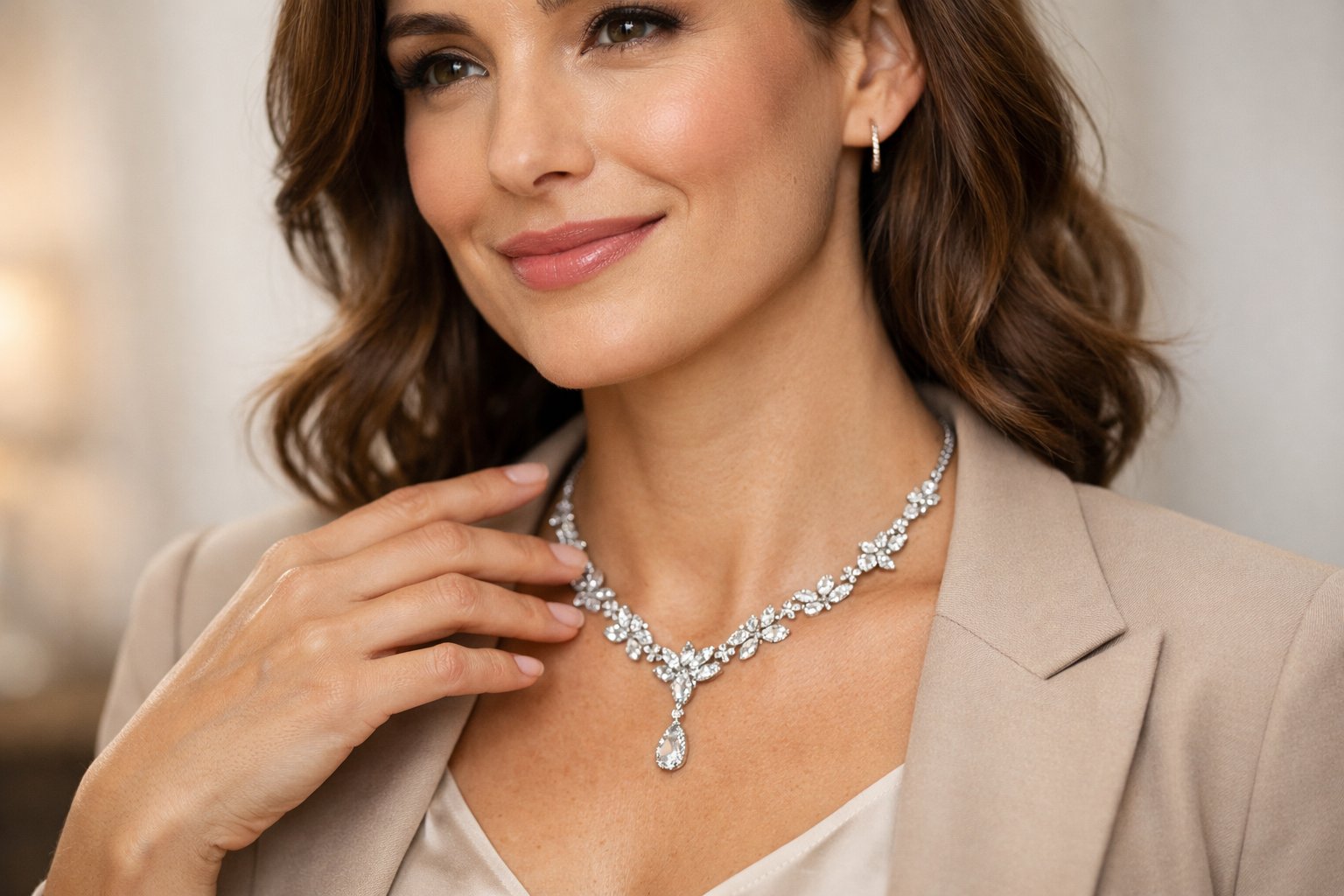
A necklace carries weight beyond its physical form, shaping how a woman sees herself and how others perceive her. The right piece becomes woven into her identity, marking important moments and expressing values that words cannot capture.
Jewelry has carried meaning across cultures for thousands of years. A necklace can represent love, commitment, achievement, or heritage. Women often receive necklaces to mark life milestones like graduations, weddings, or the birth of a child.
The symbolic weight transforms a simple accessory into something meaningful. A grandmother's pendant passed down through generations holds family history. A gift from a partner symbolizes their bond. Even custom name jewelry creates personal significance by displaying what matters most.
The value lies not in the price tag but in what the piece represents. A woman might treasure a modest chain more than expensive pieces because of who gave it to her or what moment it commemorates. This emotional connection makes certain necklaces irreplaceable.
A necklace becomes part of how a woman presents herself to the world. Some women never remove certain pieces, making them as essential as their style or personality. These signature accessories signal aspects of identity that matter deeply.
Professional women might choose sleek, minimal pieces that project competence. Creative individuals often select bold, artistic designs. Dangle name pendants allow women to wear their identity literally, making a clear statement about who they are.
The right piece aligns with how she sees herself. It reinforces her confidence and sense of self. When appearances match internal identity, the necklace stops being just decoration and becomes authentic self-expression.
Every woman has stories connected to her jewelry. A necklace bought during a transformative trip. A gift received after a difficult period. An heirloom that connects her to ancestors she never met.
These narratives give accessories deeper meaning. The necklace becomes a physical reminder of growth, love, or resilience. Women touch these pieces during challenging moments, drawing strength from what they represent.
Personalized jewelry on Amazon allows women to create new stories intentionally. Unlike Guy de Maupassant's famous short story where appearances and reality clash, authentic pieces reflect genuine experiences rather than manufactured images. The right necklace doesn't create a false identity but celebrates a real one.
Guy de Maupassant's famous short story from 1884 tells the story of Mathilde Loisel, a woman who borrows a diamond necklace for a fancy party and loses it, spending the next ten years in poverty to replace it. The twist ending reveals the borrowed necklace was fake, making their sacrifice pointless.
Mathilde Loisel is a pretty woman married to a clerk who works in the Ministry of Education. She spends her days wishing for a more glamorous life than she has.
When her husband gets invited to a ball, Mathilde worries she has nothing nice to wear. Her husband buys her a dress, but she still needs jewelry. She borrows a diamond necklace from her friend Madame Forestier.
At the ball, Mathilde enjoys all the attention she gets from men. When they leave at four in the morning, she discovers the necklace is gone. The couple searches everywhere but cannot find it.
They decide to replace the necklace without telling Madame Forestier. Loisel borrows thousands of francs from friends and moneylenders. They buy a replacement and return it to Madame Forestier.
The couple spends ten years paying back their debts. They fire their servant, and Mathilde does all the housework herself. Her husband takes a second job working for a merchant in the evenings.
After ten years, they finally pay off all the money they owe. One day, Mathilde sees Madame Forestier and tells her the truth about losing and replacing the necklace. Madame Forestier reveals the original necklace was made of imitation diamonds and was almost worthless.
The story was first published in February 1884 in the French newspaper Le Gaulois. During this time, France was experiencing major social changes as the middle class grew larger and more people wanted to improve their social standing.
The 19th century saw a rise in consumer culture. Middle-class families like the Loisels tried to keep up with their neighbors by buying nicer possessions and clothes. Many people were not satisfied with what they had and always wanted more.
The story reflects the class differences that existed in French society. The Loisels had a comfortable lower-middle-class life with one servant to help around the house. However, Mathilde dreamed of dining on finer dishes and living in luxury homes.
Maupassant wrote over 300 stories during his career, often focusing on the daily lives of average French people and their efforts to get ahead. His work typically showed a pessimistic view of human nature and the consequences of vanity and dishonesty.
The story revolves around three central figures whose choices and values drive the narrative forward. Mathilde Loisel's yearning for a life beyond her means, her husband's quiet devotion, and Madame Forestier's seemingly simple act of kindness create the circumstances that change everything.
Mathilde Loisel is a dissatisfied housewife who believes she deserves a life of luxury and glamour. She lives in a modest Parisian apartment but dreams constantly of elegant furnishings, fine china, and admiring social circles. Her beauty and charm feel wasted on her middle-class existence.
Key traits that define Mathilde:
Madame Loisel's focus on appearances leads her to borrow an expensive-looking necklace for a prestigious ball. This decision stems from her inability to attend the event without making a grand impression. She cannot bear the thought of looking poor in front of wealthy guests.
Her character demonstrates how the illusion of wealth can become more important than reality itself.
M. Loisel works as a clerk and lives within his means. Unlike his wife, he finds contentment in simple pleasures like homemade soup. When he secures an invitation to an exclusive ball, he expects Mathilde to share his excitement.
He sacrifices his own savings, originally set aside for a hunting rifle, to buy his wife a new dress. This gift represents months of careful saving. After Mathilde loses the borrowed necklace, Monsieur Loisel takes on crushing debt without complaint.
He works multiple jobs for ten years to repay what they owe. His devotion never wavers, even though Mathilde's vanity caused their financial ruin. M. Loisel represents selfless love and quiet strength throughout the ordeal.
Mme. Forestier appears briefly but plays a crucial role in the story. She lends Mathilde what appears to be a valuable diamond necklace without hesitation. Her wealthy status and extensive jewelry collection make her the perfect person for Mathilde to approach.
Madame Forestier shows no suspicion when the necklace is returned ten years later. She accepts it without close examination. Her casual attitude toward the jewelry hints at the story's final revelation about true value versus perceived worth.
Necklaces carry weight beyond their physical presence, representing the gap between appearance and truth, the cost of wanting more, and the dangers of chasing false beauty. These themes reveal how jewelry shapes identity and exposes human nature.
The necklace represents a bridge between different social classes that proves to be an illusion. When someone borrows expensive jewelry to fit into a wealthy crowd, they create a temporary facade that masks their true economic position.
This gap between appearance and reality drives many people to seek symbols of love, protection, and identity through jewelry. The borrowed necklace becomes a tool for social climbing, allowing entry into spaces otherwise closed off.
Yet costume jewelry often looks identical to real diamonds and gold. The irony cuts deep when the fake appears authentic while the wearer's entire presence feels fraudulent. This contrast between genuine wealth and borrowed elegance shows how society judges people by what they wear rather than who they are.
The necklace exposes the fragile nature of social hierarchies built on material possessions rather than character or genuine accomplishment.
Pride transforms a simple piece of jewelry into a life-altering burden. Rather than admitting the loss of a borrowed necklace, some choose years of hardship to replace it. This decision costs more than money.
The replacement necklace demands sacrifice of youth, comfort, and dreams. Ten years of hard labor ages a person beyond their years. Hands roughen from work. Beauty fades under stress. The price paid far exceeds the necklace's actual value.
The true cost includes:
Pride prevents asking for help or confessing mistakes. This stubborn independence leads to unnecessary suffering. A simple conversation could have prevented disaster, but ego stands in the way. The necklace becomes a physical representation of how pride destroys lives when left unchecked.
The symbolic meanings behind necklaces often clash with their actual worth. A piece valued at thousands might actually cost mere dollars, yet the perceived value drives behavior and choices.
Materialism creates a world where appearances matter more than substance. People judge worth by jewelry, clothing, and possessions rather than character. This shallow value system traps those who believe objects define them.
The revelation that an expensive necklace was actually costume jewelry shatters illusions about value and worth. Years of sacrifice were spent replacing fake diamonds with real ones. The original owner never cared enough to distinguish between authentic and artificial.
This twist highlights how society assigns meaning to objects that hold none. The necklace meant everything to the borrower but nothing to the owner. Realism in literature uses such moments to expose human folly and societal problems. The story shows how chasing material things leads to emptiness and regret, whether shopping on Amazon or at custom jewelry stores.
Mathilde Loisel's journey centers on three pivotal moments that reshape her entire life. The invitation sets off her desperate pursuit of the right appearance, the party itself delivers her one night of triumph, and the necklace's disappearance triggers years of struggle.
When M. Loisel brings home an invitation to a party hosted by the Minister of Education, he expects his wife to be thrilled. Instead, Mathilde bursts into tears because she has nothing suitable to wear.
Her husband sacrifices 400 francs he had saved for a hunting rifle so she can buy a new dress. But even with the dress secured, Mathilde feels incomplete without jewelry to match.
She visits her wealthy friend Jeanne Forestier to borrow accessories. Among all the pieces in the jewel box, Mathilde chooses an expensive-looking diamond necklace that seems perfect for the occasion.
The borrowed necklace transforms how Mathilde sees herself in the mirror. For the first time, she feels she looks the part of someone meant for luxury and elegance.
At the party, Mathilde becomes the center of attention. Other guests admire her beauty and charm throughout the evening. She dances with enthusiasm and enjoys every moment of being desired and noticed.
The night represents everything Mathilde had dreamed about. She feels like she finally belongs among wealthy, sophisticated people. Her success at the party comes entirely from appearances rather than actual wealth or status.
This single evening becomes the high point of her life. She experiences the luxury and admiration she always believed she deserved. The borrowed necklace plays a crucial role in creating this illusion of wealth and refinement.
The climax occurs when Mathilde discovers the necklace is missing after the carriage ride home. She and her husband search everywhere but find nothing. They file a police report without success.
Too ashamed to admit the loss to Mme. Forestier, the Loisels decide to replace it with an identical one. They find a similar necklace costing 40,000 francs. M. Loisel uses his 18,000-franc inheritance and borrows the rest from moneylenders at ruinous rates.
The couple returns the replacement necklace to an unsuspecting Mme. Forestier. This decision marks the beginning of a decade of hardship as they work to repay their massive debt.
Financial problems can strip away more than just material comfort. They test relationships, challenge identity, and force difficult choices that reshape a person's entire life.
Money troubles often start small but grow quickly. A medical bill arrives. A car breaks down. Someone loses their job.
These events push families from stable to struggling in weeks. Financial hardship makes it difficult to pay bills and afford basics. Credit cards become lifelines instead of conveniences.
The weight of unpaid bills creates constant stress. Every phone call might be a collector. Every letter might be a shut-off notice. Sleep becomes harder. Arguments become more frequent.
Common triggers of financial crisis:
Pride makes asking for help difficult. People hide their struggles from friends and family. They skip meals to feed their children. They choose between medicine and rent.
Getting out of debt requires both strategy and sacrifice. The first step involves identifying the most pressing needs and making a budget.
Many people cut expenses to bare necessities. Entertainment disappears. Eating out stops. Generic brands replace name brands. Every dollar gets assigned a purpose.
Some find practical mindset shifts help when money is tight. They focus on small wins. They celebrate each paid bill. They track progress visibly.
Debt repayment strategies include:
| Method | Description | Best For |
|---|---|---|
| Debt snowball | Pay smallest debts first | Quick wins and motivation |
| Debt avalanche | Pay highest interest first | Saving money on interest |
| Debt consolidation | Combine multiple debts | Simplifying payments |
Extra income helps accelerate progress. People take second jobs. They sell possessions. They do gig work on weekends. The sacrifice feels temporary when the goal stays clear.
A meaningful gift during this time carries special weight. A personalized necklace from Zazzle can mark the determination to overcome hardship without adding financial burden.
Facing hardship builds resilience and creates profound personal growth. The struggle changes how people view money, relationships, and what truly matters.
Financial recovery teaches lessons that prosperity never could. Budgeting becomes second nature. Needs separate clearly from wants. Gratitude replaces entitlement.
Relationships either strengthen or break under financial pressure. Partners who survive debt together often emerge closer. They've proven their commitment extends beyond comfort.
The experience reshapes priorities permanently. Former luxuries lose their appeal. Simple pleasures gain new value. Time with loved ones outweighs material possessions.
A simple jewelry box from Amazon to protect a treasured necklace represents the careful stewardship learned through hardship. Every possession receives proper care because nothing gets taken for granted anymore.
People who overcome debt carry their victory quietly. They remember the struggle. They help others facing similar battles. Their story becomes part of their strength.
Maupassant builds his narrative through layers of dramatic signals that point toward disaster, yet the actual revelation proves far more devastating than readers anticipate. The borrowed jewelry becomes worthless the moment Mathilde discovers its true nature.
The story creates tension through dramatic irony when readers suspect something feels wrong about Madame Forestier's casual agreement to lend the piece. She hands over the necklace without hesitation or concern. This easy generosity hints at the jewelry's minimal value.
Mathilde's triumph at the ball reads as too perfect. She becomes the center of attention, dancing with ministers and officials. The narrator describes her as "wild with joy," which builds anticipation that something must go wrong.
The descriptions of her success feel exaggerated, creating a sense of unease. Every detail emphasizes her temporary elevation in social status. The night represents everything she believes will make her happy, yet this peak moment sets up her devastating fall.
After ten years of crushing poverty to repay the debt, Mathilde learns the original necklace was paste worth only five hundred francs. She spent a decade working as a maid, scrubbing floors, and living in a tiny attic apartment. Her husband took on extra jobs at night. They sacrificed everything to replace what they believed was a valuable diamond piece.
The replacement necklace cost thirty-six thousand francs. This amount represented years of wages for a middle-class family. Mathilde lost her youth, beauty, and health paying for genuine diamonds to replace fake ones. Her hands became rough and red from harsh work.
Those looking for jewelry that tells a meaningful story might consider pieces from Zazzle's necklace collection or browse statement necklaces on Amazon.
The twist ending functions as situational irony because the outcome contradicts everything Mathilde worked toward. She wanted to appear wealthy for one night, but her efforts to maintain that illusion destroyed her actual comfort. The fake necklace served as a perfect status symbol for someone pretending to be something she wasn't.
Mathilde overlooked the decent life she already possessed. She had a maid, comfortable housing, and enough money for basic needs. Her obsession with luxury symbols blinded her to real contentment. The irony cuts deeper because her attempt to climb socially pushed her far below her starting position.
The revelation changes how readers interpret every prior event. Her suffering becomes unnecessary rather than noble. The debt was pointless, the sacrifice wasted.
Guy de Maupassant's "The Necklace" explores how pride distorts reality and prevents genuine communication, while revealing the false promise of social climbing through material possessions. These themes work together to show how a single moment of vanity can derail an entire life.
Mathilde Loisel's pride makes her unable to appreciate what she has. She refuses to accept her middle-class life and constantly dreams of luxury she cannot afford. This vanity leads her to borrow what she believes is an expensive diamond necklace to appear wealthy at a ball.
Her pride becomes most destructive after she loses the necklace. Rather than admit the truth to her friend, Mathilde chooses to replace it secretly. This decision costs her ten years of hard labor and poverty.
The story shows how ambition and greed for material possessions can destroy lives. Mathilde values appearance over reality. She would rather suffer in silence than face embarrassment. Her husband enables this pride by never questioning her choices or encouraging honest conversation about their situation.
The entire tragedy stems from failed communication between characters. Mathilde never tells Madame Forestier the truth about losing the necklace. She also never discusses her feelings of inadequacy openly with her husband before the crisis.
Had Mathilde practiced honesty, she would have learned immediately that the original necklace was fake. Instead, she and her husband spend a decade repaying debt for a replacement diamond necklace worth far more than the costume jewelry they borrowed.
The story emphasizes how pride and the desire to maintain appearances prevent authentic dialogue. Mathilde's inability to communicate her true circumstances traps her in unnecessary suffering. Even her husband, who sacrifices his own dreams to help replace the necklace, never insists on telling the truth.
Maupassant reveals how beauty and charm supposedly offer women upward mobility, but this promise proves hollow. Mathilde believes that looking wealthy at one ball will somehow change her life. Instead, her attempt to appear richer destroys the modest comfort she already possessed.
The twist ending exposes the entire social system as fraudulent. Wealthy people like Madame Forestier wear fake jewelry while others sacrifice everything to maintain illusions. Real diamonds and paste copies look identical, just as genuine wealth and its performance become indistinguishable.
The story critiques a society where women must rely on appearance rather than ability. Mathilde has no path to advancement except through marriage or beauty. This limited system encourages deception and values surface over substance, trapping people in cycles of pretense and debt.
Guy de Maupassant crafted "The Necklace" using specific writing techniques that made the story feel real and relatable to readers. His choice to focus on ordinary people and everyday struggles, combined with unexpected twists, creates a narrative that exposes the gap between appearance and reality.
Guy de Maupassant wrote during the Realist movement of the late 1800s. This meant he focused on showing life as it actually was, not as people wished it to be.
He wrote about middle-class characters who faced real problems like money troubles and social pressure. Mathilde Loisel is not a princess or a wealthy woman. She is an ordinary person married to a clerk who dreams of a better life.
The author used simple, direct language to tell the story. He did not add fancy descriptions or romantic ideas that were common in earlier literature. Instead, he showed how Paris society during the nineteenth century valued wealth and status above everything else.
Maupassant included specific details about costs and daily life. Readers learn exactly how much the dress costs and how many years it takes to repay the debt. These concrete facts make the story feel true to life.
The story's most powerful element is its twist ending that reveals dramatic irony. Mathilde spends ten years working hard to replace what she thinks is an expensive diamond necklace. She gives up her youth and beauty to pay back the debt.
At the end, readers discover the original necklace was fake. It was worth only 500 francs, not the 36,000 francs Mathilde paid to replace it. This twist shows how pride and fear of embarrassment can destroy a person's life.
The irony appears throughout the story in smaller ways too. Mathilde wants to appear rich at the ball, but her efforts to look wealthy lead to actual poverty. She gets her one night of beauty and attention, then loses everything.
Maupassant used irony to criticize how people judge others based on appearance. The necklace looked valuable but was worthless, just like the social world Mathilde wanted to join was empty and meaningless. Readers can find unique necklace designs that tell a different kind of story today.
The author filled his story with realistic details about daily existence in Paris. He described Mathilde's plain apartment, the simple food she ate, and the worn furniture she lived with. These details created a clear picture of middle-class life.
Maupassant showed how hard physical work changed Mathilde's appearance. She scrubbed floors, carried water, and haggled at markets. Her hands became red and rough. Her face aged quickly from stress and exhaustion.
The story included real information about jobs and wages. Monsieur Loisel worked as a clerk at the Ministry of Education. He saved 400 francs for a gun, showing how long it took ordinary people to save money.
Key Elements of Everyday Life in the Story:
This focus on mundane tasks and financial struggles makes the story feel authentic. Modern readers can explore jewelry options on Amazon that fit various budgets. Maupassant wanted readers to understand how one mistake could change everything for people without wealth or safety nets.
Guy de Maupassant's "The Necklace" revolutionized how writers approach irony and character development in brief narratives, while its moral lessons about vanity and honesty continue to spark classroom discussions and personal reflections today.
"The Necklace" set a new standard for the short story format when it was published in 1884. Maupassant's technique of building to a shocking final revelation became a blueprint for countless writers who followed.
The story demonstrates how a complete character arc can unfold in just a few pages. Mathilde Loisel's transformation from a dreaming young woman to a hardened laborer happens efficiently. Writers learned they didn't need novels to explore deep themes.
The twist ending technique became so associated with short fiction that it influenced generations of authors. O. Henry, Roald Dahl, and modern writers still use similar structures. Literary critics note that Maupassant proved short stories could deliver the same emotional punch as longer works.
Anyone studying the craft of fiction encounters this piece in creative writing courses. It appears in study guide materials worldwide as an example of efficient storytelling.
The central lesson warns against living beyond one's means and the dangers of pride. Mathilde's refusal to admit she lost a borrowed necklace costs her ten years of poverty. Her pride literally ruins her life.
The story also explores honesty versus deception. Had Mathilde immediately confessed the loss, she would have learned the necklace was fake. Instead, her choice to hide the truth led to unnecessary suffering.
Key Moral Themes:
Teachers use this story to discuss decision-making with students. The analysis often focuses on how small choices create lasting consequences. A beautiful necklace from Amazon might remind someone of this lesson.
Social media culture makes "The Necklace" more relevant than ever. People curate perfect online personas while struggling privately, just like Mathilde pretended to be wealthy at the ball. The pressure to appear successful hasn't decreased since 1884.
Credit card debt and living beyond means remains a widespread problem. Mathilde's borrowing to maintain appearances mirrors how people today finance lifestyles they cannot afford. Financial educators reference the story when teaching about debt consequences.
The story appears in high school curricula across America. Students relate to feeling inadequate compared to peers. Personalized jewelry from Zazzle lets people express identity without pretense.
Fashion and status symbols still drive behavior. Designer handbags and luxury cars serve the same function as Mathilde's borrowed diamonds. The emotional core of wanting more resonates across centuries and cultures.
Choosing a necklace that tells a story requires understanding personal meaning, design elements, material significance, and the right occasion for gifting. Custom touches like engravings can deepen emotional connections while matching styles to personal history ensures the piece becomes truly memorable.
The recipient's personal style should guide the selection process. Someone who prefers minimalist fashion will appreciate simple chains or delicate pendants, while someone with bold taste might enjoy statement pieces.
The relationship between giver and receiver matters significantly. A mother might treasure jewelry for mom that reflects shared memories, while a daughter might prefer something that marks a milestone in her life.
Consider the recipient's daily activities and lifestyle. Active individuals need durable pieces that won't interfere with movement. Office workers might prefer professional styles that complement business attire.
Skin tone and face shape influence how different necklaces look on different people. Warm-toned metals like gold suit warm complexions, while silver complements cooler skin tones.
Budget sets realistic expectations but shouldn't limit meaning. A thoughtfully chosen piece at any price point can carry deep significance when selected with care.
Symbolic elements embedded in choosing the perfect necklace design create immediate visual narratives. Hearts represent love, infinity symbols suggest eternal bonds, and compass charms indicate guidance or direction.
Pendant shapes carry specific meanings that connect to personal stories. Birds might symbolize freedom or new beginnings. Trees often represent family roots and growth over time.
Layered designs allow for multiple elements that can represent different chapters or people in someone's life. Each strand or charm adds another dimension to the overall narrative.
Colors and gemstones contribute emotional depth to the story being told. Blue stones might represent calm or loyalty, while red gems convey passion or strength.
The weight and presence of a necklace affects how the wearer experiences it throughout the day. Substantial pieces serve as constant reminders of the sentiment behind them.
Milestone birthdays mark significant life transitions that deserve memorable jewelry. An 18th birthday represents adulthood, while a 50th celebrates wisdom and experience.
Wedding gifts for her create lasting memories of the special day. Bridal jewelry becomes part of wedding photos and family history.
Graduations celebrate achievement and new beginnings. A necklace given at this time can symbolize the journey ahead and lessons learned.
Birth of a child creates powerful emotional moments perfect for meaningful jewelry. New mothers often treasure pieces that mark when their family grew.
Anniversaries honor ongoing commitment and shared history. Each year together adds depth to the story a necklace can tell.
Loss and remembrance occasions call for thoughtful jewelry that honors memory. Memorial pieces help keep loved ones close even after they're gone.
Personalized engravings transform ordinary jewelry into one-of-a-kind keepsakes. Names, dates, or coordinates mark specific moments that matter to the wearer.
Short meaningful phrases fit on most necklace surfaces. "Always with you" or "Brave and strong" provide daily encouragement and connection.
Custom messages on jewelry can include inside jokes or private words that only the giver and receiver understand. This creates an intimate bond through the piece.
Handwriting engravings capture the actual script of a loved one. A child's signature or a grandparent's handwriting preserves their presence in a tangible way.
Coordinates of special locations mark where important events happened. Wedding venues, hometowns, or places where couples met become part of the jewelry's story.
Multiple language options allow for cultural connections. Family names in heritage languages honor roots and traditions.
Observing existing jewelry preferences reveals important style clues. Someone who wears gold exclusively will want gold pieces, not silver.
Life experiences shape jewelry choices in meaningful ways. A travel enthusiast might appreciate pieces featuring maps or compass designs.
Professional identity influences appropriate necklace styles. Teachers, nurses, and corporate professionals each have different needs for workplace-appropriate jewelry.
Hobbies and passions offer rich inspiration for personalized pieces. Musicians might love treble clef pendants, while nature lovers appreciate botanical designs.
Color preferences extend beyond clothing into jewelry choices. Someone who always wears blue will likely appreciate sapphires or blue topaz stones.
Personal history with the recipient provides the deepest guidance. Shared memories, private jokes, and significant moments all offer direction for meaningful selection.
Gold represents enduring love and timeless value across cultures. Its resistance to tarnishing symbolizes relationships that withstand time and challenge.
Silver suggests clarity, purity, and protection in many traditions. Its bright shine catches light and draws attention to the wearer.
Birthstones connect jewelry to understanding necklace types and personal identity through birth months. January's garnet differs significantly in meaning from June's pearl.
Diamonds represent strength, clarity, and eternal commitment. Their hardness makes them symbols of unbreakable bonds.
Pearls carry meanings of wisdom, innocence, and feminine energy. Their organic origin connects them to nature and natural beauty.
Rose gold combines traditional gold with copper for a warm, romantic appearance. Its popularity has grown among younger generations seeking modern alternatives.
Stainless steel offers durability and modern aesthetics for active lifestyles. It resists damage while maintaining its appearance over years of wear.
Gemstone combinations tell more complex stories than single stones. Mixing birthstones of family members creates pieces representing entire families.