
Your Cart is Empty
Choosing a keepsake to honor a memory or celebrate a place you love can feel overwhelming. Maps, boxes, and necklaces all offer different ways to hold onto what matters. Each one works differently depending on how someone wants to remember, display, or carry that meaning.
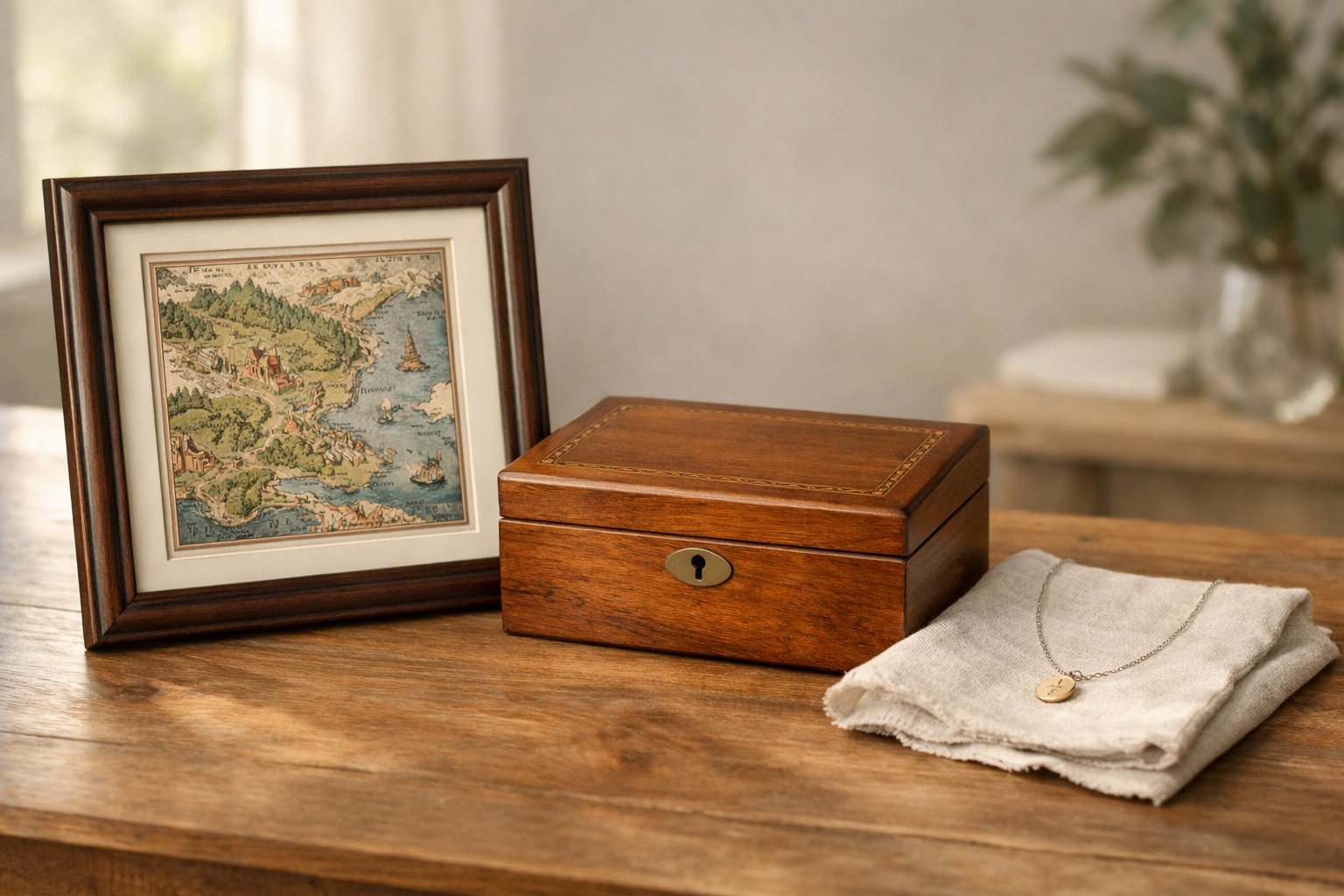
The best choice depends on whether someone wants to see the memory every day, store it privately, or keep it close to their body. A person who loves map art that combines vintage cartography with meaningful phrases might want something visual for their wall. Someone else might prefer creating a memory box to hold physical items from a trip or relationship. Others find comfort in wearing a message necklace that stays with them throughout the day.
This guide walks through each option without pushing toward one answer. It helps clarify what matters most so the decision feels calm and clear instead of rushed or uncertain.
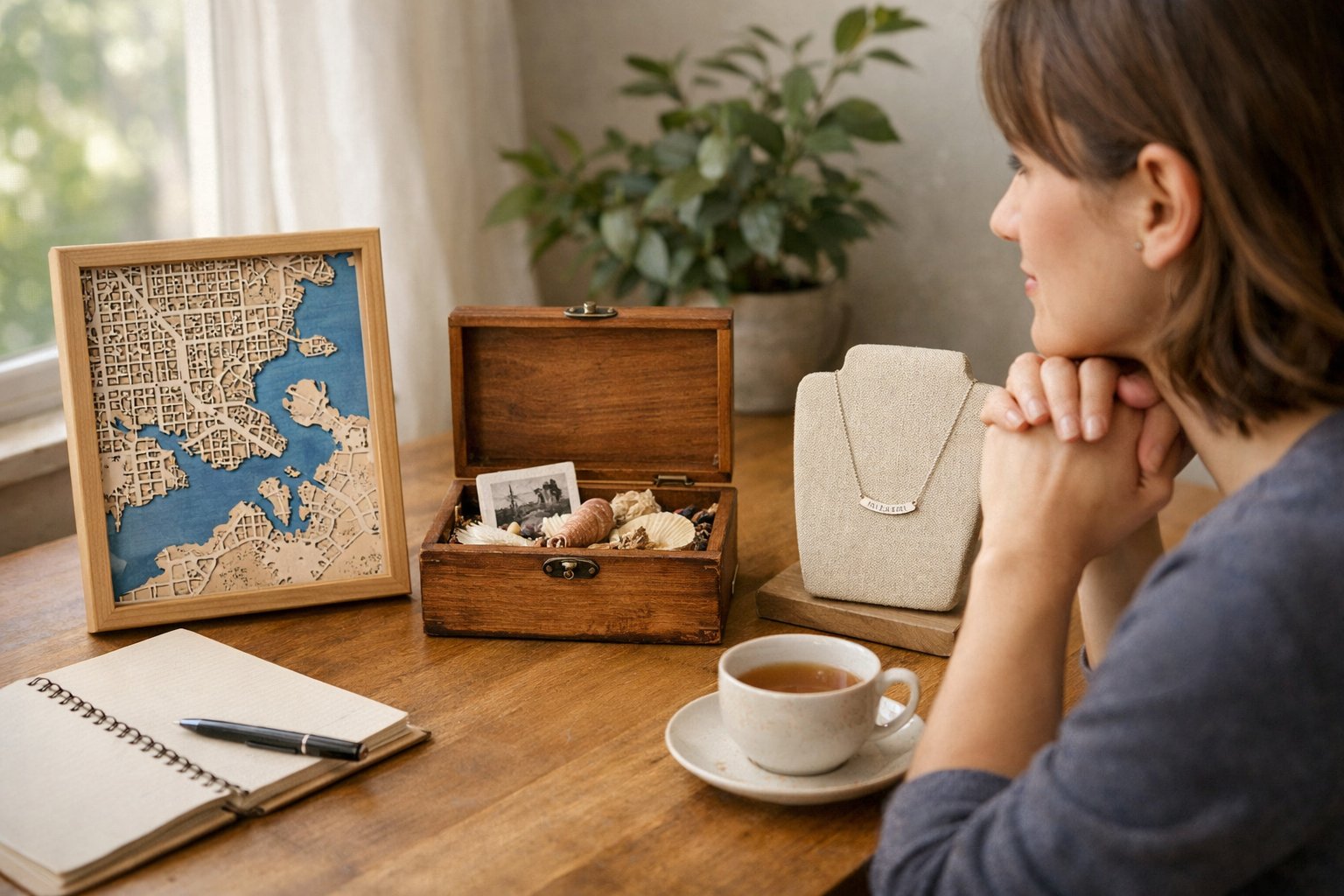
Understanding what drives the need for a keepsake helps narrow down which format will feel right. The choice becomes clearer when someone identifies the emotional role the item will play in their life.
Keepsakes serve as physical anchors for feelings that don't always have words. A map art piece might capture the weight of a big move or a first shared home. A memory box holds objects that remind someone of a specific chapter they don't want to forget. A message necklace becomes a quiet comfort during stressful days.
Understanding what motivates us shapes how we choose to mark important moments. Someone who values daily reminders might lean toward jewelry. Someone who prefers privacy might choose a box they can open when they need it.
A custom map necklace works when the location itself feels like a turning point. A personalized wooden memory box makes sense when the keepsake isn't about one moment but many small ones.
Different life events call for different formats. A graduation, wedding, or birth often feels fitting for something visible like wall art. A loss, transition, or private milestone might need something more contained.
The event itself doesn't dictate the choice. How someone wants to engage with the memory does. A framed map of a honeymoon destination might feel celebratory in a living room. A box holding letters from a late parent might feel more appropriate in a bedroom.
Someone choosing a gift should consider what the recipient is marking. A custom coordinate bracelet suits someone who wants to carry a place with them quietly. A personalized map print fits someone ready to display what the location represents.
If the moment feels deeply personal, a necklace with an engraved message offers closeness without announcement. You can personalize it here.
Keepsakes often mark growth rather than just events. Moving to a new city after a difficult period. Choosing to honor a relationship that ended but still mattered. Holding onto a reminder of who someone used to be before they changed.
Connecting goals to deeper reasons makes decisions feel more grounded. Someone who wants to remember resilience might choose a map showing where they rebuilt their life. Someone processing grief might need a memory box to hold pieces of a person they loved.
A handmade wooden keepsake box works when the act of opening it becomes part of reflection. A personalized message pendant suits someone who needs a constant but private touchpoint. The format should match how someone engages with their own story.
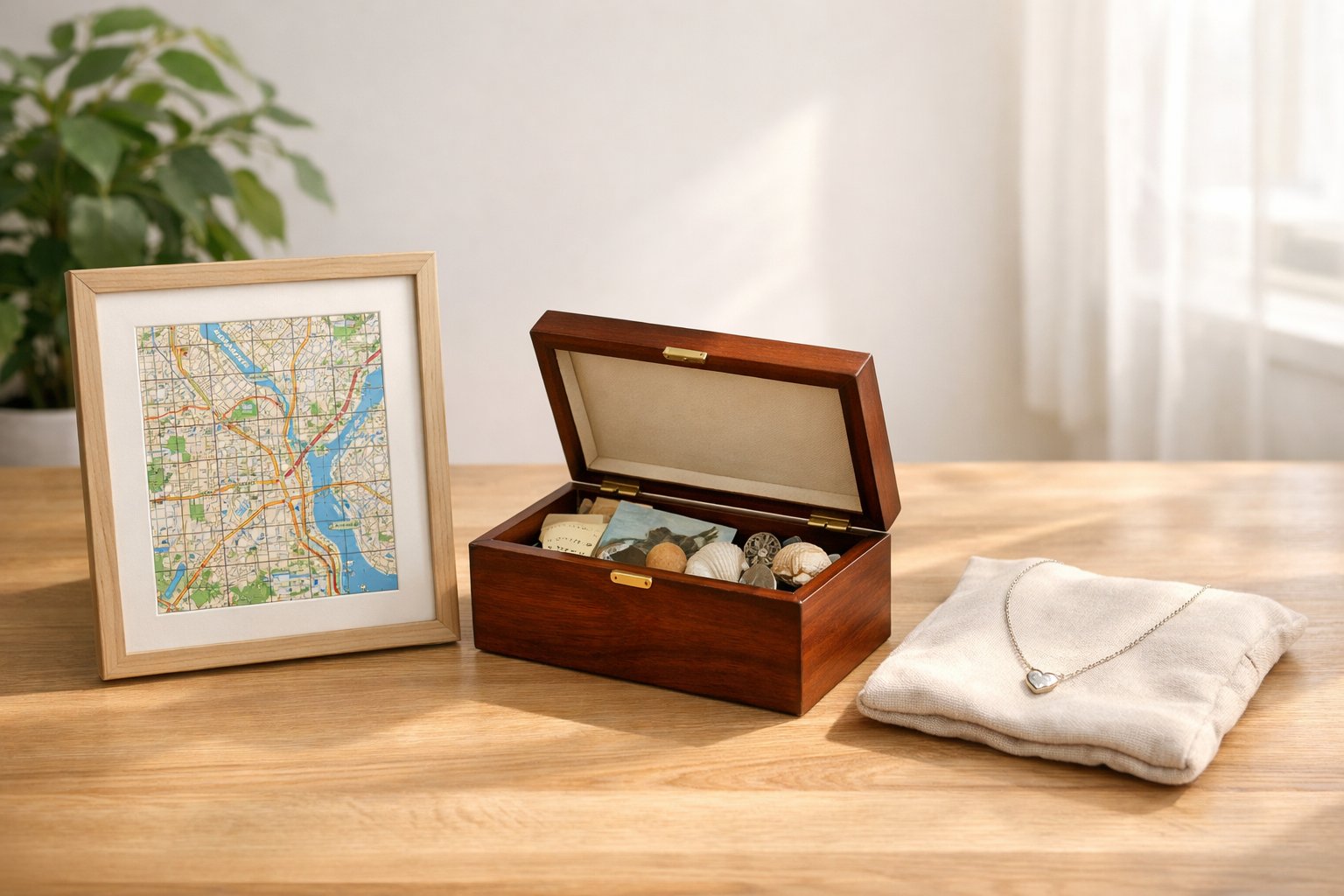
Each type of keepsake serves a different emotional purpose. Map art captures a sense of place, memory boxes hold physical reminders, and message necklaces keep words or images close to the body.
Map art turns a specific location into a visual piece that can hang on a wall or sit on a desk. It marks a place that holds meaning—where someone got married, where a child was born, or where a family spent summers together.
The design usually shows street layouts, waterways, or landmarks in a simplified style. Some versions use vintage map details. Others use clean, modern lines with custom colors.
If location matters more than objects or words, map art offers a way to honor that without clutter. It doesn't require storing physical items or making decisions about what to keep and what to discard.
Custom map prints work well for people who want something visible but not overly sentimental. They fit into existing decor without demanding attention.
A memory box stores physical keepsakes that represent specific moments or people. It might hold ticket stubs, letters, photos, or small gifts.
The box itself can be plain wood, decorated cardboard, or engraved metal. What matters is what goes inside. Some people fill them quickly. Others add items slowly over years.
Memory boxes work best for those who feel connected to tangible objects. They allow someone to revisit items without displaying them permanently. The box can stay tucked away until the person feels ready to look through it.
If she finds comfort in touching and holding reminders, a memory box gives her that option. It also keeps items protected and organized in one place.
A message necklace holds words, initials, dates, or tiny images in a pendant worn daily. Some styles show the engraving openly. Others hide the message inside a locket or use projection technology to reveal a photo.
The personalized memory necklace approach allows her to carry something private without explaining it to others. She controls when and whether to share what's inside.
This type of keepsake suits someone who wants a constant, quiet reminder. It doesn't take up space in the home. It moves with her throughout the day.
Message necklaces also work for people who prefer not to display their emotions publicly but still want to feel connected to a person or moment.
Memory boxes offer a physical home for meaningful items that tell a story over time. They work best for collections that need protection and privacy, whether that means vacation souvenirs, family keepsakes, or letters from someone who has passed away.
A keepsake box can be as simple as a wooden container from a craft store or as elaborate as a personalized memory box engraved with names and dates. Some people choose decorative boxes that sit on a shelf, while others prefer plain storage boxes that tuck away in a closet.
A time capsule is a specific type of memory box meant to be sealed and opened later. Parents sometimes create these for newborns, filling them with newspapers, photos, and letters to be opened on the child's 18th birthday.
A DIY memory box allows complete control over size, decoration, and organization. She might use dividers, small envelopes, or fabric lining to customize the interior. Shadow boxes with glass fronts work well when she wants to display certain items while keeping them protected.
Travel-focused boxes often feature maps, currency, or destination-themed designs. A vacation memory box with coordinates or location names printed on the lid makes the contents instantly recognizable years later. If she wants something that captures a specific trip without turning it into a scrapbook project, this approach keeps everything contained. You can personalize it here.
Ticket stubs represent moments in time better than almost any other keepsake. Concert tickets, movie stubs, and boarding passes take up little space but trigger specific memories when rediscovered.
Postcards and greeting cards fit naturally in most boxes. Birthday cards from grandparents, anniversary notes, or postcards sent during trips preserve handwriting and personal messages.
Small photographs work well, especially ones that didn't make it into albums. She can include duplicates, candid shots, or photos that feel too personal for display.
Recipe cards handwritten by family members hold both practical and emotional value. A grandmother's cookie recipe or a father's grilling notes become more precious over time.
Other common items include:
A personalized keepsake box with compartments helps organize different types of items without mixing everything together.
A wedding memory box typically holds invitations, dried flowers from the bouquet, a piece of lace from the dress, guest book pages, and the card that came with the first anniversary gift. These boxes grow more meaningful as years pass and details fade from active memory.
A graduation memory box captures the transition from one life stage to another. She might include the tassel, program, cards with money, acceptance letters, photos from parties, and notes from teachers or classmates.
Birthday memory boxes work especially well for milestone years. An 18th or 50th birthday box might contain cards, party favors, a copy of the guest list, and small gifts that marked the occasion. For children, parents sometimes create yearly boxes that track growth and interests.
Travel memory boxes focus on specific trips rather than all vacations combined. A box dedicated to a honeymoon in Italy or a backpacking trip through Southeast Asia keeps those memories separate and accessible. Travel souvenirs like coins, maps, brochures, and train tickets fit together to recreate the journey. A customized travel box with the destination and dates feels more intentional than a random container. You can add those details here.
Baby memory boxes hold hospital bracelets, first outfits, ultrasound photos, and birth announcements. These items matter deeply to parents but hold little interest for anyone else, making a private box more appropriate than displayed items.
Loss and grief memory boxes serve a different purpose. They provide a contained space for processing difficult emotions while honoring someone who died. The box itself offers permission to open it when needed and close it when the grief feels too heavy.
Map art turns geographic locations into visual reminders of where someone has been or where they come from. She can make it herself or buy something custom that highlights places that matter to her family.
She can start with a simple project using a printed map and a frame. Travel memory walls with pin maps let her mark cities she has visited with colored pins.
A cork-backed map works well because pins go in easily without tearing the paper. She can use different colored pins to show different types of trips. Red pins might mark family vacations while blue ones show solo adventures.
For something more crafted, she can cut out map sections and seal them in resin or glass. Small circles showing the town where each child was born make simple pendants. She can also layer maps with photos by printing a map as background and placing travel pictures on top.
Simple DIY options include:
The locations she chooses make map art personal. A piece showing the hospital where her daughter was born or the street where her parents met tells a specific story.
She can add text to make the meaning clear. Including a date, coordinates, or a short phrase helps others understand why that place matters. A map of the beach where someone got engaged becomes more meaningful with the date written below.
Combining maps with other elements like pressed flowers from that location or fabric in colors that match the landscape adds depth. For family heritage, she might layer a current map over a historical one to show how a neighborhood changed over generations.
Custom map art from Zazzle lets her choose the exact location and add names or messages. If she wants something that acknowledges a shared history without making it overly sentimental, a clean design with just the map and a simple label keeps it meaningful yet understated. You can personalize it here.
Map art works as a gift when the location connects to the recipient's life. A map showing where someone grew up reminds them of their roots. A map marking multiple cities where a couple has lived together shows their journey.
For display at home, she should think about where it will hang and what size makes sense. A large map in an entryway can start conversations. Smaller framed maps work better in hallways or on shelves mixed with family photos.
Practical display considerations:
She can find personalized map prints that let her enter specific addresses or coordinates. Handmade options on Amazon Handmade often include custom calligraphy or hand-drawn elements that feel more personal than mass-produced pieces.
A message necklace carries words that matter, whether engraved, stamped, or printed on a card that comes with it. The strength of this gift lies in its directness and the emotional weight of language itself.
The words matter more than the metal. A message necklace works best when the sentiment feels true to the relationship and the moment.
Some messages offer encouragement. Others express gratitude or love. Necklaces paired with message cards often include phrases like "you are loved" or "always with you." These work for milestones, hard seasons, or quiet reassurances.
For daughters, messages might focus on strength or pride. For wives, they often lean toward partnership or devotion. A necklace for a mother-in-law might acknowledge gratitude or connection across family lines.
The message should match the recipient's personality. Someone who values subtlety might prefer a hidden engraving. Someone who draws strength from affirmations might appreciate visible words. The tone should feel natural, not strained or overly formal.
Jewelry with hidden messages offers a private layer of meaning. The wearer knows what's there even when others don't. This creates a sense of intimacy and personal ritual.
Symbols can accompany the message. A lotus might represent growth. An elephant can signal good luck. A sun might suggest optimism. These shapes add visual interest while reinforcing the theme of the words.
Some meaningful pendant necklaces combine both text and image. A heart charm with "family" engraved inside. A disc stamped with a date or name. The layering of symbol and language deepens the emotional resonance without adding complexity.
The act of wearing words close to the skin can feel grounding. It serves as a tangible reminder during uncertainty or stress.
A message necklace works when the giver wants to say something specific but finds spoken words difficult. The jewelry becomes a surrogate for the conversation.
This gift suits relationships where words have weight. A gift for a daughter might carry a message about belief in her future. A necklace for a wife might express enduring commitment. The message bridges distance, whether physical or emotional.
It also works for people who prefer clear communication over abstraction. There's no guessing involved. The meaning sits right there in the text.
The card that accompanies many message necklaces often includes additional context or a longer note. This extends the emotional reach of the gift beyond the jewelry itself. The recipient can return to both the piece and the words over time.
Adding names, dates, or meaningful quotes transforms a keepsake from generic to deeply personal. Small details like choosing specific colors or including handwritten messages create connections that last beyond the initial gift-giving moment.
A personalized memory box works well for storing mementos from specific life events. Wedding memory boxes can hold invitations, dried flowers, and vows written on special paper. Graduation memory boxes might include caps, tassels, programs, and notes from teachers.
For vacation memory boxes, she can add ticket stubs, postcards, small shells, or pressed flowers from the trip. Birthday memory boxes work best when they hold cards, small gifts, and photos from celebrations over the years.
Common personalization options include:
The standard size of 12 by 9 inches provides enough space without taking up too much room. Custom engraving or prints add texture and visual interest to wooden boxes.
If she wants something that feels personal without making the moment overly sentimental, a customizable wooden keepsake box keeps it meaningful yet light. She can personalize it here.
Map art turns travel memories into wall decor by marking specific locations that hold significance. She can choose the exact coordinates of where a proposal happened, where a first home was purchased, or where a meaningful trip took place.
Most map designs allow her to select colors that match existing room decor. Some options combine photos with detailed maps of the location. The personalization comes from choosing which places to highlight and how to label them.
Key customization choices:
Personalized travel map art works well when she wants to display memories without storing physical items. The visual reminder sits on the wall rather than in a drawer.
For someone who values both aesthetics and sentiment, a custom map print offers a calm way to acknowledge shared experiences. She adds coordinates, names, and meaningful dates to create something specific to her story.
A memory box gathers small pieces of a life lived and lets them speak without words. The items inside can be simple daily reminders or markers of big moments, and mixing both types helps tell a fuller story.
Everyday objects hold quiet power because they reflect routines and rhythms that define daily life. A button from a favorite coat, a library card, or a set of keys can unlock memories tied to specific places and habits. These items might seem ordinary, but they carry weight when someone looks back and remembers how things felt in the moment.
Recipe cards tell stories about favorite meals and family traditions. A card with handwritten notes in the margin shows how someone adjusted a dish over time. Postcards sent from a friend or received during travels capture brief messages that felt important enough to save.
Ticket stubs from movies, concerts, or trains mark small adventures. They show what someone cared about and where they went. A personalized keepsake box offers a sturdy place to hold these smaller pieces without letting them scatter or fade.
Big moments deserve their own space in a memory box. Wedding invitations, graduation programs, birth announcements, and awards mark times when life shifted in some way. These items anchor the timeline and give structure to a collection.
Travel souvenirs like foreign coins, museum tickets, or small trinkets from shops remind someone of places they've been. A shell from a beach trip or a pressed flower from a hike connects the memory to a physical sensation. These objects don't need to be expensive or elaborate to matter.
Photos work well alongside objects. A picture of a person wearing a certain piece of jewelry or holding a specific item adds context. If someone wants to display their collection in a way that feels more personal, a custom engraved memory box can include names or dates that ground the contents in time. You can personalize it here.
Mixing ordinary objects with milestone keepsakes creates balance. A memory box filled only with big events can feel distant, while one packed with random items might lack focus. The combination tells a more complete story.
Someone might include a concert ticket stub next to a napkin from the restaurant they visited that same night. A recipe card could sit beside a photo of the person who first made that dish. This layering shows how everyday objects inspire storytelling by connecting small details to larger meanings.
The process of choosing what goes inside also matters. Items should feel true to the person's life rather than forced or overly curated. A handmade wooden keepsake chest gives the collection a physical home that feels intentional without being precious.
Choosing between a map art print, a memory box, or a message necklace means understanding what kind of emotional experience feels most natural. The choice depends on how someone prefers to hold memories and whether they want something visible, private, or wearable.
Reflective decision-making involves pausing to consider what matters before committing to a choice. With these three options, the difference isn't about quality. It's about fit.
Map art works best for someone who wants a memory anchored to a specific place. It sits on a wall and reminds her of where something happened. A memory box appeals to someone who values collecting small items over time—ticket stubs, notes, photos. It's private and tactile. A message necklace suits someone who prefers to carry meaning with her, close and quiet.
She might ask herself: Does she want to see the memory daily, or keep it tucked away? Does she want others to notice it, or does she prefer something only she knows about?
If she likes the idea of something customizable that feels personal without being too sentimental, a simple design can keep it meaningful yet light. She can personalize it here.
The reflective system in decision-making is logical and methodical, which helps when emotions feel overwhelming. Instead of choosing impulsively, she can consider a few clear questions.
Key questions to ask:
A map art print makes sense if the location itself holds weight. A memory box fits if she collects physical reminders and wants them in one place. A necklace works if she wants the memory with her but doesn't want to explain it to everyone.
For someone who wants a handmade keepsake box that feels intentional without being overly decorative, a simple wood design can hold what matters most. She can find one that suits her style.
Strong emotions can pull someone toward quick choices, but big decisions usually need more thought. She doesn't need to ignore how she feels. She just needs to notice it and then think through what makes sense.
If she loves the idea but worries about cost, she can wait. If she's drawn to one option but knows she won't use it, that's information too. Practicality doesn't cancel out emotion. It just keeps the choice grounded.
A map print requires wall space and framing. A memory box needs a shelf or drawer. A necklace needs to match her style and feel comfortable to wear. None of these details are trivial.
She might also think about who else is involved. If this is a shared memory, does the other person prefer something visible or private? If it's just for her, what will feel most comforting six months from now?
For someone who wants a custom map print that marks a meaningful location without making it overly sentimental, a clean design can keep it grounded. She can personalize it here.
Memory keepsakes serve both personal reflection and connection with others. They work best when chosen with intention rather than impulse.
A keepsake box offers a private space to hold items that anchor meaningful moments. Unlike digital photos that get lost in phone galleries, physical objects in a dedicated box create a ritual of remembering.
Some people keep ticket stubs from concerts. Others save hospital bracelets or handwritten notes. The act of placing something in a personalized memory box signals to yourself that the moment mattered.
What works for personal keepsakes:
A map showing where you met someone or started a new chapter can sit on a desk as a quiet reminder. It doesn't announce itself, but it's there when you need grounding.
Giving someone a memory-based gift requires reading the situation accurately. Not everyone wants their emotions on display.
A soundwave necklace with a baby's first words feels intimate without being showy. Engraved jewelry with a date or coordinates works when the recipient prefers subtlety. Photo projection necklaces let someone carry an image privately.
Consider these factors:
Pregnancy gifts and wedding presents work well when they hold future memories rather than pressure someone to feel a certain way now.
Transitions like graduation or becoming a parent don't always feel celebratory in the moment. A keepsake that acknowledges the shift without demanding joy respects where someone actually is.
Custom map wall art marking a birthplace or first home creates a reference point. It says "this happened" without insisting on how it should feel.
A memory box with a map from a trip or move lets someone process change at their own pace. They can add to it later when they're ready.
Transitions that benefit from tangible markers:
If you want something that feels personal without making the moment overly sentimental, a customizable keepsake keeps it meaningful yet light. You can personalize it here.
A keepsake only continues to hold meaning when it remains part of daily life or can be returned to with intention. How someone stores, displays, or expands their collection shapes whether the item stays emotionally connected or fades into the background.
The way a keepsake is kept affects how often it gets noticed and how long it lasts. A map displayed in a frame on a hallway wall becomes part of the visual rhythm of home. A message necklace worn weekly stays close and familiar. A memory box tucked into a closet requires more effort to revisit but protects delicate items from light and dust.
For framed pieces, UV-protective glass helps prevent fading. Necklaces should be stored in soft pouches when not worn to avoid scratches or tarnish. Memory boxes benefit from acid-free tissue paper or small dividers that keep contents organized and visible when opened.
She might choose a spot where the keepsake will be seen regularly but not constantly handled. A shelf, dresser top, or entryway table works well. If the item holds deeper emotion, a drawer or box that requires opening can make each encounter feel more deliberate. Some people find that preserving memories through keepsakes becomes more meaningful when the item is protected but accessible.
A single keepsake can grow into a small collection over time. A woman who starts with one map might frame a second from a later trip. A message necklace could be joined by a bracelet with a different engraving. Memory boxes are built for adding layers of items as new moments unfold.
Adding to a collection doesn't require matching styles. What matters is that each piece carries its own meaning. A box might hold ticket stubs from different years, photos from various seasons, or small objects that each represent something distinct.
If someone wants something that feels personal without making the moment overly sentimental, a customizable wooden box keeps it meaningful yet light. You can personalize it here.
She can decide whether to keep items together or spread them across different rooms. Some prefer a dedicated spot. Others like the option to move pieces around as moods or seasons change.
Choosing a meaningful gift involves practical questions about customization, longevity, and how well the item matches the recipient's style. These considerations help narrow down whether map art, a memory box, or a message necklace feels most appropriate.
Personal elements work best when they connect to specific places or moments rather than generic sentiments. A map can highlight a hometown, a wedding location, or where someone studied abroad.
A memory box allows for layering multiple items from different times. Someone might include concert tickets, handwritten notes, and small objects that each represent something different. The box itself becomes a container for stories rather than a single memory.
Message necklaces carry coordinates, dates, or initials that reference something only the recipient understands. The personalization happens through what the symbols represent rather than through visible decoration.
Creating a memory box with a map combines two approaches by using the map as the box's exterior design. This adds geographical meaning to a storage item.
The recipient's relationship to sentimentality matters more than the gift itself. Some people treasure visible reminders they can display. Others prefer private keepsakes they access occasionally.
Lifestyle affects practicality. A necklace worn daily keeps memories present in a different way than framed art does. Someone who moves frequently might appreciate jewelry over wall decor.
The nature of the memory influences format. A single location feels different from multiple places collected over time. A custom map necklace works well for one or two coordinates, while a memory box suits accumulated items.
Timing also shapes meaning. A gift marking a current transition carries different weight than one celebrating something from years ago.
The form should match how the memory exists. A place-based memory translates naturally to map art or coordinate jewelry. An experience involving multiple elements fits better in a memory box.
Some memories need context to feel complete. A single photograph might not convey enough, but paired with ticket stubs and a small object, the story becomes clearer. A memory box accommodates this layering.
Other memories distill into a single point. The exact spot where someone proposed or where a child was born carries meaning without additional context. This suits custom map jewelry or focused wall art.
The recipient's memory style matters too. Some people remember through objects they can touch and sort through. Others connect through visual reminders they see regularly.
Physical durability shapes how long a gift remains part of someone's life. Metal jewelry and archival-quality prints last decades with minimal care. Paper items in a memory box need protection from moisture and light.
Stylistic longevity matters alongside physical durability. A design that feels trendy now might look dated in ten years. Minimal designs in neutral tones typically age better than decorative styles.
Some gifts gain meaning over time while others risk feeling frozen. A memory box can accept new items as years pass. A personalized map necklace with two locations captures a specific moment without room for additions.
Permanence also creates pressure. A tattoo-like commitment to a particular design or format doesn't suit everyone. Someone unsure about long-term attachment might prefer something less fixed.
Interaction style affects how often someone engages with the gift. Jewelry worn daily provides constant small reminders. Wall art becomes part of the environment someone sees but doesn't necessarily examine closely each time.
A memory box requires active opening and sorting. This creates intentional moments of reflection rather than passive awareness. The act of handling objects brings memories forward differently than looking at them does.
Some gifts prompt conversation while others remain private. Visible map art often leads visitors to ask about the location. A necklace might go unnoticed unless someone asks about its meaning.
Handmade jewelry using maps can bridge both approaches by being wearable yet personal. The map detail becomes a talking point or stays quietly meaningful.
Observation reveals more than asking directly. Notice whether someone displays personal items visibly or keeps them stored away. Their existing decor shows color preferences and style tendencies.
Consider their relationship with accessories. Someone who wears minimal jewelry daily probably won't suddenly embrace a statement piece. A person who rotates through bold necklaces might find a subtle coordinate necklace too understated.
Their space constraints matter. Apartment dwellers with limited wall space might appreciate compact gifts over large framed pieces. Someone with a dedicated home office could display map art prominently.
Past gift reactions offer clues. If they've treasured handwritten letters or saved ticket stubs, a memory box matches that tendency. If they wear a particular piece constantly, jewelry makes sense. If they've mentioned wanting art but haven't purchased any, that gap suggests an opportunity.
Think about their practical habits too. Someone who loses small objects frequently might not be the right person for delicate jewelry. A person who reorganizes regularly might prefer something permanently mounted over items that require storage decisions.