
Your Cart is Empty
When someone you care about keeps saying "I'm fine" but you sense the weight she's carrying, a small gesture can speak volumes. A message card necklace engraved with "You're doing enough" offers quiet reassurance that meets her exactly where she is—tired, overwhelmed, and trying her best. This simple phrase cuts through the noise of productivity culture and perfectionism to deliver something rare: permission to rest in her own worthiness.

The right necklace becomes more than jewelry. It turns into a tangible reminder she can touch throughout her day when doubt creeps in or exhaustion takes hold. Whether she's navigating emotional challenges in teaching or simply surviving the daily grind, a physical token carries emotional weight that words alone sometimes can't. A personalized bar necklace with custom engraving lets you choose the exact message she needs to hear, whether it's "You're doing enough," "Still standing," or simply her name as a gentle anchor.
For someone who tends to hide behind forced smiles and automatic responses, this kind of thoughtful gesture acknowledges what she won't say out loud. It tells her that someone sees through the "I'm fine" facade and wants to offer comfort without demanding vulnerability she's not ready to give. You can find customizable message necklaces that let you match the metal tone, chain length, and card design to her style, making the gesture feel personal rather than generic.
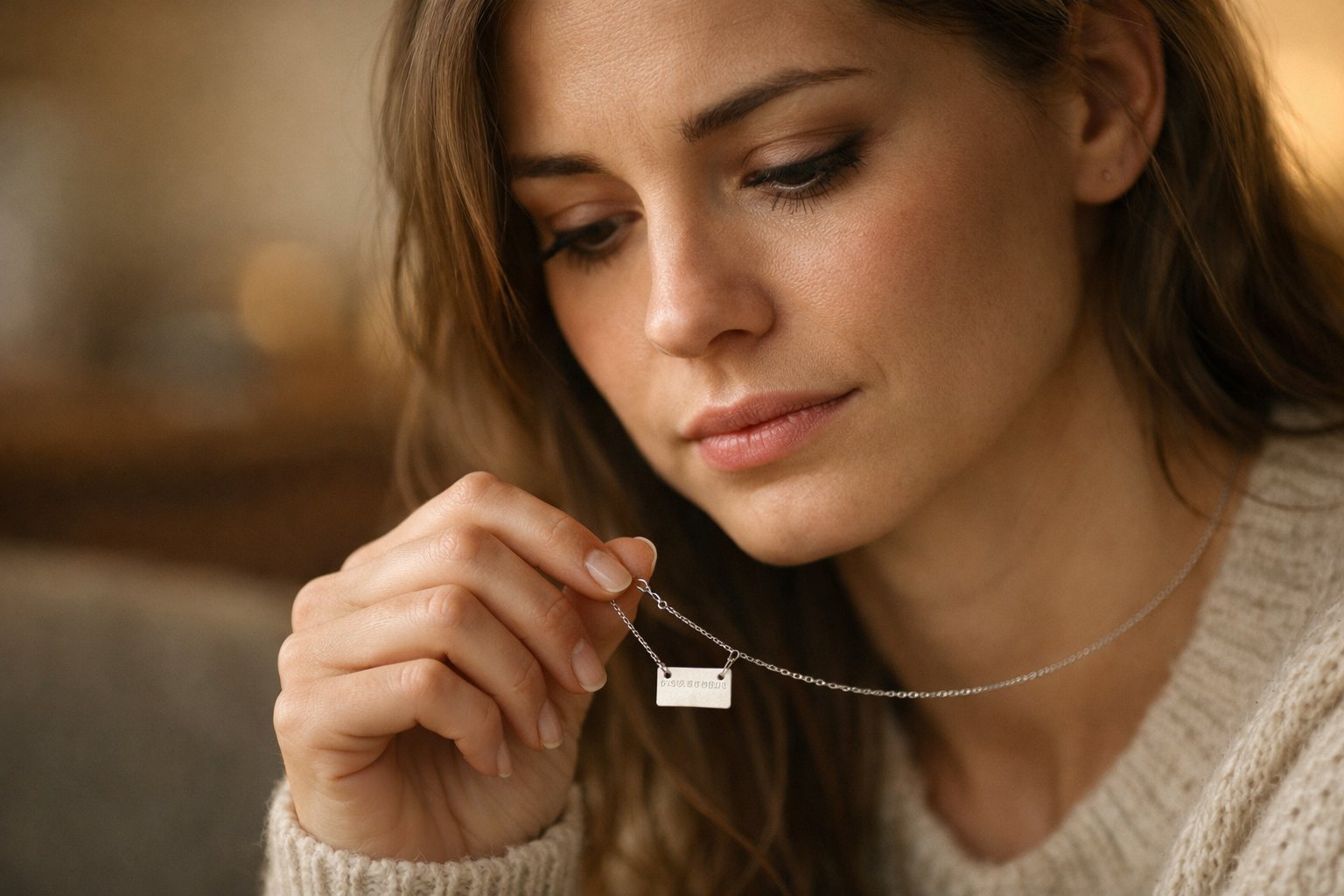
When she says "I'm fine," she's often carrying more than those two words suggest. Understanding what lies beneath requires noticing the small signals she sends and choosing gifts that speak when words fall short.
"I'm fine" functions as a shield more than a statement. She uses it to protect others from worry or to avoid seeming needy.
The phrase appears most often when she's overwhelmed but doesn't want to burden anyone. She might say it while managing too many responsibilities at once. She says it when she's tired of explaining how hard things really are.
Watch for the mismatch between her words and her body language. Her shoulders might slump even as she smiles. Her voice might sound flat or rushed. These contradictions reveal what "I'm fine" actually means: she's struggling but doesn't feel safe saying so.
A message card necklace offers her something tangible to hold onto during those moments. The card tucked inside can carry the exact words she needs to hear when she won't say what she needs out loud.
Real listening means paying attention to what she doesn't say. It means noticing when "I'm fine" appears repeatedly across days or weeks.
Look at her actions instead of just her words. Is she sleeping less? Skipping meals? Canceling plans she used to enjoy? These patterns tell a different story than "I'm fine" suggests.
Ask specific questions that can't be answered with automatic responses. Instead of "How are you?" try "What's been the hardest part of your week?" or "What's taking up most of your energy right now?"
Sometimes quiet ways of showing someone they're valued matter more than grand gestures. A custom engraved necklace with "You're doing enough" serves as a physical reminder that someone sees her effort.
She communicates her needs through indirect channels when direct words feel too vulnerable. These unspoken languages include her level of eye contact, how often she reaches out, and whether she accepts help when offered.
Physical gifts work as translators for feelings that are hard to express face-to-face. When someone gives her a personalized message jewelry piece, it says "I see you" without requiring her to admit she needs support.
The message "You're doing enough" specifically addresses the pressure she puts on herself. It validates her current efforts instead of suggesting she needs to do more or be different.
If you want something that feels personal without making the moment overly sentimental, a customizable necklace design keeps it meaningful yet light. You can personalize it to match exactly what she needs to hear.
➡️ Shop customizable message necklaces
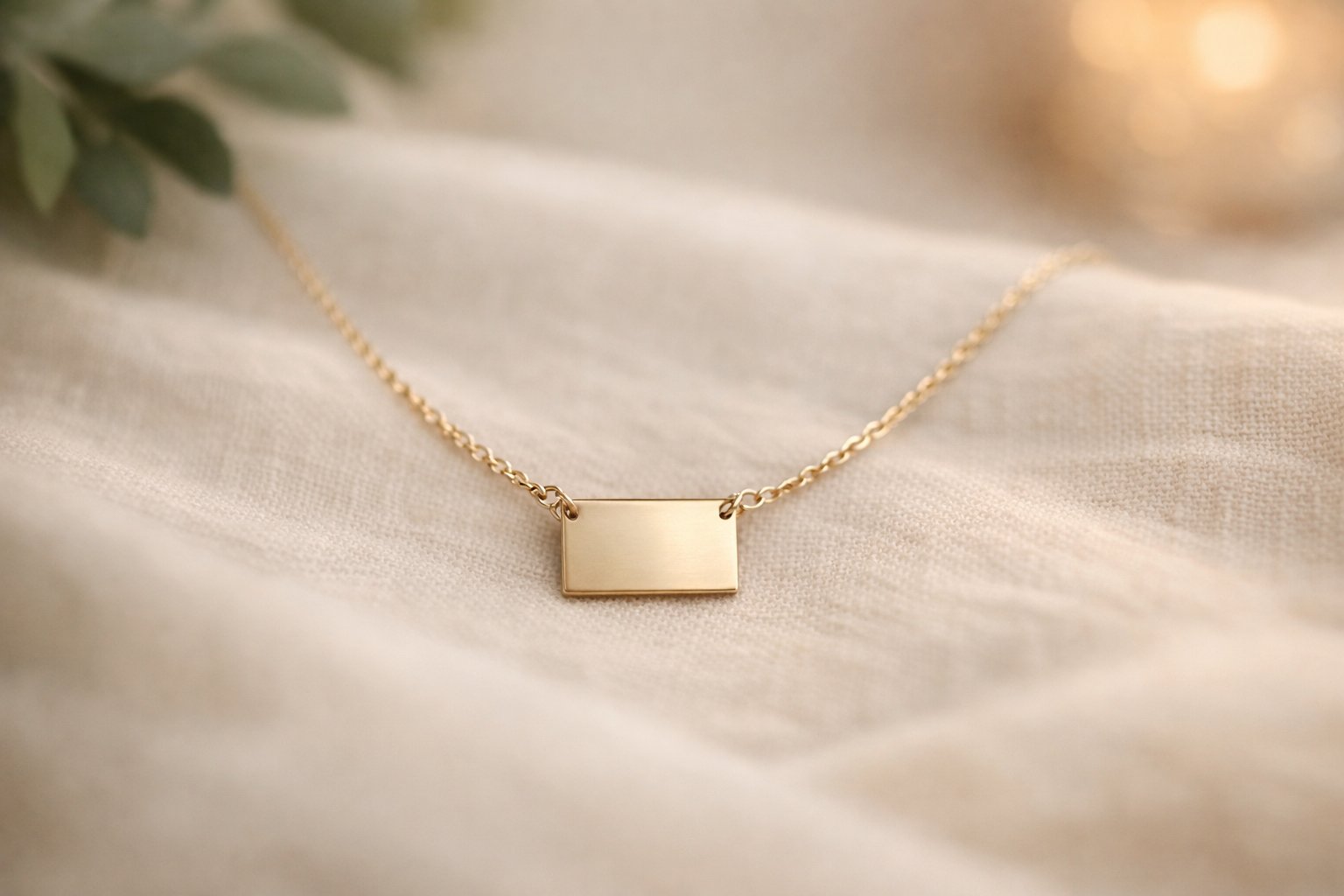
When someone keeps repeating "I'm fine," it often means she's carrying weight no one else can see. Telling her she's doing enough doesn't dismiss her struggle—it acknowledges the quiet labor she performs every day without recognition.
She wakes up early, handles a dozen small tasks before anyone notices, and manages emotions for everyone around her. Nobody sees the mental load or the constant adjustments she makes to keep things running smoothly. When she says "I'm fine," she's protecting others from the truth of how tired she really is.
A message card necklace that says "You're doing enough" becomes a physical reminder that someone notices. It validates the invisible work she does without needing her to explain or justify it. She doesn't have to prove she's struggling for the message to matter.
This kind of validation works because it doesn't require her to be failing or breaking down. It simply recognizes that what she's already doing matters. The necklace sits close to her heart, offering reassurance during moments when she questions whether she's measuring up.
The pressure to do more never announces itself loudly. It builds quietly through expectations that pile up without ever being spoken. She feels it when she scrolls past perfect images online, when she compares herself to others, or when she collapses at the end of the day wondering if she gave enough.
"You're doing enough" releases her from the need to constantly prove her worth. It tells her that rest isn't something she has to earn. A custom engraved necklace carries this message where she can touch it during difficult moments.
The relief comes from permission she didn't know she needed. She can stop adding more to her list and accept that what she's already giving is sufficient.
When someone keeps saying "I'm fine," they often need reassurance that their struggle is valid and their effort is enough. A message card necklace with thoughtful words can offer that quiet validation without forcing a conversation they're not ready to have.
The best messages avoid toxic positivity. Instead of "Stay strong" or "Everything happens for a reason," phrases like "You're doing enough" or "Rest when you need to" acknowledge the weight of what she's carrying.
Simple words work better than elaborate poetry. "You matter" lands more softly than a long paragraph about worthiness. "It's okay to not be okay" gives permission instead of pressure.
Some people prefer messages that feel like a gift from mom or another trusted person. Others want something that feels like their own private reminder. The sender matters less than the sentiment feeling true to her experience.
A customizable envelope necklace lets her keep the words hidden until she needs them. That privacy matters when she's protecting herself from well-meaning people who don't understand.
➡️ You can personalize it here.
Physical reminders work when words fail. She can touch the necklace during a meeting where she feels inadequate or glance at it when someone asks if she's okay. It becomes a tangible anchor to a truth she struggles to believe.
The gesture itself communicates care. Someone noticed she wasn't fine. Someone chose words specifically for her pain. That attention speaks louder than the bestselling designs that work for everyone.
Timing matters too. Giving her this when she's actively struggling shows you see through "I'm fine." It validates her experience without demanding she admit she's suffering. The necklace sits against her skin as proof that her feelings are real and her effort counts.
The right words can break through someone's protective wall without pushing too hard. A card message that honors her struggle while offering steady reassurance can help her feel less alone.
The challenge with someone who keeps insisting she's fine is that traditional cheerleading can feel dismissive. She doesn't need to be told she's a warrior or that everything happens for a reason. She needs recognition that things are hard right now and that her efforts count.
The most effective messages acknowledge both realities at once. They validate the difficulty while quietly affirming her worth. Phrases like "I see how much you're carrying" or "You don't have to be okay right now" create space for honesty without demanding it.
Pairing empathy with gentle encouragement works when the focus stays on her inherent value rather than her performance. Writing to someone you're no longer as close with requires similar care. The message should feel like a steady presence rather than a fix.
For someone who needs this kind of gentle reassurance, a customizable encouragement card can carry words she can return to when things feel heavy. She can keep it somewhere visible on harder days.
➡️ You can personalize it with your own message.
Direct examples help when choosing what to write. Simple phrases often land better than elaborate sentiments.
Messages that work:
These messages don't ask her to feel better or try harder. They release her from the pressure to prove she's managing.
A message card necklace for your wife becomes a physical reminder she can touch throughout the day. The jewelry serves as a quiet anchor when words feel too far away. Some prefer personalized jewelry with custom engraving that carries the exact phrase she needs to hear.
For those who want something more tangible, a handmade encouragement card offers a personal touch without feeling overwhelming. The message stays simple while the gesture shows she's thought of.
Jewelry becomes more than decoration when it holds a message someone needs to hear. A necklace rests close to the heart, making it a quiet but constant presence throughout the day.
A necklace offers something to hold onto when words feel too big or too small. When she reaches up to touch a pendant, she's reminded that someone sees her struggle and wants her to know she's enough.
The physical weight of metal against skin creates a sensory anchor. It grounds her when anxiety rises or when she's tempted to dismiss her own needs again. Dangle name pendants can carry initials or short phrases that feel personal without being obvious to everyone around her.
The act of touching jewelry becomes a private ritual. She doesn't need to explain it to anyone else. When accepting gifts feels difficult, a simple necklace bypasses some of that resistance because it doesn't demand anything from her.
If she needs something she can glance down at during hard moments, a simple engraved disc works. You can personalize it here.
Unlike flowers that wilt or cards that get filed away, a necklace stays present. She puts it on each morning, and the message travels with her through meetings, errands, and moments when she's alone with her thoughts.
The longevity matters for someone who struggles to internalize reassurance. One conversation fades from memory, but a tangible object keeps reinforcing the same truth. She's doing enough, even when her mind tries to convince her otherwise.
A message card necklace works because it doesn't require her to do anything except wear it. There's no pressure to respond or acknowledge in any particular way. The gift simply exists as a steady reminder that someone cares about her wellbeing without needing anything in return.
Small gestures often hold more weight than grand declarations. When someone says "I'm fine" but their shoulders tell a different story, the right words offered at the right time can shift something inside them.
One person began leaving handwritten notes on Fridays for colleagues who seemed worn down. The notes said simple things: "You're doing enough." No signatures. No explanations.
People were captivated by these anonymous affirmations. They'd find them tucked under coffee mugs or slipped into their bags. Some kept the notes for months, pulling them out during hard weeks. One teacher mentioned she'd taped hers inside her planner where she could see it during lesson planning.
The person leaving the notes never announced what they were doing. They just watched as faces softened when people discovered them. It wasn't about recognition. It was about creating a moment where someone felt less alone in their struggle.
A message card necklace can carry that same quiet power. She wears it close, and every time she touches it, she remembers someone saw her effort.
For something she can personalize with her own words, a custom engraved pendant lets her carry exactly what she needs to hear. You can choose the exact phrase here.
➡️ Browse customizable message designs
Another person shared how their partner noticed they'd been saying "I'm fine" more often. Instead of pushing for details, the partner left a note on the bathroom mirror: "The seeds you're planting are growing."
That recognition mattered more than any long conversation could have. Someone had noticed the invisible work. The late nights. The endless mental load. The constant second-guessing about whether it was all worth it.
Recovery work operates the same way. If someone manages a 4 out of 10 instead of a 2, they're doing enough. Progress doesn't always look impressive from the outside. But the person living it knows what it cost.
A simple bracelet with an encouraging phrase becomes a physical reminder on difficult days. She glances down and sees the words when doubt creeps in. It's not about perfection. It's about acknowledgment.
The workplace often becomes a stage where people perform competence while quietly carrying doubt, exhaustion, or fear of falling short. These invisible burdens grow heavier when there's no space to acknowledge them honestly.
Many employees say "I'm fine" when they're actually struggling with work-related questions about performance, worth, or sustainability. They wonder if they're contributing enough even when they're working past capacity.
The pressure to appear capable creates a mask that's hard to remove. Someone might arrive early, stay late, and still go home feeling inadequate. They compare themselves to colleagues who seem effortless in their success.
These hidden struggles often stem from unclear expectations or lack of feedback. When managers don't communicate what "enough" looks like, employees fill the silence with self-doubt. They push harder without knowing if they're moving in the right direction.
A necklace with a simple reminder can offer comfort during difficult workdays. Some people wear small tokens that ground them when imposter syndrome strikes. It's a private anchor that says the person wearing it matters beyond their productivity.
Leaders shape whether "I'm fine" becomes the default response or whether honesty finds room to breathe. Organizations that normalize vulnerability see less burnout and more authentic connection among team members.
Regular check-ins focused on well-being rather than just deliverables change the conversation. When a manager asks how someone is managing their workload and genuinely listens, they create permission for truth-telling.
Recognition also matters deeply. People need to hear they're doing enough when they are. A thoughtful card or customized acknowledgment can mean more than generic praise. Sometimes that message becomes something they keep at their desk during hard moments.
Teams thrive when members support each other's humanity alongside their professional goals. Small gestures—like noticing when someone seems overwhelmed—build cultures where people don't have to pretend they're fine when they're not.
Online spaces where people share struggles often become the most healing places to realize someone else feels the same weight. Comment sections and weekly check-ins create room for honest moments that break through the "I'm fine" barrier.
The first time someone types out what they've been carrying alone, their hands might shake a little. A comment section becomes sacred ground when one person admits they're struggling and another responds with recognition instead of advice.
These digital spaces work because they remove the pressure of face-to-face vulnerability. Someone can write three sentences about feeling inadequate as a caregiver at 2 AM and find responses by morning from people who understand completely.
The replies rarely try to fix anything. They say "me too" or "I see you" or share their own version of the same story. Sometimes a simple exchange in online communities reveals patterns that make isolation feel less permanent.
A message card necklace with gentle words can serve as a physical reminder of what someone learned in those threads. It carries the community's voice forward into harder moments.
The Friday open thread ritual creates a predictable place where honesty is expected rather than surprising. People know they can show up without pretense because that's exactly what the space exists for.
Unlike regular comment sections tied to specific articles, an open thread has no agenda except connection. Someone might share a small victory while another admits they snapped at their mother that morning. Both posts matter equally.
The weekly rhythm matters too. Knowing Friday brings that space helps people hold things until they can set them down among others who won't judge. It becomes a check-in point that structures the week around one guaranteed moment of being seen.
If someone wants to extend that same supportive energy offline, personalized jewelry lets them carry a specific message that echoes what the Friday open thread taught them about their own worth. You can personalize it here.
When someone keeps insisting they're fine, they may already be carrying more than they can hold. Recognizing when rest is needed and knowing how to offer words that land softly can make all the difference.
Burnout doesn't always announce itself loudly. It shows up in small ways first.
She might say "I'm fine" repeatedly, even when her eyes tell a different story. People dealing with burnout often claim they're okay while quietly drowning in responsibilities. She stops asking for help. She cancels plans she used to enjoy.
Her energy feels different. Tasks that once came easily now drain her completely.
A person who isn't rested may not recognize how deeply exhaustion has settled in. She might feel like nothing she does is ever enough. She worries constantly about falling behind.
Watch for the pattern: working late, skipping meals, brushing off concern. These aren't signs of dedication. They're warning signals that her system is overloaded and running on empty.
Words that remind someone they're already doing enough can become anchors in difficult seasons. A message card necklace lets her carry that reminder everywhere she goes.
The gesture works because it's quiet but persistent. She doesn't have to ask for encouragement. It's already there, resting against her heart.
Choose words that acknowledge her efforts without adding pressure. "You're doing enough" validates without demanding more. "Rest matters too" gives permission she might not grant herself.
If you want something personal that honors her specific journey, a custom engraved piece allows you to include words that speak directly to her situation. It becomes something she can touch when doubt creeps in.
You can personalize it with her name or a date that holds meaning.
➡️ Create your custom message here
Consistency matters more than grand gestures. Small reminders delivered regularly help more than one big moment. A necklace she wears daily keeps the message present when she needs it most, especially during seasons when believing in herself feels hardest.
A message card necklace becomes more than decoration when it holds words that interrupt the quiet storm of self-doubt. It can break through the practiced "I'm fine" and offer something steadier underneath.
She might wear the words close to her chest because reading them throughout the day matters more than she expected. A necklace that says "You are enough" or "Rest is strength" doesn't fix what's broken, but it creates small pauses in the tempest of trying to hold everything together.
The message doesn't need to be long. Sometimes a custom stamped bar necklace with just three words—"breathe," "enough," or "still here"—lands harder than a paragraph ever could.
She doesn't need to explain why she chose those particular words. They're hers. They remind her that the person she's been hard on deserves the same patience she extends to everyone else. When the necklace catches light or brushes against her collarbone, it's a tiny anchor back to something kinder than the voice that says she should be doing more.
The necklace stays with her through ordinary moments that turn unexpectedly hard. It doesn't announce itself, but when her hand reaches up to touch it, she remembers what it says without having to look.
If she wants something that feels personal without making the moment overly sentimental, a customizable card necklace design keeps it meaningful yet light. She might choose different words than someone else would. That's the point.
She can personalize it here.
Some days she forgets it's there. Other days, it's the only thing that feels true. Either way, she's carrying proof that someone thought she deserved to hear it, even when she struggles to believe it herself.
Choosing a gift that carries quiet reassurance requires understanding both the weight someone carries and the gentleness they need to hear it acknowledged.
A message card necklace works because it delivers comfort without demanding a conversation. When someone says "I'm fine" repeatedly, they often mean they don't have the energy to explain what's really happening inside.
A customizable message card necklace lets the giver choose words that land softly. Phrases like "You're doing enough" or "Rest when you need to" acknowledge the struggle without forcing them to name it.
The necklace becomes a physical reminder they can touch throughout the day. It says someone sees them, even when they're working hard to appear fine.
Short phrases carry more weight than long explanations. "You're enough" speaks directly to the fear that they're falling short.
"Keep going" offers encouragement without minimizing pain. "I see you" acknowledges their effort when they feel invisible.
"Still standing" honors resilience without demanding they be strong all the time. A personalized bar necklace can hold these brief messages in clean, simple typography.
"You matter" works for someone questioning their value. The best engravings feel like quiet truths rather than motivational slogans.
Delicate chains suggest gentleness rather than force. A simple pendant that rests near the heart creates a feeling of protection without weight.
Circle pendants represent wholeness and continuation. Bar necklaces offer clean lines that feel modern and unobtrusive.
Lockets that open create a private space for messages or tiny photos. The act of opening and closing becomes a small ritual of remembering they're supported.
Materials matter too. Sterling silver feels cool and calming. Rose gold carries warmth without being too bright.
The message matters more than the price tag. A necklace that says "You're doing enough" directly addresses the anxiety many people carry about not measuring up.
Pairing the message with their birthstone adds personal recognition. It says this was chosen specifically for them, not picked from a generic shelf.
If you want something that feels personal without making the moment overly sentimental, a customizable design like this keeps it meaningful yet light. You can personalize it here.
Including a handwritten note with the necklace explains why these specific words were chosen. The combination of permanent jewelry and temporary paper creates layers of meaning.
Physical presence matters. Presenting the necklace in person, even without a big speech, communicates care through proximity and attention.
The weight of the necklace itself provides a grounding sensation. Many people find comfort in having something to touch when they feel unsteady.
A compass pendant suggests direction without pressure to have everything figured out. An anchor charm represents stability during rough waters.
Choosing jewelry they can wear daily means the reassurance travels with them. They don't have to seek it out or remember to look at it.
The act of clasping the necklace around their neck becomes a small ceremony of care. It mirrors being held without requiring vulnerability in that moment.
Mountains represent endurance through difficulty. Trees symbolize growth and deep roots that hold steady.
Infinity symbols suggest love that continues regardless of circumstances. Hearts remain classic because they're universally understood as care.
Lotus flowers represent rising through muddy waters into bloom. Semicolons have become a recognized symbol for continuing the story when it would be easier to stop.
A simple initial necklace connects the wearer to someone who matters. Birds in flight suggest freedom and the ability to rise above current struggles.
Stars remind people they can shine even in darkness. The most powerful symbols are ones that hold personal meaning between the giver and receiver.