
Your Cart is Empty
A keepsake necklace holds close what matters most—a name, a date, a small symbol of love worn near the heart. When she pairs that tangible reminder with the quiet practice of journaling, something deeper takes shape. The act of writing becomes its own kind of holding, a way to catch fleeting thoughts and preserve the textures of ordinary days that slip by too quickly.
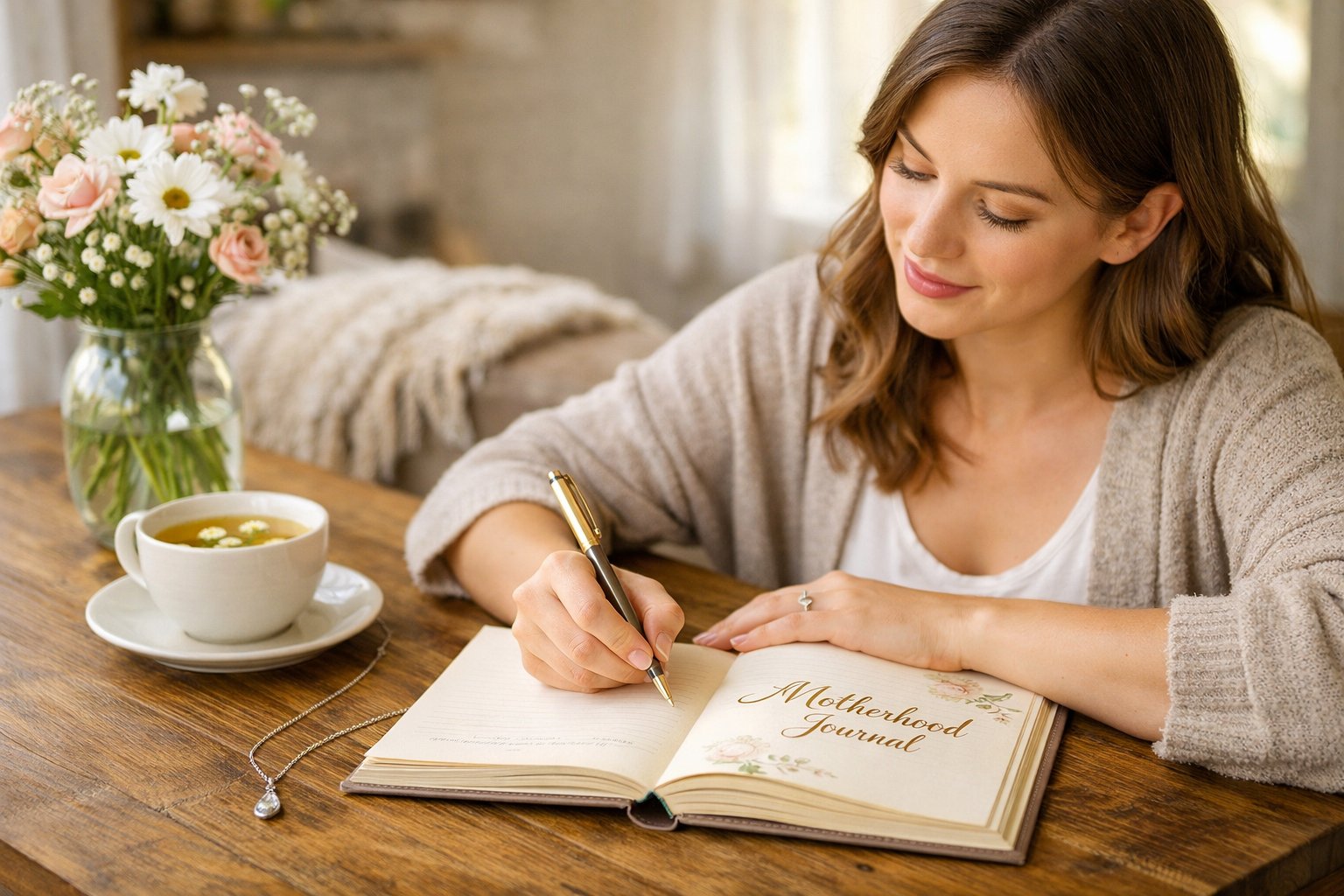
The best motherhood journals to pair with a keepsake necklace are those that offer simple, guided prompts and require only a few minutes each day, such as Q&A a Day for Moms or The Mother's Gratitude Journal, which help capture memories without overwhelming an already full life. These journals work because they honor the reality of motherhood—the exhaustion, the beauty, the in-between moments—while creating something she can revisit or even pass down. A personalized journal can make the practice feel even more intentional, especially when it mirrors the sentiment of the necklace she wears.
The ritual of writing beside something she wears daily creates a rhythm. Both become witnesses to this season, one resting against her skin and the other holding her words. Together, they form a quiet archive of what it means to be her, right now, in this particular chapter of motherhood.
Both journals and necklaces hold what cannot be spoken aloud in a single moment. Together, they create a language of remembrance that lives both on the page and against the skin.
A mother who writes while wearing something precious begins to notice how the two acts mirror each other. The pen moves across paper while the necklace shifts with her breath. Both are deliberate choices to hold onto what matters.
Necklaces often symbolize gifts between loved ones, carrying sentiment across time. When paired with a journal, these objects create a double archive. The necklace marks the body. The journal marks the day.
She might write about the morning her daughter first smiled or the weight of her son's hand in hers. The necklace she wears could be from her own mother or a meaningful piece for her daughter. Either way, it connects generations through more than blood.
Some mothers prefer custom engraved jewelry that holds initials or birthdates. These details echo what she records in her journal entries.
Motherhood asks a woman to hold too much at once. A keepsake journal documents personal memories and experiences in ways that honor the small moments alongside the monumental ones. The necklace does similar work without requiring words.
She touches the pendant when her hands are too tired to write. She returns to the journal when the necklace feels too quiet. Both serve as anchors when the days blur together.
Journals represent introspection and personal growth, giving her a private space to work through what motherhood stirs up. The necklace offers something she can reach for in public, a quiet reminder that she carries more than what shows on the surface.
Together, these objects let her hold the paradox of motherhood. The joy and the exhaustion. The love and the loss of self. The necklace stays constant while the journal pages fill and change.
What she wears near her heart and what she writes in private become two halves of the same story. The necklace might feature a birthstone or a charm that represents her family's heritage. The journal holds the context behind that choice.
She writes about why she chose that particular stone. She records the conversation with her mother-in-law who gave her the necklace. She notes how it felt the first time her child reached up and grabbed it.
If she wants something that feels personal without making the moment overly sentimental, a customizable journal design keeps it meaningful yet light. You can personalize it here.
The necklace becomes part of her children's earliest memories. The journal becomes the story she can give them later. Both are pieces that tell her story in different languages.
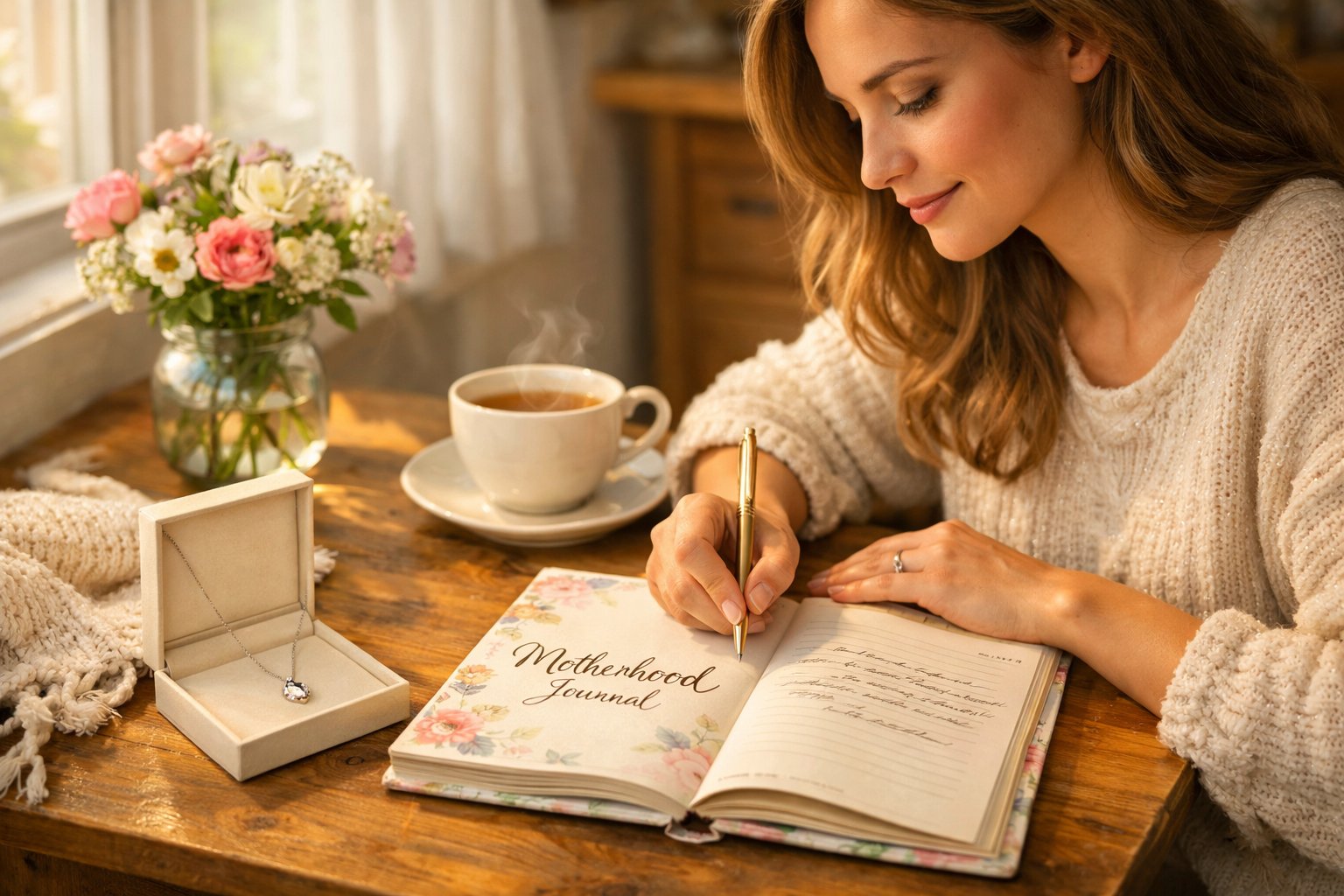
A meaningful motherhood journal becomes a quiet companion during a season of constant motion. It holds space for reflection without adding pressure, and it's designed to last beyond the moment.
The right journal prompts help moms navigate the messy middle of motherhood without glossing over the hard parts. She needs questions that don't demand perfection or performance.
Prompts like "What surprised you most today?" or "Where did you lose your patience, and what were you really feeling?" create room for truth. They help her see patterns in her responses and recognize what she's carrying beneath the surface.
Journaling through motherhood challenges works best when prompts balance gratitude with grief, joy with exhaustion. She doesn't need to celebrate every moment or fix every feeling. She just needs to name what's real.
A journal that asks her to reflect on her own growth, not just her child's milestones, becomes something she returns to. It reminds her that her story matters too.
She doesn't have an hour to write. She has five minutes between bedtime and collapsing on the couch.
A journal designed for busy moms respects that reality. It offers short prompts that don't require backstory or elaborate answers. One sentence can be enough.
Simplicity doesn't mean shallow. A single question like "What did I need today that I didn't get?" can unlock something deeper than three pages of forced gratitude. The format should feel like relief, not another task.
Undated layouts give her permission to skip days without guilt. Minimal design keeps the focus on her words, not decorative distractions. She needs space to breathe on the page, not instructions on how to perform her feelings.
The best journals don't demand consistency. They wait for her.
A motherhood journal becomes a personal time capsule when it's built to last. She's not just documenting today. She's leaving something behind.
Thick, acid-free paper prevents ink from bleeding through and yellowing over time. A hardcover binding protects pages from sticky fingers and spilled coffee. These details matter when she imagines her daughter reading this twenty years from now.
A handmade leather journal with hand-stitched binding carries weight in her hands. It feels intentional, like something worth returning to.
She wants something that feels personal without making the moment overly sentimental. A customizable design like this keeps it meaningful yet light. You can personalize it here.
Timeless design avoids trendy fonts or overly decorated covers. Clean lines and neutral tones let her words become the focal point. This isn't about aesthetics. It's about creating something that honors the quiet work of becoming.
The journal that fits this moment isn't always the one with the prettiest cover. It's the one that meets her where she is and holds space for what she's actually feeling.
She needs to name what's happening right now. Is she in the fog of newborn nights, or watching her last baby start school? Is she grieving who she used to be, or celebrating how far she's come?
Journaling prompts designed specifically for motherhood help her locate herself in the story. Some seasons call for gratitude lists. Others need room for messy, unfiltered feelings.
A journal built around crafting your ideal motherhood season works when she's ready to realign. If she's navigating loss, transition, or identity shifts, she might need something that makes space for both grief and joy at the same time.
The keepsake necklace she wears tells a story. Her journal should do the same.
Some mothers write in paragraphs. Others need bullet points or single sentences scribbled between feedings.
If the necklace holds birthstones or initials, a guided journal for moms with structured prompts keeps her tethered to the people she's honoring. If it's a symbol of something she's working through—a miscarriage, a new beginning, a hard year—she might want blank pages that don't ask her to perform gratitude when she's not ready.
A custom mother journal can include her children's names or a meaningful date. It mirrors what the necklace does: it makes the private work feel witnessed.
She doesn't need a journal that tells her how to feel. She needs one that lets her show up exactly as she is.
The texture matters. Leather softens with handling. Linen feels gentle. A journal she reaches for daily should feel good in her hands, not precious or fragile.
If she wants something that feels personal without making the moment overly sentimental, a customizable design keeps it meaningful yet light. You can personalize it here.
Color and weight influence whether she actually uses it. A heavy hardcover might sit on a shelf. A slim softcover slips into a diaper bag or nightstand drawer.
Some journals include ribbon markers or lay-flat binding. These aren't just aesthetic choices—they're about removing friction so she can write when the urge strikes, not when everything's perfect.
Different journals meet different needs in motherhood, from celebrating tiny wins to tracking milestones worth remembering. Some offer daily prompts for reflection while others keep things simple with a single line each day.
These journals focus on what went right instead of what feels hard. They guide moms through structured gratitude practices and positive reflections that reshape how she sees her days.
The Mother's Gratitude Journal uses thought-provoking prompts to help her capture both ordinary moments and extraordinary ones. It's designed to infuse long days with celebration and acknowledgment of her own experience.
Many affirming journals include space for listing three good things from each day. Others prompt her to write about moments when she felt capable or proud. The structure matters less than the habit of noticing what's working.
She might pair one of these journals with a personalized necklace for Mother's Day as a way to honor both inner work and outward symbols of her journey.
Thoughtful journal prompts help mothers reflect, heal, and grow through the messy and beautiful parts of parenting. These journals ask questions she might not think to ask herself.
Prompts might explore how motherhood has changed her sense of self or what values she wants to pass down. They create space for processing identity shifts and recognizing emotional growth. Some focus on relationship dynamics while others dig into personal dreams that still matter.
Maternal Journal offers free resources and guided exercises using creative techniques to boost wellbeing through pregnancy, birth, and parenthood. The variety of styles helps her find what resonates.
She doesn't need to answer every prompt. The best ones open up thoughts she's been carrying without realizing it.
When time feels tight and energy runs low, a single sentence captures the day. These journals reduce the pressure while still creating a record of her experience.
The format works because it's sustainable. She doesn't need quiet or inspiration or even full thoughts. Just one line about what happened or how she felt. Over time, those lines become patterns she can look back on.
Some one-line journals include prompts for each day while others leave the space completely open. Both approaches work as long as she can maintain the practice without guilt on days she skips.
This style pairs well with physical keepsakes because both honor simplicity. Neither demands perfection.
These journals document the details she doesn't want to forget as her children grow. They track firsts, favorites, funny moments, and developmental leaps.
Back-and-forth journals between mother and child create a shared keepsake where both perspectives live together. She writes something, her child responds when they're able, and the conversation becomes a record of their relationship over time.
Milestone journals often include spaces for photos, handprints, or tucked-in mementos. They're less about her internal experience and more about capturing childhood as it unfolds. Some families keep one journal per child while others prefer a family journal that holds everyone's stories.
She might choose this type when she wants something tangible to pass down someday. The journal becomes an heirloom alongside physical keepsakes like jewelry that marks who they are together.
Journaling becomes self-care when it creates space to process motherhood's emotional weight without judgment. Small rituals around writing can restore energy rather than drain it, and gentle observation helps navigate feelings that might otherwise overwhelm.
She doesn't need an hour. Research shows that journaling for just 15 minutes three times weekly produces measurable mental health benefits.
Those 15 minutes might happen during naptime or after bedtime. They might happen in the car before walking into the house. The timing matters less than the consistency.
A personalized leather journal can sit on her nightstand as a quiet invitation. She can pair it with the keepsake necklace she wears, both objects holding space for motherhood's private moments.
Simple ways to carve out time:
The practice doesn't ask for perfection. It asks for presence.
The ritual signals to her body that this time belongs to her. Lighting a candle before opening the page. Making tea. Sitting in the same chair each time.
These small acts create what researchers call "psychological safety." Her nervous system learns that this space is different from the rest of her day.
She might keep her custom embossed notebook and favorite pen together. If something feels personal without adding pressure to the moment, it often helps the practice stick. You can personalize it here.
The ritual doesn't require elaborate setup. It requires intention. Even pulling out the journal becomes a signal that she's pausing to notice what she's carrying.
Elements that support gentle rituals:
The benefits of journaling extend beyond the writing itself. The ritual creates a boundary between her role as mother and her experience as a person.
Motherhood brings feelings that contradict each other. Joy and exhaustion. Gratitude and resentment. Love and loss of self.
The journal holds all of it without asking her to resolve the contradictions. Self-care journaling works by creating distance between feeling and reaction, giving her space to witness emotions without immediately acting on them.
She can write: "I love him and I miss my old life." Both truths exist. The page doesn't judge which feeling is more valid.
A handmade gratitude journal can track moments of tenderness alongside harder days. Over weeks, patterns emerge. She notices what depletes her and what restores her.
Prompts for emotional honesty:
The practice isn't about positive thinking. It's about accurate thinking. When she writes without trying to fix or improve herself, the journal becomes a place where all her selves can coexist.
A motherhood journal becomes most powerful when it holds not just her own reflections, but the voices of those she loves and the traditions that shaped her. These entries create a record that reaches backward to honor what came before and forward to guide what's yet to come.
She can ask her children simple questions and write their exact words in the journal. Their answers about favorite foods, scary dreams, or what makes them laugh reveal who they are at each age.
Recording children's everyday observations creates a portrait that shifts and changes. She might note the way her daughter pronounces certain words or her son's current obsession with trucks. These details fade quickly from memory.
She can dedicate pages to each child's milestones and struggles. A guided family journal offers prompts that make this easier when she's not sure what to document. The small shifts in personality matter as much as first steps.
Some mothers create a monthly interview tradition. They ask the same questions each time and watch how answers evolve. This becomes a record of growth that photos alone can't capture.
She can write about the recipes, rituals, and beliefs passed down through her family. These stories connect her children to relatives they may never meet.
Recording why certain traditions matter gives them weight. She might explain the story behind her grandmother's necklace or why they always gather on specific holidays. Legacy planning through family journals helps preserve what might otherwise be lost.
She can interview older relatives and transcribe their memories. Their voices carry wisdom about resilience, love, and navigating hard times. A personalized family tree necklace worn while writing these entries creates a physical connection to the lineage she's documenting.
Writing about ancestral heritage stories grounds her children in something larger than themselves.
She notices what fills ordinary days. The way light hits the kitchen table during breakfast. Her child's current bedtime routine. The simple moments that define this season become remarkable when revisited years later.
She can document the mundane in specific detail. Not just "we went to the park" but which park, what her daughter wore, how the air smelled. These specifics bring memories back to life.
A custom journal with her children's names feels more intentional than a generic notebook. You can personalize it here.
➡️ Create a custom family journal on Zazzle
She transforms routine moments by asking what future readers need to know. Her current parenting challenges and small victories reveal the texture of this particular time. The chaos and beauty sit side by side on the page.
Writing down thoughts creates space to process emotions that often go unspoken, helps mothers recognize patterns in their days, and builds a quiet kind of self-trust that grows stronger with each entry.
Motherhood changes a woman in ways she cannot always name in the moment. Journaling helps mothers process emotions like resentment, exhaustion, and grief over her pre-motherhood self without judgment.
When she writes about a hard day, she often finds patterns she did not notice before. Maybe rage surfaces every Tuesday when she is doing everything alone. Maybe sleep matters more than she admits. The page does not argue back or tell her she should be grateful.
Small shifts become visible:
A guided journal for moms offers structure when freestyle writing feels overwhelming. She can track her emotional patterns alongside her child's milestones. Some mothers prefer custom journals that feel like they were made specifically for this season.
The mental load shows up as invisible work that never makes it onto a to-do list. Journaling gives her a place to name what she carries, from remembering vaccination schedules to tracking everyone's emotional temperature throughout the day.
When she writes it down, journaling can help her feel more grounded and find clarity about what actually needs her attention. The act of moving thoughts from her mind to paper creates distance. What felt urgent at midnight sometimes looks manageable by morning.
She might notice she is the only one remembering certain things. Or that she needs different support than what she is getting. Writing about these moments without judgment creates space to notice what is really driving her stress.
If she wants something that feels personal without making the moment overly sentimental, a customizable journal keeps it meaningful yet light. You can personalize it here.
Every mother second-guesses herself. Journaling becomes quiet evidence that she knows more than she thinks she does.
When she looks back at entries from weeks ago, she sees that her instinct about sleep training was right. Or that saying no to that event protected her family. Reflecting on daily wins and lessons learned cultivates a healthier mindset about her choices.
She builds a record of her own wisdom. Not the kind that comes from experts or books, but the lived knowledge that comes from showing up day after day. A personalized motherhood journal paired with something she wears creates a daily reminder that this work matters.
The benefits accumulate quietly. She becomes someone who trusts her own voice a little more with each page.
A motherhood journal and a keepsake necklace can work together to create a layered record of this season. The words she writes and the piece she wears both hold meaning that deepens when they're connected through intention.
The act of writing about her child while wearing something that represents them creates a quiet ritual. She might choose jewelry for mom that carries their initials or birthstone, then reference that same detail in her journal entry for the day.
When she writes "Today E said his first full sentence," the necklace becomes more than decoration. It's a physical anchor to that memory. Some mothers find that touching the pendant while they write helps them focus on what matters most in that moment.
A guided journal for moms often includes prompts about milestones and daily observations. She can note when she first wore the necklace, what it symbolizes, or how it felt to receive it. These details turn both objects into a matched set of memory keeping tools.
The metal doesn't fade the way paper might yellow. The words don't tarnish the way a chain might. Together, they preserve different dimensions of the same experience.
She might establish a simple practice: put on the necklace, open the journal, write one or two sentences. Keepsake journals that busy moms will actually use are designed for these brief moments rather than long writing sessions.
The physical act of clasping a personalized name necklace can signal to her brain that it's time to slow down and reflect. It becomes a boundary between the rush of the day and the quieter space she needs to capture what happened.
Some women prefer to journal at night after their children sleep, the necklace still warm against their skin from the day. Others write in the morning before anyone else wakes, choosing which piece to wear based on what they want to remember or honor that day.
She doesn't need elaborate routines. The pattern matters more than perfection. Writing while wearing something meaningful creates a sensory memory that links the two practices together over time.
Years from now, she can give her child both the journal and the necklace. The written memories explain the context the jewelry can't convey on its own. The physical object proves the words weren't just abstract thoughts.
A custom birthstone pendant paired with entries about her pregnancy or her child's early years creates a complete story. She might write about choosing the stone, receiving the gift, or what she felt the first time she wore it.
If she uses dangle name pendants with multiple children's names, her journal can track how the piece grew as her family did. Each addition becomes its own chapter in the written record.
The combination gives her child something to hold and something to read. They'll see their name in her handwriting and feel the weight of the metal she wore while raising them. Both objects become proof of her attention and her love during this particular season of their lives.
The right prompts transform journaling from obligation into connection. They pull out the small, tender moments that deserve to be remembered alongside the big milestones that mark time passing.
She can record first steps and first words, but the magic lives in what happened between those moments. The way her toddler's hand felt reaching for hers in the grocery store. How her voice sounded calling "mama" from another room.
A guided motherhood journal with dated prompts keeps these details from slipping away. She might write about the morning routine that felt chaotic but somehow worked. Or the bedtime question her child asked that revealed how much they're growing.
Recording specifics matters more than perfect prose. What her child wore on their birthday. The exact phrase they repeated all week. The temperature of the air during their first park visit of spring.
These details become the story she'll want to reread years later. Not because they were extraordinary, but because they were real and ordinary and hers. She doesn't need to document everything. Just the moments that made her pause.
Gratitude journaling significantly boosts optimism levels in mothers when practiced consistently. She can list three small things each evening that brought unexpected lightness to her day.
Maybe it was her child's laughter during bath time. Or five quiet minutes with coffee while they played independently. The way sunlight came through the kitchen window at exactly the right angle.
A personalized gratitude journal with her children's names can make the practice feel more intentional. She writes what she noticed about each child that day. Not achievements or milestones necessarily. Just something true.
This practice shifts what she sees throughout her day. Her brain starts looking for moments worth remembering instead of just problems needing solutions.
She can write letters her children will read someday. Not advice exactly, but observations about who they're becoming. What makes them laugh. How they show kindness. The questions they ask that surprise her.
Or she writes to herself. Letters from this version of her to the woman she was before motherhood. Words she needs to hear on difficult days from someone who understands.
If she wants something that holds both journal and keepsake together, a custom photo journal lets her add pictures alongside her words. You can personalize it here.
These letters don't need polished language. They need honesty. She writes what she wants to remember about this season when her children were this age. Before everything changes again.
A journal becomes more than ink and paper when she treats it with intention. The choices she makes now about how she stores it, who she invites to read it, and how she marks different chapters will determine whether it survives as a family treasure.
She should choose custom handmade leather journals that can withstand years of handling. Leather develops character over time rather than falling apart.
Archival quality matters more than she might think. She can use acid-free paper and permanent ink pens to prevent fading. Regular ballpoint pens fade within decades. She should store her journal in a cool, dry place away from direct sunlight.
If she wants something that feels personal without making the moment overly sentimental, a custom leather journal keeps it meaningful yet light. She can personalize it with her children's names or birth dates stamped into the cover. This creates immediate connection for whoever holds it years from now.
Digital backup provides insurance against loss. She might photograph pages monthly or scan completed journals. Cloud storage means her words survive even if the physical book doesn't. But she shouldn't rely only on digital copies. Paper carries weight that screens never will.
She can write directly to her children or grandchildren in specific entries. These notes might explain why she made certain choices or what she hopes they understand about her season of life.
Leaving blank pages with prompts invites her children to add their own stories later. She might write "What do you remember about this year?" or "How did this moment shape you?" at the bottom of entries. This transforms solitary journaling into generational conversation.
She should include context that won't be obvious decades later. Small details about daily routines, costs of groceries, or cultural moments help future readers understand her world. A note about why she felt tired doesn't mean much without mentioning she was working night shifts or caring for aging parents.
Photos tucked into pages create visual anchors. She might add ultrasound images, first day of school pictures, or candid shots that capture ordinary moments. These images give texture to her written words.
Different phases deserve different approaches. Early motherhood might mean brief bullet points scribbled during naps. Later years might allow longer reflections. She shouldn't force consistency when life doesn't allow it.
She can mark transitions with specific entries. The last night of breastfeeding, the first day of kindergarten, or the moment her teenager drove away alone all deserve deliberate recording. These marker moments help her and future readers understand the arc of her motherhood.
Changing handwriting tells its own story. She might notice her penmanship shifts when she's exhausted or stressed. These physical traces reveal what words alone cannot. She shouldn't try to maintain perfect writing. The shakiness matters.
She can create sections for different children or different themes. Some mothers keep separate journals for each child. Others prefer one continuous record with color-coded entries. Either method works as long as she maintains it. A personalized keepsake journal with divided sections helps organize multiple storylines without creating separate books.
Mothers often wonder how to blend their journaling practice with physical keepsakes in ways that feel natural and meaningful. The right journal becomes a companion to treasured items like necklaces, creating layers of memory that grow richer over time.
A mother captures her journey most honestly when she writes without pressure or expectation. One-line-a-day entries allow her to note a single moment that mattered, whether it was her child's first attempt at tying shoes or the unexpected weight of missing them at bedtime.
She might keep a simple leather journal on her nightstand where thoughts can flow freely. The act of writing by hand slows her down enough to notice what she's actually feeling.
Voice recordings offer another path when her hands are full. She can speak her observations while driving or folding laundry, preserving the exact tone of a moment she doesn't want to forget.
Hybrid journals with pockets and photo slots let mothers tuck in hospital bracelets, pressed flowers, or tiny drawings alongside their written words. These physical spaces create a home for objects that might otherwise get lost in drawers.
A keepsake memory book designed specifically for mothers often includes prompts paired with attachment points for mementos. She can tape a lock of hair next to her reflection about the first haircut, creating a tactile timeline.
Some mothers prefer journals with clear envelopes bound into the pages. She slides in ultrasound images, first shoes tags, or birthday cards, building a collection she can touch and reread.
She might choose a journal cover that echoes her necklace's design elements. If her necklace holds a birthstone, a journal with a corresponding color or gemstone accent creates visual harmony between the two keepsakes.
Dating each entry with the same milestone markers engraved on her necklace strengthens the connection. When her necklace displays her children's initials, she can structure journal sections around each child's name.
A custom leather journal embossed with the same names or dates as her necklace makes the pairing feel intentional. The repetition across objects deepens their meaning.
If she wants something that feels personal without making the moment overly sentimental, a customizable design like this keeps it meaningful yet light. You can personalize it here.
Prompted journals offer questions that guide without restricting. They ask things like what surprised her this week or what she learned about herself through her child's eyes.
Gratitude-focused journals provide three lines each day for noticing what held beauty or relief. This structure prevents overwhelm while building a record of small mercies she might otherwise overlook.
Monthly milestone journals break the year into manageable sections. She reflects on one child or one theme at a time, making the practice sustainable even during exhausting seasons.
Photo journaling lets her paste one image per week with a few sentences about what happened just before or after the camera clicked. The stories behind the smiles matter more than the smiles themselves.
She can create a memory jar system where she writes moments on slips of paper throughout the week, then transfers favorites into her journal during quieter weekend hours. This captures spontaneity without demanding immediate processing.
Themed entries around specific objects help her focus. She might write about the day represented by each charm on her necklace, or journal whenever she adds something new to a memory box.
A handmade scrapbook journal with blank pages gives her freedom to tape, glue, and arrange however the moment requires.
The journal's physical presence matters as much as what goes inside it. When she selects one that feels substantial in her hands or opens with a satisfying weight, she's more likely to return to it.
A journal that matches her aesthetic preferences becomes something she wants to spend time with rather than another obligation. If she loves texture, linen covers invite touch. If she values simplicity, clean lines let the content speak.
Pairing her journal with her keepsake necklace creates a ritual. She might touch the necklace before writing, using it as a tangible reminder of why these words matter. The two objects begin to hold each other's meaning.
When journaling helps moms work through emotions and lower stress, the practice becomes self-care rather than documentation. The journal stops being about perfect preservation and starts being about honest presence with her own experience.