
Your Cart is Empty
Some items hold more than just monetary value. They carry memories, love, and the presence of someone who has passed. A necklace inherited from a grandmother often becomes a tangible connection to her memory, offering comfort during moments of grief and longing. Jewelry passed down through families transforms into more than an accessory. It becomes a way to feel close to someone who shaped a person's life.
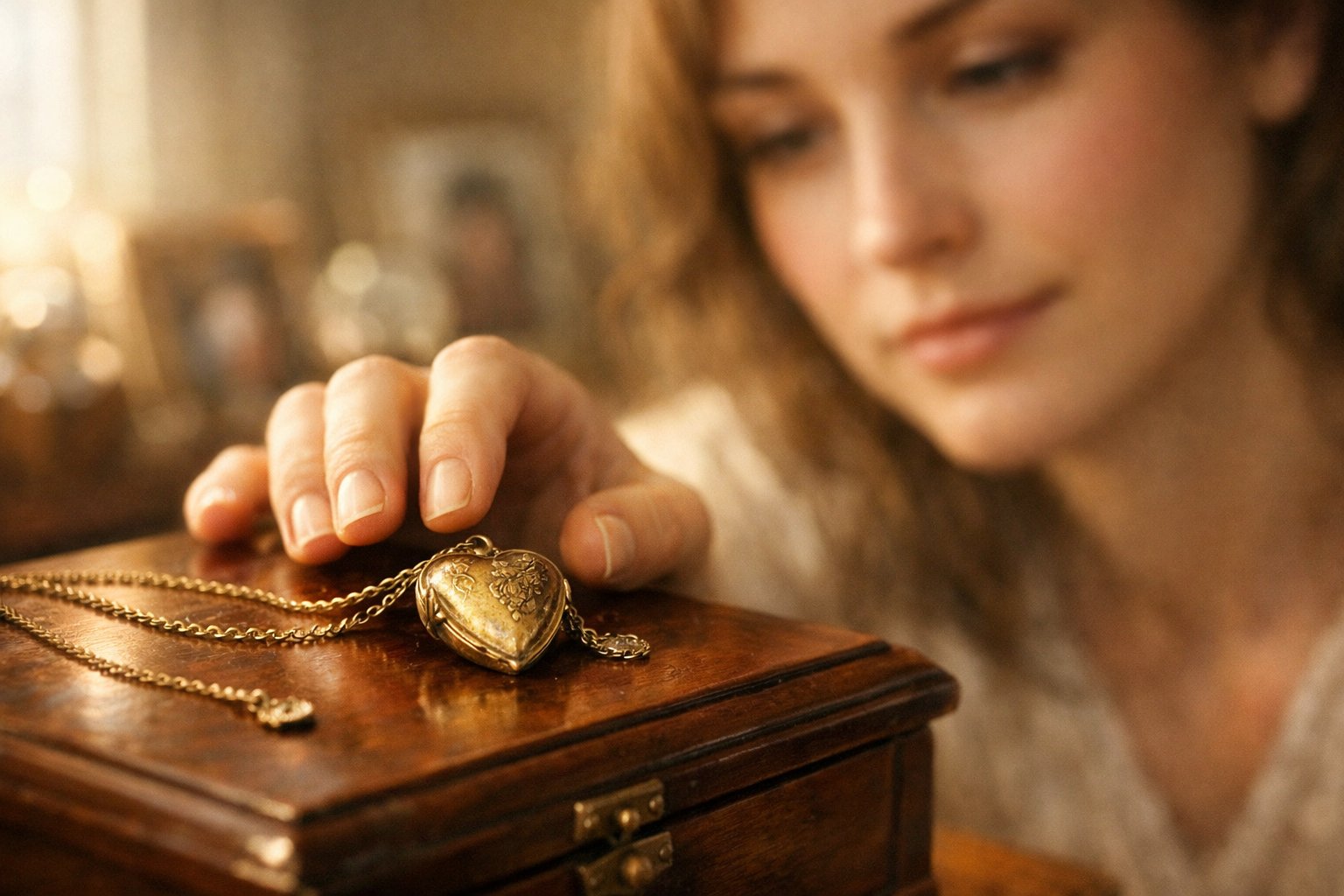
The act of reaching for a specific piece of jewelry when missing a loved one is deeply personal. Some people find themselves drawn to a particular necklace that their grandmother wore often or left behind. This simple gesture can bring a sense of peace and continuity. It reminds them that the bond they shared continues even after death.
These pieces often carry stories within them. They might have been worn during important family gatherings or passed down through multiple generations. Whether it's a religious medallion or a simple gold chain, the necklace becomes a symbol of enduring love and connection that transcends time.
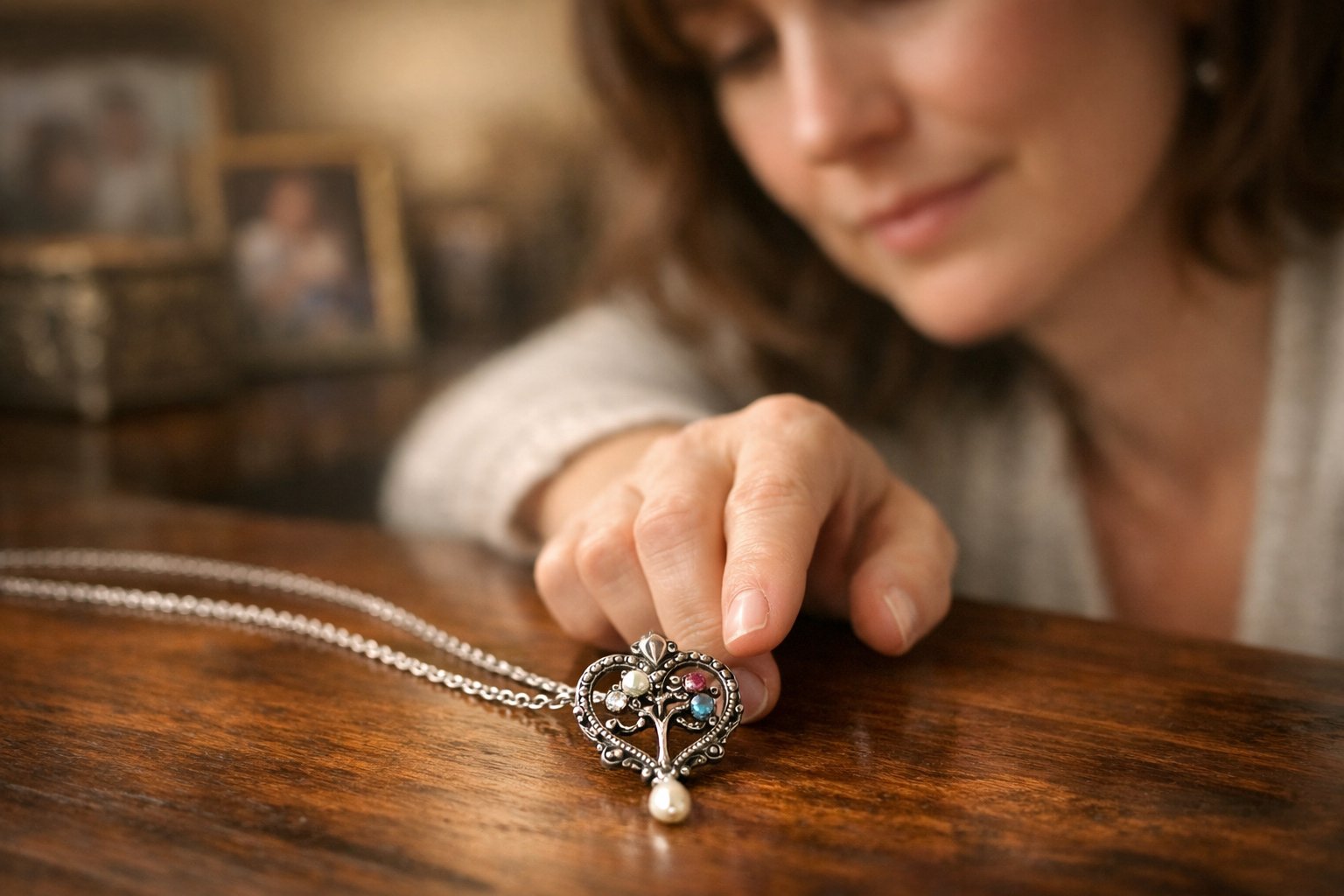
The diamond necklace in Guy de Maupassant's story serves as more than just jewelry. It embodies deception, social ambition, and the gap between what things seem to be and what they truly are.
The necklace appears as a stunning piece of jewelry adorned with what look like expensive diamonds. Mathilde Loisel selects it from her friend Madame Forestier's jewel box because it looks the most costly and impressive. She cannot tell that the necklace is made of paste, not real diamonds.
The piece comes from Madame Forestier's collection. When Mathilde visits to borrow jewelry for a fancy party, she examines every item carefully. The diamond necklace catches her eye immediately because of its apparent value and beauty.
The actual worth of this false appearance amounts to only 500 francs at most. Yet its convincing look fools Mathilde completely. She believes she wears genuine wealth around her neck, which makes her feel transformed for one night.
The lost necklace drives the entire plot forward after Mathilde wears it to the ball. She enjoys one evening of feeling wealthy and admired. But when she discovers the jewelry missing, panic sets in.
Mathilde and her husband search everywhere without success. They visit the jeweler whose name appears on the box, but he confirms the necklace didn't come from his shop. The couple then locates a replacement necklace that looks identical, priced at 40,000 francs.
To buy the replacement necklace, Mathilde's husband uses his inheritance and borrows heavily from friends and loan sharks. They return it to Madame Forestier, who never opens the box to inspect it. Mathilde spends ten years in poverty paying off the debt before learning the original was fake.
For those seeking meaningful jewelry to commemorate loved ones, personalized photo necklaces on Zazzle offer authentic sentimental value.
The necklace symbolizes greed and the desire for wealth that Mathilde cannot resist. She chooses the most expensive-looking item because she craves the social status it represents. Her inability to see past the surface reveals how appearances deceive her.
The jewelry represents the split between appearances and reality throughout the story. Beautiful on the outside but worthless underneath, it mirrors Mathilde's own values. She focuses entirely on looking wealthy rather than appreciating what she has.
The false diamonds also show how dangerous vanity can be. Mathilde's obsession with status costs her ten years of hard labor. Her greed leads her to assume the necklace must be real because it looks expensive.
Simple sterling silver necklaces on Amazon prove that genuine materials need not break the bank, unlike Mathilde's costly mistake with costume jewelry.
Mathilde Loisel's character represents a study in how vanity and social ambition can reshape a person's entire life. Her journey from a discontented middle-class wife to a woman hardened by years of poverty reveals the true cost of living beyond one's means.
Mathilde Loisel is a remarkably beautiful woman who believes her appearance entitles her to a life of luxury. She obsesses over expensive things and glamorous experiences that remain out of reach. Her apartment brings tears to her eyes because it fails to match the grand home she imagines she deserves.
Key aspects of her vanity:
Madame Loisel's dissatisfaction never stems from actual hardship. She has a devoted husband and a comfortable life. Yet she spends her days dreaming of silk curtains, fine jewelry, and elegant dinner parties she cannot afford.
Her husband's love means little compared to the admiration of strangers. This shallow perspective blinds her to the good things already present in her life.
Social class consumes Mathilde's thoughts completely. She feels trapped in a middle-class existence when she believes she belongs among the elite. The invitation to the Minister's ball represents everything she has wanted.
She refuses to attend without the proper dress and jewelry. Her husband sacrifices his savings for a new gown, but that isn't enough. Mathilde borrows what she believes is a diamond necklace from her wealthy friend Jeanne Forestier to complete her transformation.
At the ball, Mathilde finally experiences the life she craves. She becomes the center of attention, admired by everyone present. The evening proves intoxicating because it confirms her belief that she naturally belongs in high society.
This single night of glory costs her the next ten years. The materialism driving her choices leads directly to her downfall when she loses the borrowed necklace.
Losing the necklace forces Mathilde into genuine poverty for the first time. She and her husband must replace what they believe is an expensive diamond piece. They take on crushing debt that requires a decade of hard labor to repay.
Mathilde's beauty fades as she scrubs floors, haggles with shopkeepers, and wears shabby clothing. Her hands become rough and red from constant work. The glamorous life she once dreamed about disappears entirely.
The irony strikes hardest when she finally learns the truth. The original necklace was made of paste, worth almost nothing. Her sacrifice was unnecessary. This revelation exposes how her obsession with appearances and social status destroyed her life over something worthless.
Those seeking meaningful jewelry gifts today can find pieces that celebrate real relationships rather than shallow status. Personalized necklaces offer genuine emotional value that outlasts temporary admiration.
Monsieur Loisel stands as a model of selflessness in Guy de Maupassant's story, consistently putting his wife's happiness above his own desires. His willingness to give up personal dreams and endure years of hardship reveals a character defined by quiet devotion and unwavering support.
Monsieur Loisel's generosity appears early when he gives Mathilde money intended for his own hunting rifle to buy her a party dress. This decision costs him a personal dream without complaint. When Mathilde loses the borrowed necklace, he immediately searches the cold streets for it despite being undressed and needing rest before work.
The most significant sacrifice comes when he devises the plan to replace the necklace. He orchestrates loans and mortgages that trap them in debt for ten years. During this decade, he works multiple jobs and gives up any hope of comfort or happiness.
He never forces Mathilde to face consequences alone. Instead, he protects her by shouldering the financial burden himself. While she works as a maid and washerwoman, he takes on evening accounting jobs and late-night copying work to earn extra money.
His actions demonstrate that his own desires hold no weight when they conflict with Mathilde's needs. Check out this elegant necklace jewelry box to store cherished pieces safely.
Monsieur Loisel accepts his middle-class life with contentment while Mathilde constantly rails against it. He finds joy in simple pleasures like a good pot of soup, but she dreams of fancy meals and expensive furniture.
When he brings home the party invitation, he expects excitement. He cannot understand her devastation over lacking proper attire. He suggests she wear flowers instead of jewelry, viewing their financial limits as simple facts rather than injustices.
His emotional stability stands in sharp contrast to her outbursts and dissatisfaction. At the party, he dozes in a coat room while she dances all night, perfectly content to let her enjoy herself. He never seeks the spotlight or complains about his own comfort.
This difference extends to how they handle the debt. He works without imagining alternate fates or lamenting his situation. She ages rapidly under the physical and emotional strain, but he simply does what needs doing. Consider preserving family memories in this personalized photo album.
The story's tragic irony hinges on Monsieur Loisel's decisions. His suggestion that Mathilde borrow jewelry from Madame Forestier sets the disaster in motion. When the necklace goes missing, his choice to replace it rather than confess the loss leads to their ten years of poverty.
His plan to take on massive debt protects Mathilde's pride but destroys their lives. They move to a cheaper apartment, dismiss their servant, and take on grueling manual labor. The sacrifice he makes proves unnecessary when they learn the original necklace was fake.
Yet his character never wavers throughout the ordeal. He remains devoted and uncomplaining even as youth and opportunity slip away. His blind devotion to pleasing Mathilde ultimately costs him everything, making him both noble and tragic in equal measure.
Madame Forestier serves as a wealthy friend who generously lends Mathilde jewelry, yet their relationship reveals deeper truths about social class and the deceptive nature of appearances. Her character becomes central to understanding how a single act of kindness leads to devastating consequences.
Mme. Forestier owns an impressive collection of jewelry that reflects her wealthy status. When Mathilde needs accessories for an important party, she turns to her well-to-do friend from convent school days. Madame Forestier responds with kindness and opens her jewelry box without hesitation.
The act of lending demonstrates genuine friendship. She allows Mathilde to choose freely from her valuable pieces. Mathilde selects what appears to be an expensive diamond necklace, believing it represents the luxury she craves.
This moment of generosity sets the entire tragic story in motion. The necklace becomes a symbol of the illusion of wealth that Mathilde desperately wants to embody. For those seeking meaningful jewelry with sentimental value, the emotional connection often matters more than material worth.
The friendship between these two women spans back to their school years together. Yet their social positions have diverged significantly. Madame Forestier lives comfortably in wealth while Mathilde struggles with middle-class life.
Despite this gap, Mme. Forestier shows no snobbery or condescension. She remains kind and generous rather than falling into greed or materialism. When Mathilde asks to borrow jewelry, she immediately agrees without making her friend feel inferior.
After the necklace goes missing, Mathilde replaces it without telling the truth. Madame Forestier only expresses annoyance about the delayed return. She doesn't notice the substitution at all, which proves significant later. Their friendship essentially pauses for ten years while Mathilde works to pay off debt.
Ten years later, Mme. Forestier barely recognizes Mathilde when they meet by chance on the Champs Elysées. Hard labor has aged Mathilde beyond her years. When Mathilde finally confesses the truth about losing and replacing the necklace, Madame Forestier reveals the shocking reality.
The original necklace was made of paste, not real diamonds. It was essentially worthless compared to what Mathilde paid to replace it. This revelation single-handedly triggers the story's twist ending and exposes the central theme about appearances versus reality.
The fact that a wealthy woman owned fake jewelry proves an important point. Madame Forestier understood that status and class are often illusions. She knew expensive-looking accessories could achieve the same social effect as genuine ones. For readers interested in affordable jewelry that makes a statement, this lesson remains relevant today.
Guy de Maupassant's short story follows Mathilde Loisel through a life-changing evening that begins with borrowed jewels and ends with a devastating revelation. The narrative moves from her dissatisfaction with middle-class life to a single night of glory, followed by ten years of hardship to repay a debt.
Mathilde Loisel is a beautiful and charming woman born into a middle-class family in Paris. She married a clerk who works for the Ministry of Education because she had no dowry to attract a wealthier husband.
Mathilde constantly dreams of luxury instead of accepting her comfortable life. She imagines elegant rooms with silk hangings and fancy dinner parties. Her husband M. Loisel seems content with simple pleasures like a good stew for dinner.
The couple lives modestly with a maid. Yet Mathilde feels miserable about her unfashionable apartment and humble lifestyle. She believes her beauty entitles her to wealth and glamour.
M. Loisel brings home an invitation to an elegant party hosted by the Minister of Education. Instead of feeling excited, Mathilde becomes upset because she has nothing suitable to wear. Her husband offers her 400 francs for a new dress, which was money he saved to buy a hunting rifle.
Even with a new dress, Mathilde remains unhappy. She complains about having no jewelry to wear. M. Loisel suggests she borrow something from her wealthy friend Mme. Forestier.
Mathilde visits Mme. Forestier and searches through her jewel box. She chooses an expensive-looking diamond necklace. At the party, she becomes the center of attention and dances "intoxicated with pleasure."
You can find beautiful replica vintage necklaces to recreate this classic look.
After the party ends, Mathilde feels embarrassed by her modest wraps. She rushes outside to avoid being seen by wealthier women in their expensive furs. The couple searches desperately for a carriage in the cold night.
When they finally arrive home on the rue des Martyrs, Mathilde looks in the mirror one last time and discovers the necklace is gone. They search everywhere but cannot find it. M. Loisel retraces their steps through the streets without success.
The Loisels find a replacement necklace that costs 40,000 francs. M. Loisel uses his 18,000 franc inheritance and borrows the rest from friends and loan sharks. They buy the replacement and return it to Mme. Forestier, who never opens the box.
The next ten years are filled with poverty and hard work. The Loisels dismiss their maid and move to a garret apartment. M. Loisel takes a night job copying documents while Mathilde does heavy housework and chores herself.
The hard labor ages Mathilde quickly. She loses her remarkable beauty and looks like an old woman. After ten years, they finally repay the entire debt.
One day while walking, Mathilde sees Mme. Forestier, who barely recognizes her aged friend. Mathilde decides to tell her the whole story, proud of having replaced such an expensive necklace. Mme. Forestier reveals the twist ending: the original necklace was fake paste worth only 500 francs at most.
This detailed summary shows how Guy de Maupassant crafted a story about the dangers of vanity and materialism. Consider reading annotated editions of the story to explore deeper analysis.
Guy de Maupassant's story examines how desire for material possessions destroys lives, how appearances deceive both characters and readers, and how rigid social structures trap people in cycles of ambition and disappointment.
Mathilde Loisel's obsession with material wealth drives every decision she makes. She rejects her comfortable middle-class life because she believes happiness comes from expensive dresses, fancy jewelry, and luxurious furniture.
Her fixation on possessions blinds her to what she already has. When her husband saves money to buy a hunting rifle, she cries until he gives her the funds for a new gown instead. This pattern shows how materialism shapes gender roles and priorities within their marriage.
The borrowed necklace becomes the ultimate symbol of her material desires. She believes the diamonds will transform her into someone worthy of admiration. Instead, losing the necklace forces her into ten years of grueling labor to repay the debt.
The irony deepens when readers learn the original necklace was fake. Her sacrifice was unnecessary. The story suggests that chasing material wealth often costs more than the objects are worth. A vintage-style pendant necklace can hold meaning without requiring financial ruin.
The story's central irony revolves around the worthless necklace that appears valuable. Mathilde spends a decade repaying a debt for diamonds that were actually paste and glass. This twist reveals how easily people mistake appearance for reality.
Mathilde herself embodies false appearances. At the ball, she seems elegant and wealthy, attracting attention from important men. Her beauty and confidence that night came from borrowed items and temporary illusion. The study of beauty in the story questions whether her attractiveness was real or simply a product of expensive accessories.
The deeper irony lies in what the suffering reveals. After ten years of hard work, Mathilde seems happier than before. She finds pride in honest labor and loses her shallow obsession with status. The catastrophe that ruins her financially actually improves her character. Readers can explore different interpretations of these themes through various literary analyses.
Nineteenth-century French society offered women few options for advancement. Mathilde couldn't change her social class through work or education. Marriage was her only path upward, and she felt trapped by marrying a clerk instead of a wealthy man.
The story exposes how social class determines everything from daily activities to personal worth. Mathilde measures her value entirely through comparison to richer women. She refuses to visit her wealthy friend because seeing luxury items makes her miserable.
Her husband accepts their position without complaint. He enjoys simple meals and feels grateful for dinner invitations that torture his wife. This contrast shows how ambition and contentment divide them. When crisis strikes, both take on work defined by their gender—she does housework while he handles bookkeeping.
The rigid class system offers no middle ground between poverty and wealth. One mistake sends the couple tumbling from modest comfort into genuine hardship, demonstrating how precarious their position always was.
The necklace operates as a deceptive symbol of wealth that mirrors Mathilde's mistaken beliefs about happiness and status. The necklace symbolizes greed and the desire for wealth, while other objects in the story expose the gap between what characters want and what they actually have.
The borrowed necklace appears valuable but contains no real worth. It looks like diamonds at first glance, yet closer inspection reveals it as fake jewelry.
This false appearance drives the entire tragedy of the story. Mathilde believes she wears genuine diamonds to the ball, which gives her temporary confidence and joy. The necklace represents the surface-level nature of social class because Mathilde values it based on looks alone.
When she loses the necklace, Mathilde spends ten years paying for a replacement necklace made of real diamonds. The irony cuts deep when she discovers the original was worthless. The replacement necklace costs her youth, beauty, and comfort for something that never had true value.
The fake jewelry also suggests that the wealthy lifestyle Mathilde craves might be equally hollow. She pursues an illusion that brings no real happiness. Her dreams of luxury prove as false as the costume jewelry she borrowed.
Mathilde's shabby apartment walls and worn furniture remind her daily of her middle-class status. She fixates on what she lacks rather than appreciating what she has.
The invitation to the ministerial ball becomes another symbol of social climbing. Her husband sees it as a kind gesture, but Mathilde views it as torture since she owns no proper dress. This reaction shows how objects trigger her endless dissatisfaction.
The 400 francs her husband saves for a hunting rifle gets redirected to buy her ball gown. This sacrifice demonstrates the family's limited resources and the husband's devotion. Yet Mathilde still feels incomplete without jewelry to match her dress.
Even her friend Madame Forestier's jewelry box represents the wealth gap between them. Mathilde sorts through the pieces with trembling hands, selecting the most impressive necklace she can find. These physical objects measure her perceived social failures.
Check out personalized jewelry or find classic fiction books on Amazon to explore similar themes.
The mirror in Mathilde's home reflects both her physical appearance and her inner vanity. She gazes at herself with displeasure, always comparing her reality to her fantasies. After ten years of hard labor, the mirror shows her transformation into a hardened, aged woman.
Her hands become rough and red from household work after losing the necklace. These physical changes symbolize her fall from even modest comfort into poverty. The hands that once refused to do heavy cleaning now scrub floors and carry water.
The attic apartment where Mathilde ends up living represents her complete social descent. She moves from dissatisfaction with middle-class life to genuine hardship. The cramped, cheap space shows how her pursuit of false glamour led to real suffering.
Mathilde Loisel's desire to appear wealthy at a single party sets off a chain of events that destroys her comfortable middle-class life. The loss of a borrowed necklace forces her and her husband into ten years of crushing poverty as they work to repay the debt.
The Loisels face an immediate crisis when Mathilde loses the diamond necklace. Her husband explores every possible option to replace it without admitting the loss to Madame Forestier.
He borrows money from multiple sources to buy a replacement necklace worth 36,000 francs. The couple takes on loans they can barely afford to repay.
Financial decisions made in desperation:
The themes of vanity, poverty, and deception intertwine as the couple begins their long struggle. Monsieur Loisel sacrifices his entire inheritance of 18,000 francs toward the debt. He signs notes for the remaining amount that will haunt them for years.
The debt transforms every aspect of their daily existence. Mathilde learns what real poverty feels like after years of merely feeling poor in her middle-class life.
She dismisses their servant and does all the housework herself. She washes dishes, scrubs floors, and takes out the trash. Her hands become rough and red from constant labor.
The couple's living situation deteriorates rapidly. They rent a garret apartment under the roof. Mathilde haggles with shopkeepers at the market to save a few pennies.
She dresses in old, worn clothes and looks aged beyond her years. The woman who once dreamed of elegant dinners now counts every sou. Monsieur Loisel takes on evening accounting work after his regular job ends.
Their sacrifice spans an entire decade. The greed that drove Mathilde to borrow the necklace costs them their youth and health.
Mathilde changes physically during the ten years of hardship. Her beauty fades as she works without rest. She becomes loud, rough, and harsh in her manner.
Yet she shows surprising strength in accepting her fate. She pays back every franc of the debt without complaint during those years. Her husband emerges as a true martyr through his sacrifice, paying for a mistake that wasn't his own.
The cruel irony comes when Mathilde finally tells Madame Forestier about replacing the necklace. The original was fake, worth only 500 francs. Mathilde's suffering becomes meaningless when she discovers the truth.
Her decade of poverty was spent repaying a debt seventy times larger than necessary. The necklace she thought justified her sacrifice was worthless costume jewelry. She blames Madame Forestier for her misfortune rather than accepting responsibility for losing the borrowed item.
Guy de Maupassant's story delivers its most powerful impact through the revelation that the borrowed necklace was fake all along. This surprise ending changes how readers interpret everything that came before it.
The twist ending works by withholding a crucial piece of information until the final lines. Madame Forestier reveals that her necklace was made of paste, not real diamonds. It was worth only five hundred francs.
Mathilde and her husband spent ten years in poverty to repay a debt of 36,000 francs. They replaced what they thought was an expensive piece of jewelry. The necklace they bought was genuine, but the original was worthless.
This revelation shows that Mathilde's sacrifice was completely unnecessary. She worked as a maid and lived in harsh conditions for nothing. The object she valued so highly had no real worth, much like her pursuit of status and appearances.
The story contains multiple types of irony that build tension throughout the narrative. Dramatic irony occurs when readers suspect something the main character doesn't know. An attentive reader might question why Madame Forestier so easily agreed to lend such a valuable item.
Key ironic elements include:
Guy de Maupassant crafted this situational irony to show how appearances deceive. Readers can find beautiful jewelry pieces to commemorate special memories on Zazzle.
The ending forces readers to reconsider Mathilde's entire journey. She had a comfortable life before the party with a maid and her basic needs met. Her obsession with luxury destroyed what she already possessed.
The irony extends to her values. She believed material objects defined worth and status. The necklace's true value being nothing mirrors the emptiness of her aspirations. Her ten years of suffering taught her humility and hard work, but at an enormous cost.
Madame Forestier's casual revelation shows she never considered the necklace important. She didn't notice it had been replaced with real diamonds. This detail emphasizes how much Mathilde projected her own desires onto objects that held little meaning for others. For those seeking meaningful jewelry with personal significance, Amazon offers various memorial pieces.
Guy de Maupassant's short story has shaped how writers approach twist endings and social commentary. The tale's influence extends from classroom study guides to modern adaptations that continue to explore themes of vanity and class struggle.
Maupassant established himself as a master of the short story format through works like "The Necklace." Published in 1884 during the Realist movement, the story demonstrated what critics call the "impression of truth" by focusing on a single transformative event in ordinary life. His approach rejected Romantic ideals of passion and imagination in favor of depicting everyday experiences of working-class Parisians.
The story's structure influenced countless writers who followed. Maupassant showed how a brief narrative could deliver powerful social criticism while maintaining suspense. His technique of revealing character through action rather than lengthy description became a template for modern short fiction.
Writers studying the essence of human vices through literature often point to this work as a prime example. The story strips away pretense to reveal how pride and materialism can destroy lives. This unflinching examination of character flaws resonated with readers and inspired similar explorations in later works.
"The Necklace" has maintained significant influence on literature and popular culture since its publication. Teachers worldwide use it to introduce students to irony and social themes. The story appears in anthologies, textbooks, and detailed study guides that help readers analyze its layers of meaning.
The tale has inspired numerous retellings across different media. Stage adaptations, films, and modern short stories borrow its core premise of deceptive appearances leading to life-altering consequences. "The Gift of the Magi" by O. Henry explores similar themes of sacrifice and ironic twists, showing Maupassant's influence on contemporary writers.
Readers can find literary analysis books on Amazon or teaching materials on Zazzle that explore the story's continued relevance.
The story remains compelling because it addresses timeless human weaknesses. The relationship between appearance and reality continues to resonate in an era dominated by social media and material display. Readers recognize how the protagonist's obsession with status mirrors modern consumer culture.
Modern audiences relate to the pressure of maintaining appearances beyond one's means. Credit card debt, luxury goods purchased for image rather than need, and social comparison all echo the central character's fatal choices. The story warns against letting pride override practical judgment.
The twist ending still surprises new readers despite the story's age. This unexpected revelation forces reflection on wasted years and misplaced values. Literature courses use it to teach about irony while readers discover personal applications to their own lives and priorities.
Family heirloom necklaces carry deep emotional significance and require specific care to maintain their condition and meaning. Understanding their symbolism, preservation methods, and psychological impact helps people honor their grandmother's memory through these cherished pieces.
Family heirloom necklaces represent continuity across generations. They serve as physical connections to ancestors and embody the values, stories, and love passed down through families.
These pieces often symbolize a grandmother's enduring presence in her grandchild's life. The act of wearing such a necklace transforms it into a protective talisman that provides comfort during difficult moments.
Many cultures view inherited jewelry as carriers of family blessings and wisdom. The necklace becomes more than metal and stones—it holds memories of shared moments, whispered advice, and unconditional love.
Wearing a grandmother's necklace creates a tangible connection to her memory during the grieving process. The physical weight and presence of the jewelry provides comfort when words fail.
Many people touch or hold their inherited necklace during moments of stress or sadness. This simple act can trigger positive memories and provide emotional grounding during overwhelming feelings of loss.
Grief counselors recognize that memorial jewelry serves as a healthy coping mechanism. The piece becomes a private way to keep a grandmother close throughout daily activities and special occasions.
Gold and silver remain the most common materials for heirloom necklaces due to their durability. These metals withstand decades of wear while maintaining their beauty and structural integrity.
Pearl strands represent classic grandmother jewelry that transcends fashion trends. Many families also pass down pendant necklaces featuring birthstones or religious symbols that held personal meaning to the original owner.
Vintage designs from specific eras reflect the fashion preferences of their time. Art Deco pieces feature geometric patterns, while Victorian necklaces often showcase intricate filigree work and sentimental motifs like hearts or flowers.
Layering vintage necklaces with contemporary pieces creates a balanced look that honors tradition while expressing personal style. This approach allows the heirloom to stand out without appearing costume-like or outdated.
Some people wear their grandmother's necklace for special occasions only, preserving its significance for meaningful moments. Others incorporate it into daily outfits, finding comfort in having that connection present throughout ordinary activities.
Pairing heirloom jewelry with simple, modern clothing lets the piece become the focal point. A classic pearl necklace works beautifully with a crisp white shirt, while a vintage pendant complements minimalist dresses and tops.
Professional cleaning every six to twelve months maintains the necklace's condition and identifies potential repair needs. Jewelers can check clasps, restring pearls, and polish metals to restore their original luster.
Storage matters significantly for preservation. Keeping the necklace in a soft pouch or lined jewelry box prevents scratches and tangling. Separating pieces prevents chains from knotting and stones from damaging each other.
Removing jewelry before showering, swimming, or applying cosmetics protects it from chemical damage. Perfumes, lotions, and chlorine can tarnish metals and degrade delicate materials like pearls or gemstones over time.
Research shows that wearing meaningful jewelry reduces anxiety and provides emotional comfort. The familiar weight and presence of a grandmother's necklace can lower stress levels during challenging situations.
Many people report feeling their grandmother's support when wearing her jewelry. This psychological connection provides courage during important life events like job interviews, weddings, or difficult conversations.
Sentimental jewelry serves as a physical reminder of unconditional love and acceptance. Touching the necklace throughout the day reinforces positive memories and strengthens the emotional bond that transcends physical absence.