
Your Cart is Empty
You buy her a beautiful set of printed affirmation cards. She loves them at first, places them on her nightstand, and reads them for a few days. Then they disappear under a stack of books or get tucked into a drawer. It's not that she doesn't care about the message. It's that they require her to remember to look at them, and daily life has a way of crowding out even the smallest rituals.
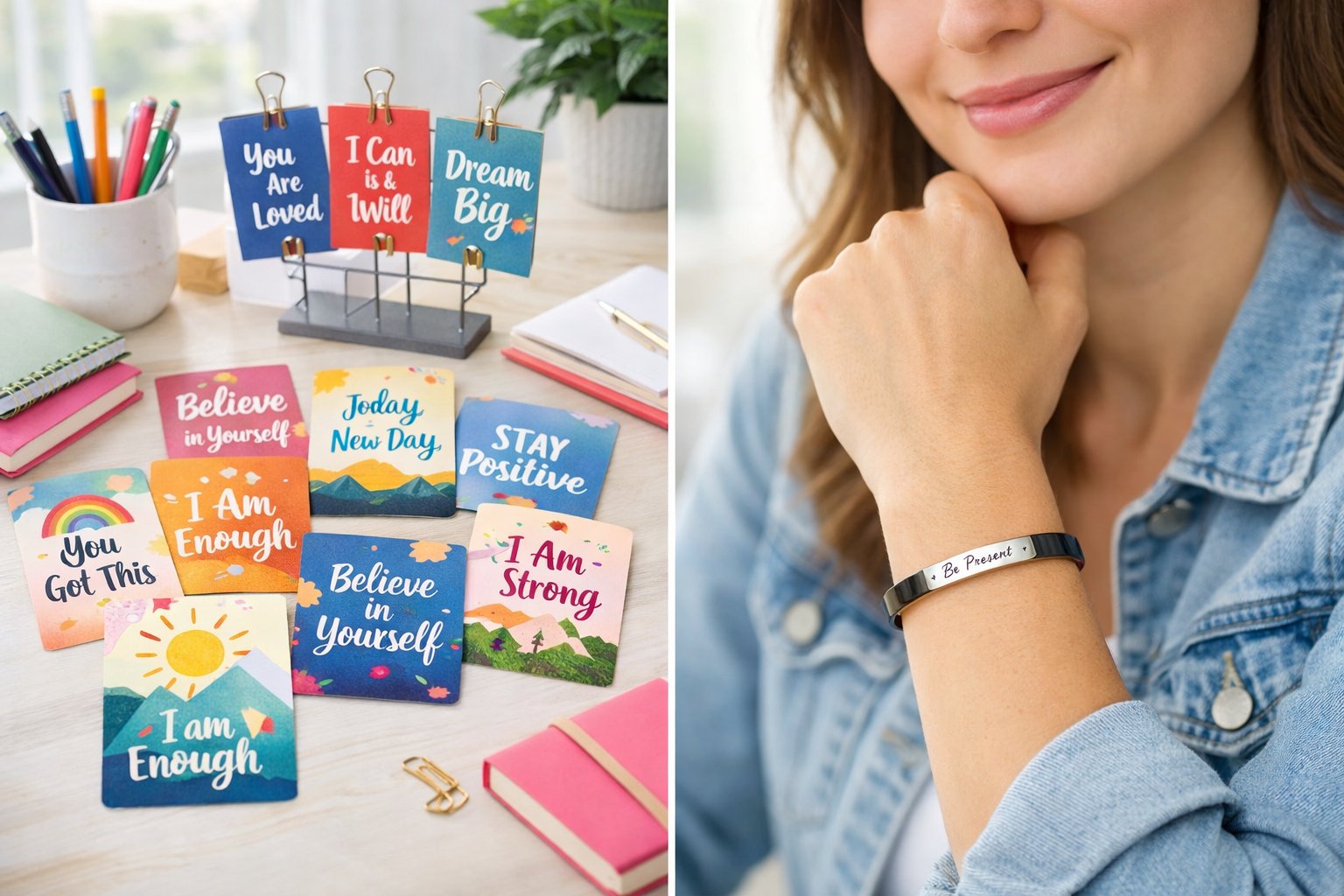
Wearable affirmations become part of her routine because she already gets dressed every morning, while printed affirmations depend on her creating a new habit from scratch. This difference in how digital affirmations work applies to physical formats too. Visibility matters more than intention. When she wears a bracelet or necklace with an encouraging word, she sees it dozens of times without planning to. It shows up when she reaches for her coffee, types an email, or checks her phone. The message finds her instead of waiting to be found.
The right choice depends on how she actually moves through her day. Some women naturally pause for reflection and appreciate creating affirmation cards they can hold and read. Others need their reminders woven into what they already wear. A simple personalized bracelet or a custom affirmation necklace might carry more daily impact than the most thoughtfully designed card set because it stays visible without extra effort.
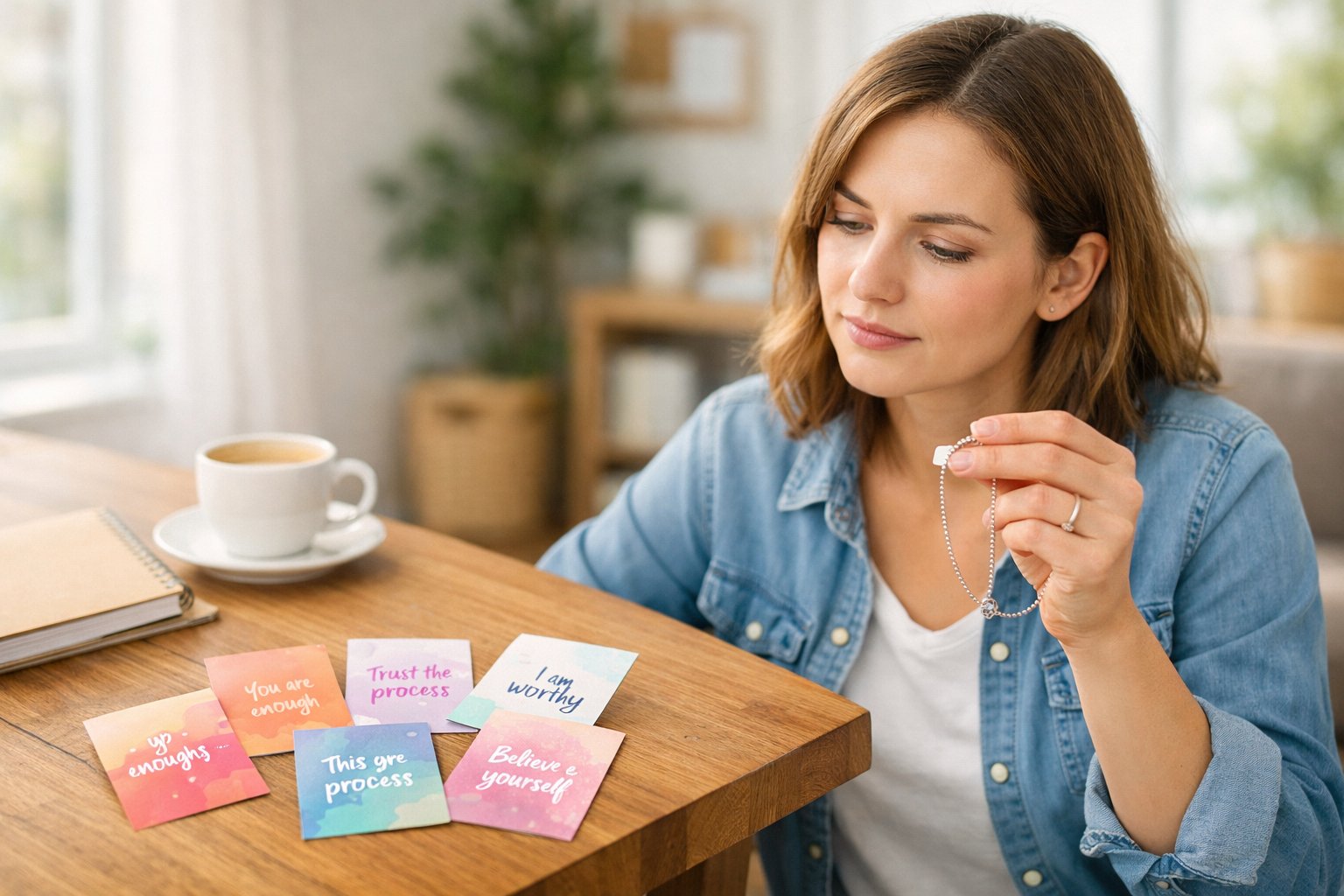
Both approaches serve as daily reminders of intention, but they differ in how they integrate into her life and when they offer emotional support.
Printed affirmations live in her visual field. They sit on her desk, hang on her bedroom wall, or rest on her nightstand where she sees them during morning routines or evening wind-down.
The act of reading creates a deliberate pause. She has to stop and take in the words. This moment of stillness can support wellness by interrupting automatic negative thoughts.
Printed formats include:
A custom affirmation print can hold words that speak directly to what she's working through right now. If she values something that reflects her specific journey without needing explanation, this keeps the message between her and herself.
You can personalize it here.
The limitation is location. She has to be in the space where it lives to receive the reminder.
Wearable affirmations travel with her. A bracelet, necklace, or ring becomes part of her physical presence throughout the day.
She doesn't need to read anything. The item itself acts as a tactile anchor. When stress rises or doubt creeps in, touching the piece can bring her back to the intention it represents.
Common wearable options:
An engraved cuff bracelet works well for someone who needs the reminder during difficult conversations or challenging workdays. The physical weight and placement on her body create a steady, unspoken presence.
This option supports balance by keeping the affirmation accessible no matter where she goes or what demands her attention. It doesn't require her to stop and read. It just exists with her.
Both choices address the need for self-reassurance and grounding. The difference lies in how she prefers to receive support.
Printed affirmations suit someone who values intentional moments of reflection. She wants to sit with the words, let them settle, and create mental space around them.
Wearable affirmations suit someone who needs continuity. She moves through environments that pull her away from herself, and she wants something that stays close when external pressure builds.
Neither option is more effective. The right choice depends on her rhythm, her environment, and how she processes emotional reminders. Some women need both—a grounding message at home and a portable anchor for everything outside of it.
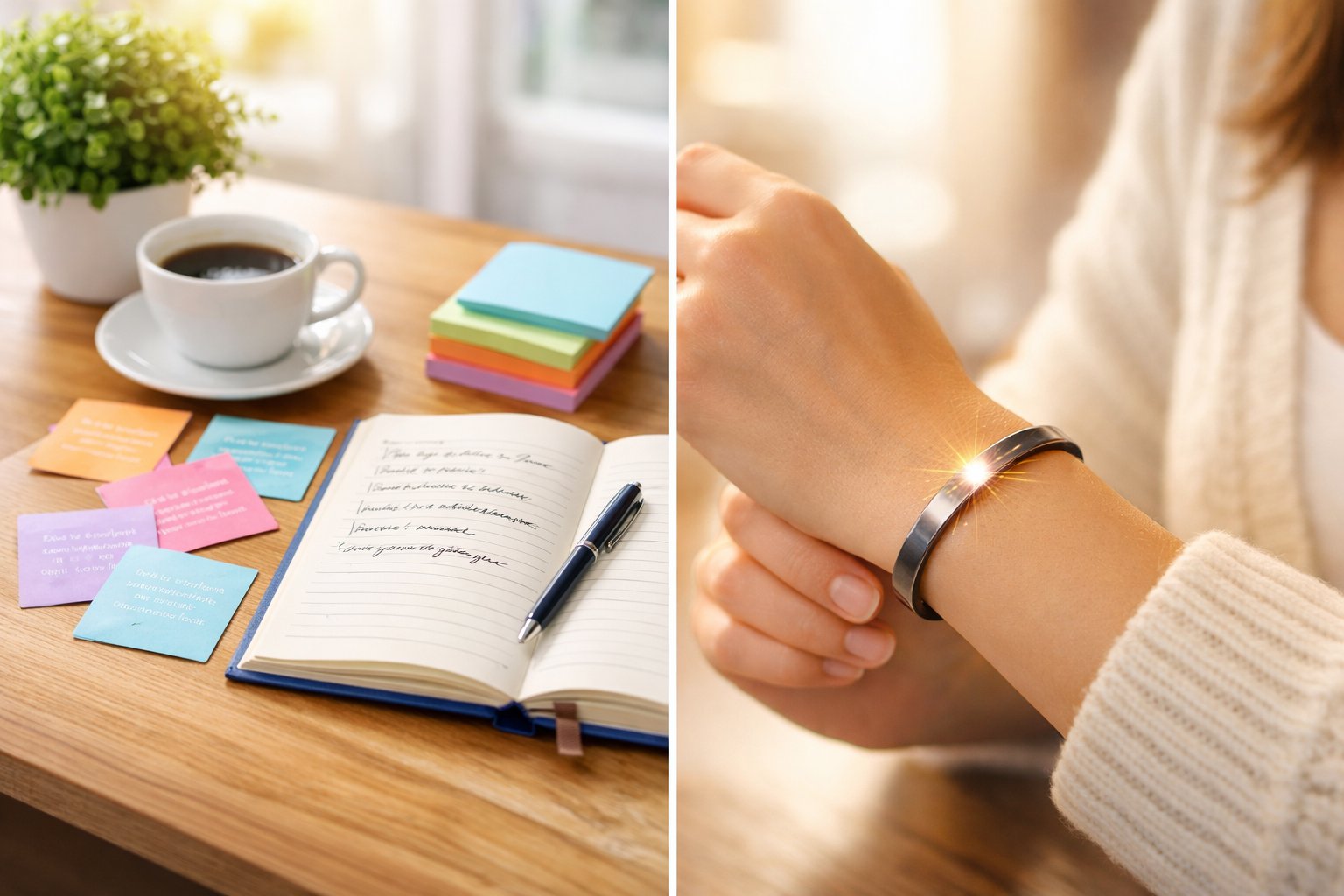
The difference between choosing an affirmation and actually using it comes down to how naturally it fits into her existing routines. Printed affirmations require intentional placement and visual space, while wearable options move with her throughout the day.
Morning routines often determine whether wellness practices stick or fade away. Printed affirmations work best when placed where she already looks—next to the coffee maker, on the bathroom mirror, or beside her skincare products. These stationary reminders require her to be in a specific location at a specific time.
Wearable affirmations become part of getting dressed. When she puts on a bracelet with a meaningful word, the practice becomes automatic rather than something she needs to remember. She doesn't have to stop and read anything. The affirmation simply goes with her.
Evening routines follow the same pattern. A printed affirmation on her nightstand might catch her attention before bed. A wearable piece stays present through her entire wind-down routine without requiring extra steps. For someone who values incorporating affirmations into daily routine without added complexity, the format that requires the least effort often wins.
A busy day rarely includes time to stop and read something intentional. Printed affirmations stay where she left them that morning. If her routine changes or she leaves the house early, she misses that reminder entirely.
Wearable affirmations travel through meetings, errands, and unexpected schedule changes. She might glance at her wrist while waiting in line or feel the weight of a necklace during a stressful moment. These small touches happen naturally without pulling her away from what she's doing.
The question isn't which type is more meaningful. It's which one she'll actually encounter when her partner notices she needs grounding. A custom affirmation card works beautifully if she has a consistent desk routine. But if her days vary, something she wears matters more than something she passes by.
The most common barrier isn't lack of interest. It's forgetting the affirmation exists. Printed versions get buried under mail, hidden behind other items, or become invisible through familiarity. She walks past them without actually seeing them anymore.
Wearable pieces solve this through physical presence. She feels them when she moves. They catch light differently throughout the day. If she wants something that feels personal without making the moment overly sentimental, a customizable design keeps it meaningful yet light. You can personalize it ➡️ here.
Another barrier is feeling self-conscious about wellness practices. Printed affirmations announce themselves to anyone who enters her space. Wearable options look like jewelry first. Only she knows what the word or phrase means. This privacy often makes daily use feel less vulnerable and more sustainable over time.
Both printed and wearable affirmations create emotional touchpoints throughout the day, but they work differently depending on how she moves through her world. One offers quiet presence in her personal spaces, while the other travels with her as a gentle anchor.
Affirmations work by replacing negative thought patterns with healthier ways of thinking, which creates a real shift in how she relates to herself. When she sees a message like "I am enough" on her mirror each morning, it interrupts the automatic cycle of self-doubt before it fully forms.
Wearable affirmations offer something different. A simple bracelet she can touch during a difficult moment becomes a physical reminder that doesn't depend on being in a specific location. The act of feeling the words under her fingertips creates a sensory connection to the message.
Printed affirmations stay put, which means she encounters them in predictable moments. A personalized desk print might catch her eye during work stress, while a card on her nightstand offers reassurance before sleep. The repetition matters because neuroplasticity allows repeated affirmations to create and strengthen neural connections over time.
If she wants something that feels personal without making the moment overly sentimental, a customizable design like this keeps it meaningful yet light. You can personalize it here.
Balance doesn't come from a single practice but from having tools she can reach for when her internal state shifts. Affirmations support emotional regulation by engaging the prefrontal cortex and limbic system, which work together to manage stress responses.
A wearable reminder travels with her through unpredictable days. When she's in a meeting, caring for others, or navigating public spaces, she can glance down at a stamped cuff without drawing attention. It's there when printed reminders aren't accessible.
Printed affirmations create intentional pauses in familiar spaces. A sticky note on her bathroom mirror or a framed message near her coffee maker turns routine moments into brief check-ins with herself. These micro-moments add up, especially when life feels demanding.
Key differences in how they support balance:
She might find that combining both gives her the most flexibility. One grounds her at home, the other travels with her when she needs portable reassurance.
Mindfulness asks her to notice what's happening in the present moment without judgment. Affirmations become mindful when she doesn't just read them but actually pauses to feel what the words mean.
Wearable affirmations pair well with meditation because she can hold or touch them while sitting quietly. The physical sensation becomes part of the practice, giving her something tangible to return to when her mind wanders. Many people use beaded bracelets as a counting tool during breath work.
Printed affirmations work differently with mindfulness. When she sees a message in her space, she can choose to engage with it fully for a few seconds or simply let it register in the background. Placing stickers in strategic locations where she'll see them often strengthens neural reinforcement without requiring active effort.
The best fit depends on how she already practices. If she has a regular meditation routine, a wearable becomes part of that ritual. If she prefers gentler reminders woven into daily life, printed affirmations show up without asking for anything.
Where affirmations live determines whether they get noticed or ignored. Printed versions depend on strategic placement in her daily path, while wearable options travel with her but require thoughtful decisions about visibility.
Printed affirmations work best when they interrupt her usual routines without demanding effort. A card taped to her bathroom mirror catches her attention during morning prep. Another tucked inside her laptop case appears exactly when she's settling into work mode.
The problem with printed affirmations is that they become invisible after a few days in the same spot. Her brain stops registering them as anything meaningful. Moving them weekly keeps them fresh.
High-traffic areas matter more than decorative appeal. The refrigerator door gets opened multiple times per day. Her nightstand is the last thing she sees before sleep. Designing effective displays means considering eye-level placement and lighting conditions.
She might prefer discrete locations if she shares her space with roommates or family. A card inside her planner or tucked into her wallet offers privacy while maintaining daily visibility.
Wearable affirmations give her control over who sees her intentions. A bracelet with an engraved phrase stays visible to her while appearing like regular jewelry to others. A personalized necklace keeps her message close without announcing it.
Some women prefer bold statements. T-shirts and sweatshirts with affirmations declare what she believes publicly. This works when she feels aligned with the message and doesn't mind conversations about it.
Discrete options fit better into professional environments. A small pendant or ring with initials that represent her affirmation phrase keeps the meaning private. Even something as casual as cloud slippers can have affirmations printed inside where only she sees them.
The everywhere belt bag offers another option. She can clip an affirmation card inside the zippered pocket where it travels with her essentials but stays hidden.
Integration happens when affirmations blend into spaces she already uses. A custom water bottle with her chosen phrase ensures she sees it every time she hydrates. A phone case with subtle text puts the message in her hands dozens of times daily.
If she wants something that quietly reinforces her intentions without making them the focal point of a room, items like coasters or desk accessories work well. You can personalize it here.
Functional items earn their place through use rather than decoration. A custom tote bag with an affirmation serves double duty. She needs the bag anyway, so the message becomes a bonus rather than another object requiring dedicated space.
The difference between printed and wearable affirmations often comes down to routine versus intentionality. Printed versions require no decision once placed. Wearables require her to choose them each day, which either strengthens the practice or adds friction she doesn't need.
Affirmations become more effective when they're woven into existing self-care routines rather than treated as standalone tasks. Whether she places printed cards near her meditation cushion or wears affirmations during her morning skincare routine, the key is making them part of moments she already protects for herself.
Printed affirmations work well in stillness. She can place them on her yoga mat, prop them against a meditation cushion, or keep them visible during breathwork.
The physical presence of the card gives her something to return to when her mind wanders. Unlike digital reminders, printed affirmation cards don't compete with notifications or screen fatigue. They sit quietly until she's ready.
Many women use them as focal points during seated meditation. Reading the affirmation before closing her eyes helps set an intention without forcing it. If she practices yoga at home, a small affirmation card near her mat can anchor her practice before she begins moving.
These work best when she chooses affirmations that match her current emotional state. A gentle phrase like "I trust my body's rhythm" feels more honest during yoga than something overly aspirational. She'll use it more if it doesn't feel like pressure.
Wearable affirmations fit naturally into morning rituals that involve touch and repetition. If she already uses gua sha during her skincare routine, wearing an affirmation bracelet or ring keeps the message present without adding steps.
The repetitive motion of gua sha pairs well with a word she can glance at or feel on her wrist. It creates a sensory loop—touch, breath, affirmation—that grounds her before the day begins. Some women wear affirmation jewelry specifically during these rituals, then remove it afterward.
Cloud slippers with affirmations embroidered inside offer a softer approach. She sees the message when she puts them on, but it doesn't demand constant attention. If she's someone who wears slippers during morning coffee or evening wind-down, the affirmation becomes part of that transition time. These work well for pregnancy gifts or first-time moms who need gentle reminders during overwhelming seasons.
The advantage of wearables is that they move with her. Unlike printed cards that stay in one room, she carries the affirmation through multiple parts of her day without thinking about it.
When a partner introduces affirmations into the relationship, it shifts from personal practice to shared experience. The format matters less than the consistency of showing up for each other's growth.
Couples who practice affirmations together often find it easier to maintain the habit than those who try alone. Reading statements aloud to each other before bed or during morning coffee creates accountability without pressure.
Some partners write affirmations on sticky notes and leave them in unexpected places. Others prefer digital reminders that arrive at specific times throughout the day.
Common shared practices include:
The format that works depends on what already exists in the daily rhythm. A partner who notices her wearing jewelry might appreciate a bracelet with engraved words she can touch throughout the day. Someone who values privacy might prefer a printed card tucked into a wallet.
Giving affirmations as gifts requires understanding how she actually engages with reminders. A framed print sits on a wall but might fade into background noise after a week. Wearable pieces stay in her line of sight and travel with her.
Wedding gifts for her often include jewelry with meaningful phrases because it combines sentiment with daily use. The same principle applies to affirmation gifts outside of major milestones.
A personalized necklace carries more weight when the message reflects something specific about her journey rather than generic encouragement. Partners who listen closely know which words matter most.
Printed options work better when they're portable. A small card that fits in a purse or planner gets more attention than a poster. If she likes something that feels personal without making the moment overly sentimental, a customizable design keeps it meaningful yet light. You can personalize it here.
Supporting a partner's self-care means removing barriers rather than adding pressure. If she already wears jewelry daily, adding an affirmation piece requires no new habit. If she rarely remembers to check printed materials, those won't serve her no matter how beautifully designed.
Understanding how to use affirmations effectively in relationships starts with observing what she already does consistently. Does she check her phone first thing in the morning? Does she have a nighttime routine that never varies?
A partner who wants to encourage this practice might start by asking what format feels least intrusive. Some women find affirmation jewelry becomes part of their identity over time, while others prefer the flexibility of rotating through different printed cards.
The goal isn't to create a perfect system. It's to make encouragement accessible when she needs it most, in whatever form she'll actually notice and absorb.
Both printed and wearable affirmations need to fit into her existing aesthetic. Printed pieces work best when they complement her space, while wearable options must align with her clothing choices and personal taste.
Printed affirmations sit in her environment all day. They work when they blend with her decor rather than clash with it.
Typography matters more than most people expect. A minimalist sans-serif affirmation suits modern spaces with clean lines. Script fonts feel warmer in cozy, traditional rooms. The wrong font makes the piece feel disconnected from the space.
Color choices affect daily impact. Neutrals like black, white, or beige fit most rooms without demanding attention. Soft pastels work in calming spaces. Bold colors only succeed when they match her existing palette.
Size determines visibility. A small 5x7 print gets lost on a large wall but works perfectly on a nightstand. An 11x14 piece commands attention in an entryway. She should consider where it will hang before choosing dimensions.
Frame style ties everything together. A simple wooden frame suits farmhouse or Scandinavian styles. Metal frames work in industrial or modern settings. The frame should feel intentional, not like an afterthought.
Wearable affirmations need to align with how she already dresses. A bold statement tee won't get worn if she prefers subtle, understated pieces.
Jewelry offers the most versatile option. A delicate name pendant with an affirmation word fits both casual and professional settings. It layers well and doesn't announce itself the way graphic tees do.
T-shirts work for women with casual wardrobes. She'll wear them if the design feels authentic to her style. A custom affirmation shirt with her chosen phrase in a font she loves becomes part of her regular rotation.
Accessories bridge the gap between subtle and visible. An affirmation on a tote bag, water bottle, or everywhere belt bag keeps the message present without requiring a wardrobe change. These items travel with her throughout the day.
Color choices matter just as much as with printed pieces. If she wears mostly black, a neon pink affirmation tee stays in the drawer. Matching her existing color preferences ensures actual use.
For something that feels personal without being obvious, a customizable design lets her control every detail. You can personalize it here.
Both printed and wearable affirmations differ significantly in how long they last and what impact they leave behind. The materials used and how often they need replacing affect both cost and environmental footprint over time.
Wearable affirmations require regular care to maintain their appearance and readability. Jewelry pieces need cleaning to prevent tarnish or skin irritation. Fabric items like clothing with affirmations printed on them fade after multiple washes.
Metal engraved pieces hold up better than printed fabric options. Sterling silver or stainless steel bracelets can last years with minimal maintenance. T-shirts and sweatshirts typically show wear within six months of regular use.
Printed affirmations face different durability challenges. Paper prints fade when exposed to direct sunlight. Framed pieces behind glass last longer but still accumulate dust. High-quality cardstock stands up better than standard printer paper.
Laminated cards survive daily handling in purses or wallets. Canvas prints resist fading better than paper alternatives. A well-made print can remain readable for several years when properly displayed away from moisture and harsh light.
The environmental impact varies widely between these options. Fast fashion affirmation clothing contributes to textile waste when pieces wear out quickly. A single-use greeting card gets discarded after being read once or twice.
More sustainable choices include recycled paper prints or organic cotton apparel. Some sellers offer eco-conscious affirmation practices that align with environmental values. Digital affirmations eliminate physical waste entirely but lack the tangible reminder that helps some people stay consistent.
For someone who wants something meaningful that won't add to landfill waste, a durable engraved piece makes sense. You can personalize it here.
Reusable items justify their resource use through extended wear. A quality metal bracelet worn daily for years creates less waste than replacing paper cards monthly. The initial investment costs more but reduces long-term environmental impact.
Apps deliver affirmations through notifications and audio, while wearable devices embed reminders into jewelry and accessories that stay visible throughout the day.
Printed affirmations exist in physical space. A card propped on a nightstand or a poster above a desk becomes part of the room's landscape. She sees it without choosing to look for it.
Apps require her to open something. They send notifications, but those compete with dozens of other alerts. Research shows that brief self-affirmation exercises can significantly boost well-being and reduce anxiety, but the delivery method affects consistency.
Printed versions work best when placed in spots she visits naturally. The bathroom mirror. The coffee maker. Her desk drawer.
App-based affirmations offer variety and customization. She can switch messages daily or set reminders for specific times. Some apps include tracking features to monitor mood patterns over weeks.
The challenge with apps is that they live behind a screen. She has to remember to check them. Printed affirmations sit in her line of sight whether she's thinking about self-care or not.
If she wants something that feels personal without making the moment overly sentimental, a customizable affirmation card keeps it meaningful yet light. You can personalize it here.
Wearable affirmations take different forms. Bracelets with engraved words. Rings stamped with short phrases. Smart jewelry that vibrates with pre-set reminders.
The physical versions function as quiet anchors. She glances at her wrist during a stressful meeting and sees the word "calm" or "worthy." No battery required.
Smart wearables combine technology with jewelry. They connect to apps and deliver gentle vibrations at chosen intervals. Some include breathing prompts or moment-of-stress alerts based on heart rate data.
Traditional engraved pieces work through constant visibility. Studies suggest that positive affirmations create physical changes in certain brain regions through repetition. Wearing the message means she carries that repetition wherever she goes.
Smart options add functionality but require charging and setup. They track patterns and offer data, which appeals to some women and feels like another task to others.
A simple engraved bracelet with her chosen phrase stays with her without needing updates or batteries. The format that matches her existing habits will be the one she actually uses.
The physical spaces where affirmations live determine whether they become part of her routine or fade into the background. Thoughtful placement and reducing everyday interruptions help affirmations feel less like a task and more like a natural part of her day.
Placing affirmations where her routine naturally takes her makes them easier to see and absorb. The bathroom mirror catches her attention during her morning routine. The kitchen counter or fridge door becomes a touchpoint as she prepares meals.
Her desk or workspace benefits from a small affirmation card she can glance at between tasks. A bedside table offers a quiet moment for reflection before sleep. Physical space significantly impacts mindset when the environment feels calm and inviting.
She might choose a custom affirmation card set that fits her personal style. If she prefers something she can wear throughout the day, a personalized affirmation bracelet keeps the message close without requiring dedicated space.
For a design that feels entirely hers, something like a customizable affirmation print works well. It gives her the freedom to choose words that resonate without feeling generic. You can personalize it here.
Digital notifications, browser cookies tracking her across websites, and constant phone alerts pull her attention away from present moments. Creating a favorable environment for affirmations means protecting small pockets of focus.
She can turn off non-essential notifications during morning or evening routines. Clearing browser cookies regularly reduces targeted ads that create mental clutter. Physical affirmations avoid these digital interruptions entirely.
Keeping her phone in another room while she reads her affirmations helps maintain focus. A printed affirmation card holder on her desk serves as a visual anchor that doesn't require unlocking a device. Wearable affirmations work differently since they travel with her but don't demand screen time or create data trails through cookies and online tracking.
Wearable and printed affirmations each serve different emotional needs, and understanding how they work in real life helps clarify which format fits best into someone's routine.
Wearable affirmations stay with her throughout the day without requiring any extra effort. She doesn't need to remember to look at a card or open a journal.
The affirmation becomes part of what she's already doing. Whether it's a bracelet, necklace, or ring, the message moves with her through meetings, errands, and quiet moments at home.
Printed affirmations require intention. She has to stop, read, and engage with the words deliberately.
That pause can be grounding. But it also means the affirmation gets left behind when she's not in that space.
Wearable affirmations offer constant presence. Printed ones offer focused reflection.
Affirmations shape how she speaks to herself. That inner dialogue affects how she shows up in relationships.
When she practices self-compassion through affirmations, she's less likely to project insecurity or defensiveness onto others. She listens more clearly and responds with less reactivity.
Personal growth happens when she believes change is possible. Affirmations reinforce that belief, especially when they're written in the present tense and feel personal to her experience.
She doesn't become a different person overnight. But small shifts in self-perception create space for new behaviors.
A customized affirmation bracelet can remind her of who she's becoming, not just who she was. If she wants something that feels personal without making the moment overly sentimental, a design like this keeps it meaningful yet light. You can personalize it here.
➡️ Shop customizable affirmation designs
Writing affirmations by hand slows the mind down. It requires more focus than reading or repeating words aloud.
That physical act creates a stronger connection between thought and belief. She's not just consuming the message—she's creating it.
Research on daily affirmations suggests that repetition matters, but so does engagement. Writing adds a layer of intention that passive exposure doesn't provide.
Consistency builds familiarity. Over time, the affirmation stops feeling like something she's trying to believe and starts feeling like something she already knows.
A personalized journal gives her a dedicated space to practice this without distraction. She can return to it daily and track how her relationship with the words evolves.
Affirmations work best when they reflect something she actually wants to believe. Not what sounds good, but what feels true or just out of reach.
That alignment creates intimacy. She's not performing positivity—she's naming her own potential.
Written affirmations allow for privacy and depth. She can revise them, cross things out, and explore what resonates without anyone watching.
Wearable affirmations make the practice visible. That visibility can be grounding, but it also means the message is fixed.
The method that fosters deeper connection depends on how she processes emotion. If she needs quiet reflection, writing works better. If she benefits from external reminders, wearable formats work effectively.
A custom affirmation necklace keeps the words close without demanding attention. She notices it when she needs to, not because someone told her to.
People share what actually happens when they try affirmations. Not the polished version—the messy, inconsistent, sometimes disappointing reality.
Some find affirmations feel forced at first. Others say they only worked after months of repetition.
The common thread is that affirmations don't erase doubt. They coexist with it.
She might repeat "I am enough" while still feeling inadequate. Over time, the gap between the affirmation and her current state narrows—not because the affirmation changed her, but because it gave her a direction to move toward.
Reddit threads reveal that the format matters less than the follow-through. Whether she wears it or writes it, the affirmation needs to be something she can believe might be true.
Studies show that affirmations can reduce stress and improve problem-solving when they're self-relevant. They don't work as generic cheerleading.
The effectiveness increases when affirmations align with core values. If she values connection, an affirmation about being lovable makes sense. If she values growth, an affirmation about resilience fits better.
Science behind positive daily affirmations suggests they work best when paired with action. The words create intention, but behavior reinforces belief.
Self-care isn't about repeating phrases until they magically become true. It's about creating small, consistent practices that support how she wants to feel.
A personalized affirmation ring offers a physical reminder without adding another task to her day. She doesn't have to remember to check in with herself—the reminder is already there.