
Your Cart is Empty
There is a gift I still think about — a small necklace, nothing expensive, given to me by someone who had been quietly paying attention. She'd noticed the things I cared about, the details I never said out loud, and somehow she'd folded all of it into something I could wear. That was years ago. I still have it. I still remember exactly how it felt to open it.
Then there are the gifts I can't quite place. The candle. The generic gift card. The "nice" thing from a store that could have been meant for anyone. Those I remember receiving, but not the feeling. They faded the moment the wrapping hit the floor.
The difference isn't price. It isn't even effort in the traditional sense. It's something quieter — the sense that someone actually saw you, thought of you specifically, and chose something that carried that recognition. That's what makes a gift memorable. And once you understand the psychology behind it, you'll never shop for someone you love the same way again.
If you're looking for a gift that carries real emotional weight, explore dangle name pendants — pieces that are made to feel like they were always meant for one person.
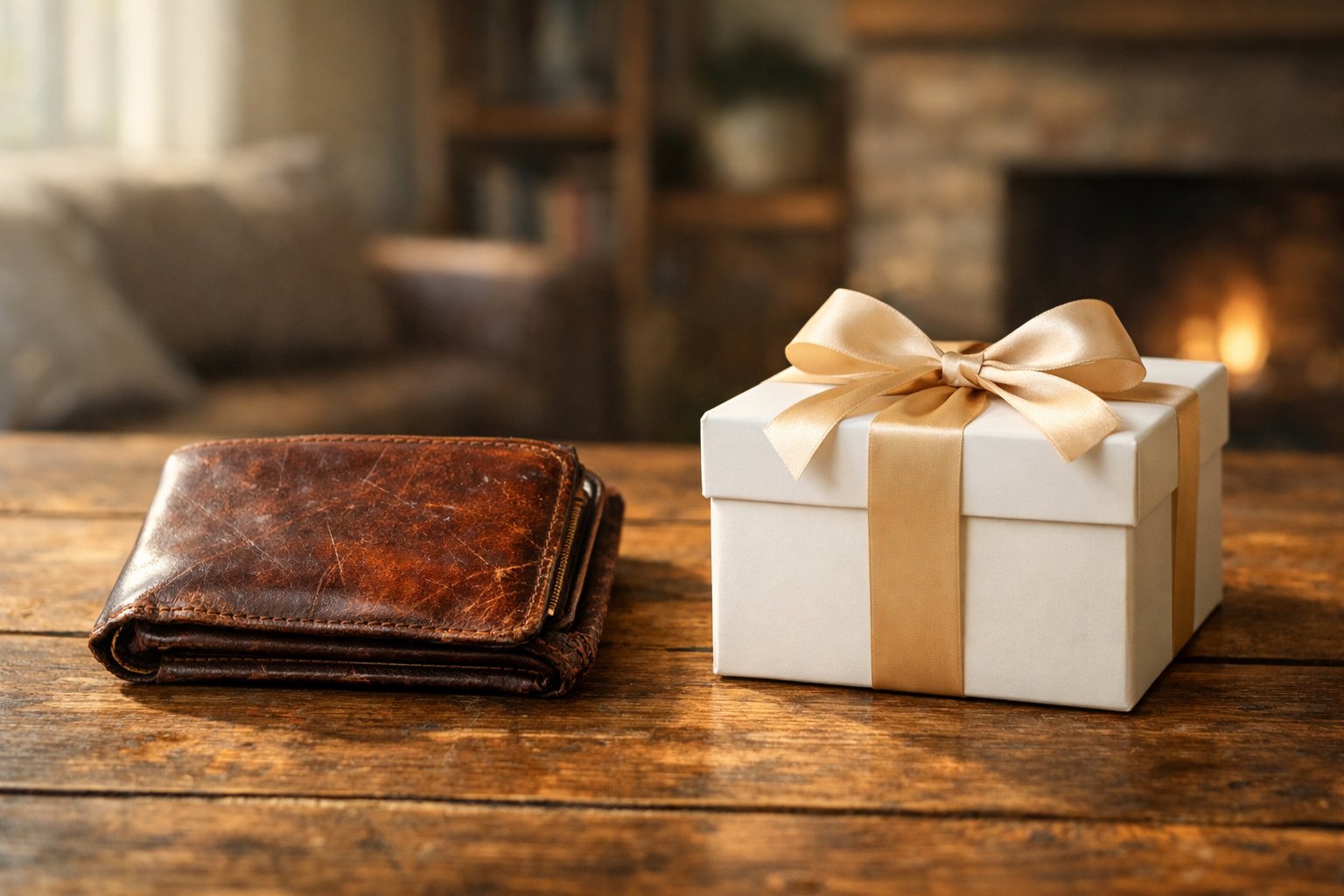
Memory is selective by design. Your brain filters out what doesn't matter and holds onto what does — experiences tied to strong emotion, personal meaning, or moments that felt significant. Gifts follow the same rules.
When neuroscientists look at what makes memories stick, they find that emotional arousal is the central ingredient. The amygdala, the part of your brain that processes emotion, essentially tags certain experiences as "worth keeping." A gift that moves you — one that surprises you, or makes you feel genuinely understood — gets that tag. A generic gift doesn't.
This is why the handmade scarf from your college roommate still lives in your memory fifteen years later, while you can barely remember what your boss gave the office last December. One carried emotional weight. The other was simply fulfilling a social requirement.
Research also shows that we remember peaks more than averages. Psychologists call this the peak-end rule: we judge an experience by its most intense moment and how it ended. In gift-giving, the unwrapping moment is that peak. A thoughtfully wrapped box with a personal note can create a stronger emotional spike than an expensive but impersonal item handed over in a bag. The wrapping, the card, the words you choose — they're not secondary. They're the memory.
When someone receives a gift that has their name on it, or a date that means something to them, or a detail that references something private between the two of you — their brain processes it differently than a generic item. Studies on personalization consistently show that it raises self-esteem, deepens emotional attachment, and creates what researchers call "psychological ownership": the feeling that an object was always meant for you, even before you had it.
This is the quiet power behind a graduation gift necklace engraved with a meaningful date, or a piece of jewelry that carries someone's initial. It's not just decorative. It tells the recipient: I thought about you specifically. You're not interchangeable. You're someone worth noticing.
And that message — delivered without words, through a physical object — is one of the most powerful things a gift can do. It validates identity. It says: I see who you are.
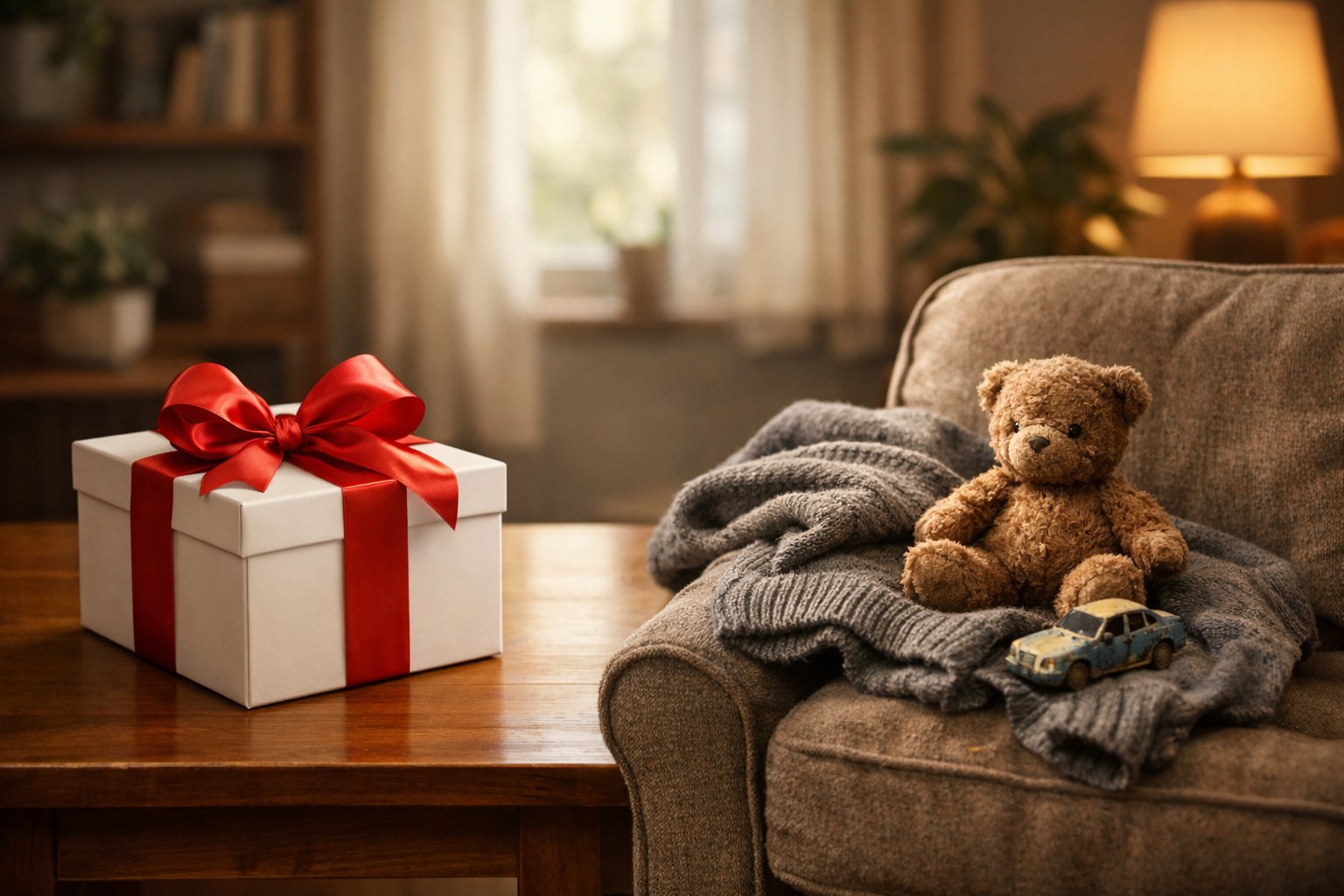
There's something that happens when people receive a handmade gift — or any gift where the effort is visible. They don't just evaluate the object. They calculate the time. The care. The fact that someone chose to spend hours thinking about them.
Research published in the Journal of Marketing confirms this: handmade items promote stronger social bonds than machine-made equivalents, even when the quality is objectively similar. The perceived effort changes how the gift is valued. A hand-knitted scarf communicates something a designer scarf from a department store simply cannot.
But you don't have to knit something yourself to carry that feeling. A personalized leather journal chosen with care — engraved with her name, picked because you know she's been writing more lately — carries that same spirit. The effort shows in the specificity of the choice. The more precisely a gift fits a person, the more labor it implies. And the brain interprets that labor as love.
This matters enormously when you're choosing between something beautiful-but-general and something that's less expensive but clearly chosen just for them. The latter will always win.
Our love knot necklaces are designed to carry that feeling — understated, personal, and made to mean something specific to the person wearing it.
Recipients can sense obligation. They may not be able to name it, but when someone opens a gift that could have been given to anyone, there's a subtle deflation. The gift reveals that the giver didn't spend much time thinking about them — and people feel that absence, even if they smile politely and say thank you.
Generic items — logo merchandise, gift cards with no context, standard gift baskets — aren't forgotten because they're bad objects. They're forgotten because they carry no signal about the relationship. A gift that could have been given to your coworker, your neighbor, or a stranger you just met tells the recipient very little about how the giver sees them.
The same problem affects mismatched gifts — items that reflect what the giver likes, rather than what the recipient needs. A luxury tech gadget given to someone who finds peace in simplicity. An expensive piece of jewelry in a style the recipient would never choose for herself. These gifts aren't unwanted because of poor quality; they're set aside because they don't reflect the person. They're a portrait of the giver, not the receiver. And that's a missed connection.
Obligation-driven giving has a particularly short shelf life. Holiday exchanges with distant acquaintances, corporate swag, and gifts given because a calendar demanded it — these rarely produce lasting impressions. Inspired giving, on the other hand, happens when something stops you mid-thought and makes you say: she would love this. That moment of connection between the gift and the person is precisely what the recipient will feel when they open it.
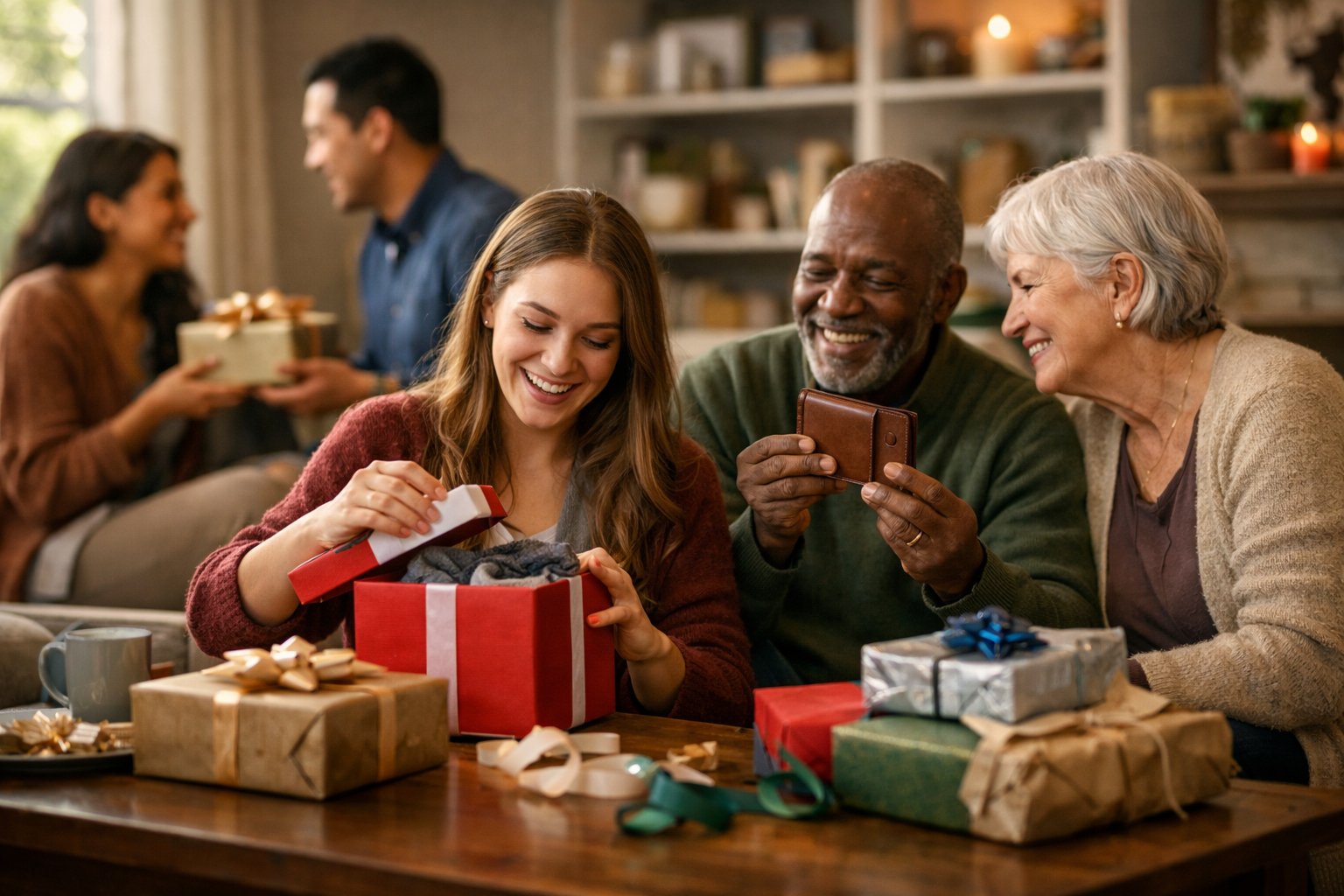
Every gift that gets remembered comes with a narrative. Sometimes it's spoken aloud — "I saw this and immediately thought of you because of what you told me last spring." Sometimes it lives in the object itself, in the engraving or the photo or the detail that only two people would understand. But the story is always there.
Stories trigger emotional arousal. When you explain why you chose something — the specific reason, the exact memory it references — you activate the same neural pathways that make experiences unforgettable. The gift stops being an object and becomes a piece of evidence: proof that someone was paying attention.
This is why a handwritten card tucked into a gift box can change everything. Not a printed note, not a generic message — a few real sentences explaining what the person means to you and why this particular thing made you think of them. That card, more than the gift itself, is often what gets kept for years.
You can apply this principle to any gift, at any price point. A carefully chosen book becomes something entirely different when it arrives with a note explaining which passage reminded you of her and why. The story adds the layer that turns an object into a memory.
One of the most underappreciated ways to make a gift memorable is to give it when no one is expecting one. Birthday gifts are appreciated, but they're also anticipated — the recipient is already in "receiving mode." A spontaneous gift on an ordinary Tuesday carries a different charge entirely. It says: I was thinking about you when I didn't have to be.
Researchers who study gift-giving have found that givers worry about timing far more than recipients do. People remember the gesture and the feeling far more than whether it arrived on exactly the right date. If anything, a slightly late gift that comes with a genuine explanation — or a gift given "just because" — often lands more softly and more memorably than one rushed out to meet a deadline.
Gifts given at significant life transitions do carry special weight, though. A piece of jewelry given at graduation, or a keepsake chosen to mark a major milestone, becomes permanently anchored to that moment. The person wears it and remembers not just the gift, but who they were when they received it. Physical objects become memory storage that way — containers for moments that mattered.
The element of surprise also creates the emotional peak that the brain tends to remember most. When someone isn't expecting something, the delight is unguarded and genuine. And that genuine reaction — that unscripted moment of joy — is what both giver and recipient carry forward.
It's become fashionable to say that experiences make better gifts than things. And there's truth in it — shared experiences create lasting memories, build relationships, and often produce more happiness over time than physical objects. A cooking class, a concert, a day trip somewhere new: these leave impressions that don't wear out or break.
But material gifts have something experiences can't offer: they stay. They're touchable. They show up on her nightstand every morning. They get worn on days when she needs to feel like herself. The right physical gift doesn't compete with an experience — it is an experience, extended over time. Every time she reaches for it, the memory of receiving it is briefly there.
The real answer isn't experiences versus things. It's about knowing the person well enough to understand which they'd prefer, and within that, choosing with genuine attention. Some people are collectors of objects. Others accumulate memories. Most are both, depending on the moment.
For people who love having something to hold — something that lives with them in daily life — a piece of jewelry chosen carefully will outlast most experiences. It becomes part of how they move through the world. And that's a gift that gives quietly, over and over, long after the occasion is gone.
Research on emotional intelligence and gift-giving reveals something both obvious and profound: people who are better at reading others give better gifts. Not because they spend more money, but because they gather more information. They listen for what someone hasn't said. They notice what makes a person light up. They track the small passing comments — "I've been wanting to try that," "I used to love doing this before I got so busy" — and they file them away.
Empathy in gift-giving isn't a soft skill. It's a practical one. It means stepping out of your own preferences and into someone else's life. It means choosing a gift that fits their actual routine, their real taste, their current season — not the version of them that's easiest to shop for.
The most common gift-giving mistake isn't choosing something cheap. It's choosing something that reflects the giver's taste instead of the recipient's. A gift given with genuine empathy — one that shows the giver actually knows this specific person — creates what researchers call "felt understanding." The recipient doesn't just like the gift. They feel known. And feeling known is one of the deepest human needs.
What makes a gift meaningful isn't universal — it shifts across cultures, generations, and relationships. In many East Asian traditions, the way a gift is wrapped and presented carries as much meaning as what's inside. In some communities, practical gifts are the highest form of care. In others, symbolic objects matter more than functional ones.
Even within a single family, these differences exist. One sister keeps everything. Another donates gifts she doesn't use within the month. A grandmother holds onto a small engraved pendant for thirty years. A teenager loses interest in a gift after a week. Understanding who you're giving to — not just what they might want, but how they relate to objects and meaning — is part of what separates a thoughtful giver from a well-intentioned one.
Corporate and ritual gifting struggles here most visibly. When gifts are given to fulfill a role rather than to honor a relationship, recipients sense it. Wedding favors, holiday swag, obligatory thank-you gifts — these almost always end up forgotten not because they're bad objects, but because they weren't chosen with a specific person in mind. The gift was an action completed, not a thought expressed.
Useful gifts have a quiet power. They become part of someone's daily life, which means they create repeated memory triggers — every morning with the coffee mug, every time she reaches for the journal, every time she fastens the necklace before leaving the house. Repeated use deepens the neural pathway connecting the object to the person who gave it.
The trick is choosing something useful that also feels personal — not a kitchen tool anyone would receive, but the specific kind of planner she mentioned she's been looking for. Not any necklace, but one with her name or a date that belongs to her. Utility and meaning aren't opposites. The best practical gifts carry both.
Pay attention to what she's in the middle of right now. The season of life someone is in shapes what they actually need. Someone navigating a major transition — a graduation, a new chapter, a hard year — will remember a gift that acknowledged where she was, not just who she is in general. Meeting someone where they actually are is the most precise form of gift-giving empathy.
Before you head to the FAQ, consider what she's in the middle of right now — and whether a piece from our dangle name pendant collection might carry that acknowledgment in a way she'd keep for years.
Price has very little to do with memorability. The brain assigns emotional weight based on how well a gift reflects understanding of the recipient — not how much it cost. An expensive item chosen without thought communicates less than a modest one chosen with care. What creates lasting memory is the sense that someone paid close attention to who you are and chose something that couldn't have been given to anyone else.
It depends entirely on the person. Experiences create strong shared memories and often produce more lasting happiness than objects. But physical gifts stay — they become part of someone's daily life and create ongoing memory triggers every time they're used or worn. The best approach is knowing which the recipient values more, and choosing with that in mind. For someone who loves having a tangible reminder of a person or moment, a meaningful physical object — especially something personalized — will often outlast an experience.
The most powerful tool is a handwritten card that explains specifically why you chose this gift — what it reminded you of, what memory it references, what you were thinking about when you saw it. Adding that story transforms an ordinary object into something with personal meaning. You can also look for personalization options: engraving a name or date, adding a photo, or choosing something in her specific style or color rather than a generic version. The cost doesn't change. The feeling does.
Because obligation is removed. When someone gives you something outside of a required occasion, it signals that they were thinking of you when they didn't have to be. That authenticity reads clearly, and it creates a different emotional quality than a gift delivered because a calendar demanded it. The surprise element also creates a stronger emotional peak — that unguarded moment of delight that the brain files away as a memory worth keeping.
Personalized jewelry sits at the intersection of several things that make gifts memorable: it's worn regularly (so it creates repeated memory triggers), it's clearly made for one specific person (so it communicates genuine understanding), and it becomes part of how someone presents themselves to the world. Every time she wears it, she remembers the person who gave it to her and why. It's one of the few gift categories where meaning and daily utility live in the same object.
Yes — more than most people expect. The unwrapping moment is often the emotional peak of receiving a gift, and the peak-end rule tells us that's what gets remembered most. A thoughtfully wrapped gift with a personal card builds anticipation and frames the item inside as something worth receiving. The presentation signals care before the gift is even seen. It sets the emotional tone for the entire experience.
The gifts that stay with us aren't always the ones that cost the most. They're the ones that made us feel, for a moment, completely and specifically seen. That's the standard worth aiming for — not impressive, not expensive, but real. A gift that carries a person's actual name, or a date that belongs only to them, or a detail that only someone paying close attention would know. Those are the gifts that end up staying. The ones that get worn on hard days, and good ones too, long after the occasion that prompted them has passed.