
Your Cart is Empty
Jewelry can serve as more than decoration when paired with the practice of writing down thoughts and feelings. Some women combine wearing meaningful pieces with keeping a journal because the jewelry acts as a physical anchor that reminds them to pause, reflect, and stay connected to their inner world throughout the day. The practice works by linking something visible and tangible with the quieter work of self-reflection.
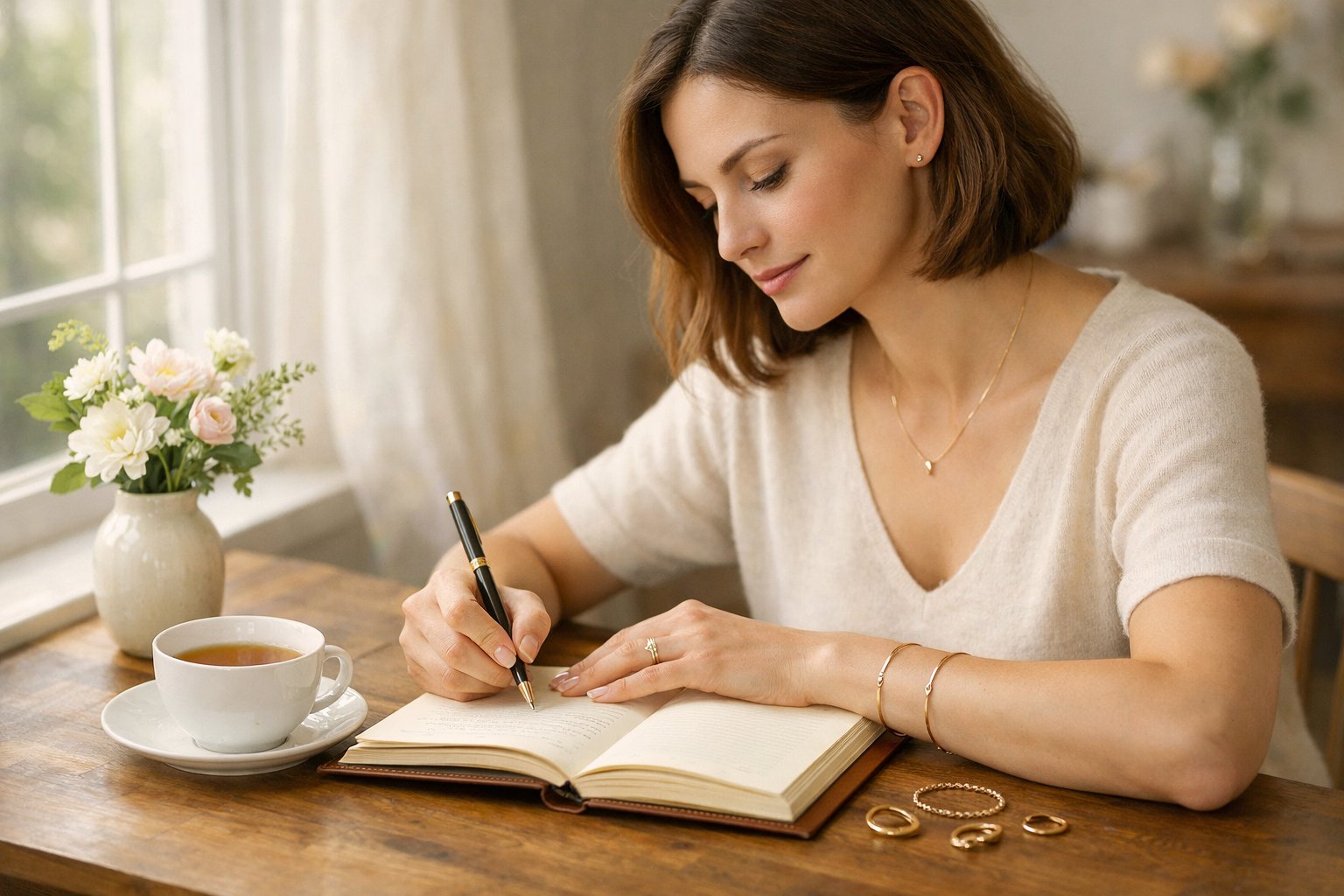
When a woman puts on a bracelet in the morning, she might think of it as the start of a small ritual. If she's also someone who keeps a journal, the two practices can support each other. The jewelry becomes a gentle prompt to check in with herself later, while the journal gives her space to process what she noticed. This pairing creates a rhythm that feels natural rather than forced.
The act of wearing jewelry can help people stay present by giving them something to notice or touch during the day. Writing offers a different kind of clarity by slowing down racing thoughts and making room for feelings that might otherwise stay buried. Together, these practices create a simple framework for mindfulness that doesn't require extra time or special skills. It's just a way to hold space for reflection in an everyday routine.
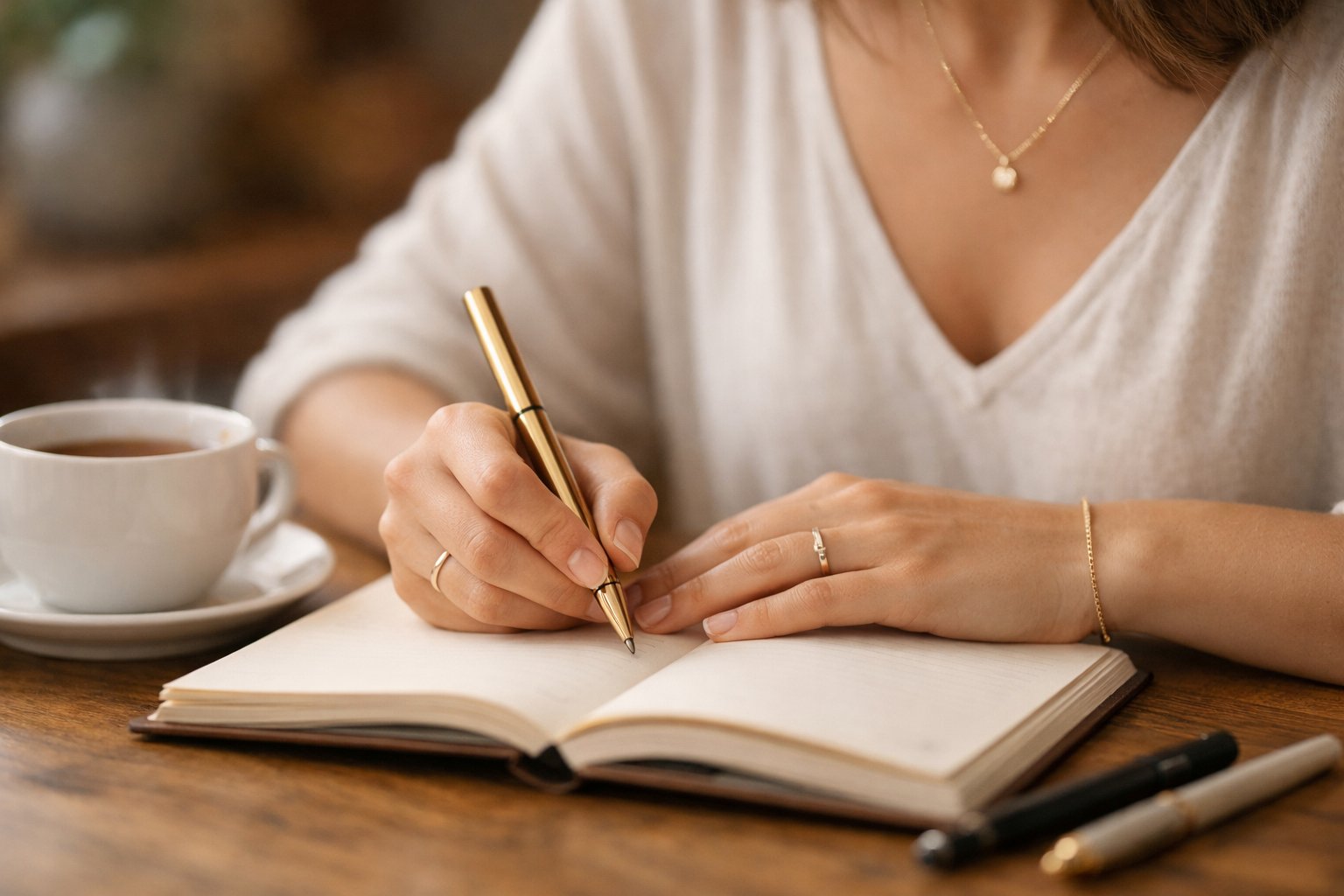
When a woman wears a piece of jewelry that holds meaning while she journals, she creates two touchpoints for the same intention—one she can see and feel throughout the day, and one she returns to in writing.
Life moves quickly, and it's easy to lose track of what matters. A simple necklace or ring can serve as a physical anchor that brings her back to a feeling or commitment she made to herself. When paired with journaling, that anchor becomes even stronger.
She might write about a goal or emotion in her journal one morning. Later, when she glances at a personalized bar necklace engraved with a word or date, the memory of what she wrote surfaces again. The jewelry doesn't demand attention, but it's there when she needs it.
This practice isn't about perfection. It's about building small moments of awareness into a busy day. The combination works because it doesn't require extra time or effort—just a willingness to notice. Some women find that wearing something meaningful while they write helps them feel more present. Others discover that the jewelry itself prompts them to journal when they might have skipped it.
Writing helps process emotions in ways that thinking alone cannot. But once the journal closes, those insights can fade. A piece of jewelry keeps them alive.
A woman might journal about setting boundaries or embracing change. A simple engraved cuff bracelet becomes a daily reminder of that decision without needing to reread her entries. If she wants something that feels personal without making the moment overly sentimental, a customizable design like this keeps it meaningful yet light. You can personalize it here.
The two practices support each other. Journaling offers depth and clarity through words. Jewelry offers presence through touch and sight. Together, they create a mindfulness practice that doesn't feel forced. She's not trying to remember her intentions—she's wearing them.
This isn't about collecting objects. It's about choosing one or two pieces that genuinely resonate and pairing them with the act of writing down what matters.
Many women use journaling as a tool for clarity, but struggle to carry that clarity into their daily routines. Jewelry becomes the bridge.
When she sets an intention in her journal—whether it's about self-compassion, courage, or simply slowing down—a piece of jewelry can hold that intention visibly. A customizable charm bracelet with symbols that reflect her current focus can shift from being just an accessory to something that supports emotional clarity throughout the day.
She doesn't need to explain it to anyone. The practice is private. But every time she sees or touches the jewelry, there's a quiet reminder of what she wrote, what she's working through, or what she's trying to remember about herself. That small gesture of noticing can be enough to bring her back to center when things feel chaotic.
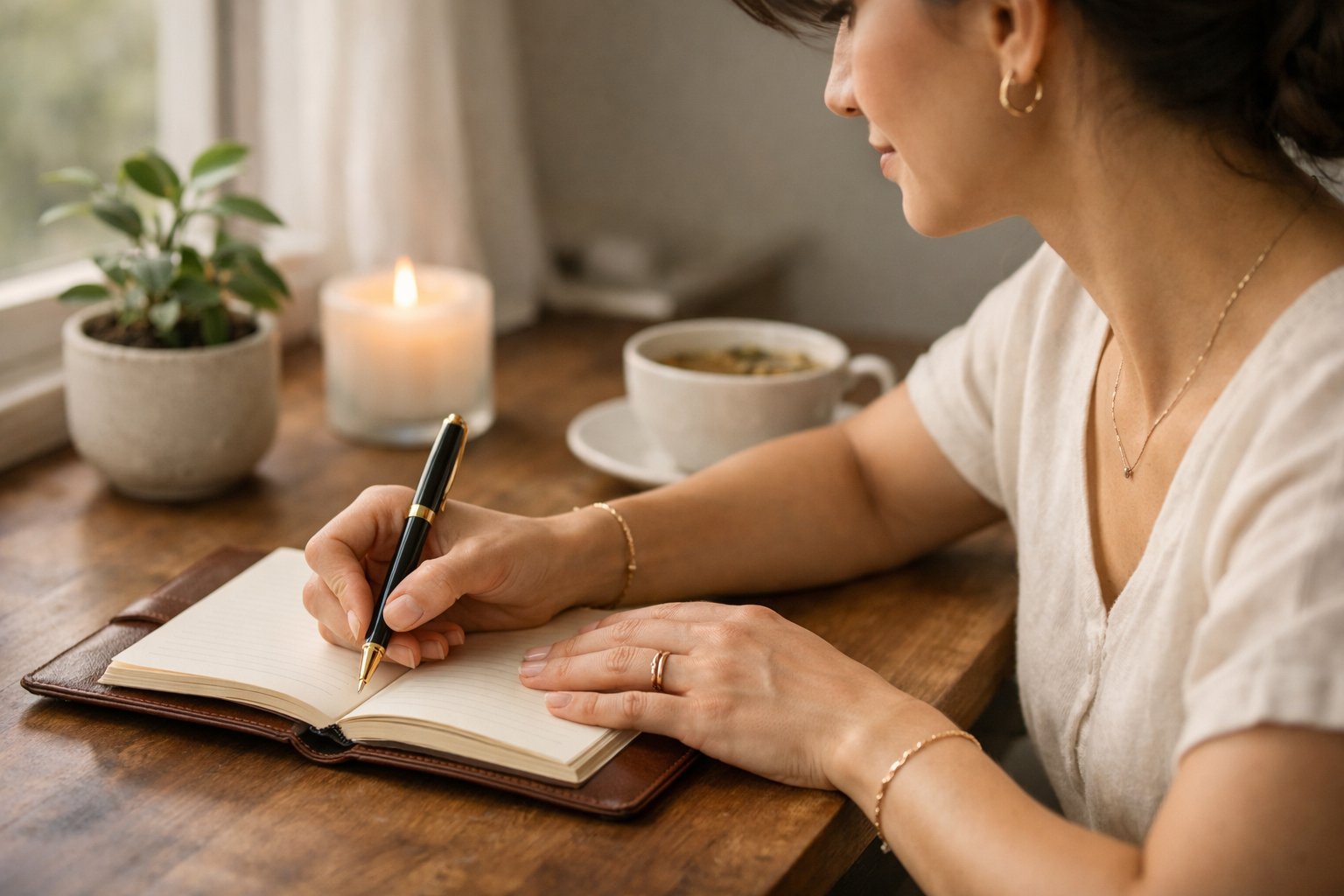
Mindfulness jewelry creates physical anchors that help women return to the present moment throughout their day. These pieces work because they combine sensory reminders with personal meaning, turning everyday accessories into tools for awareness.
A ring that catches on fabric or a bracelet that shifts with movement can pull attention back to the body. These small interruptions break the cycle of mental overwhelm that builds during rushed mornings or back-to-back meetings.
Mindfulness through jewelry works through tactile grounding. The weight of a pendant against skin or the cool metal of earrings reminds the wearer she exists in this specific moment, not in tomorrow's worries or yesterday's regrets.
Some women choose pieces they can touch discreetly during stressful conversations. A smooth stone set in silver or a textured band becomes something to trace with fingertips when anxiety starts building. The action itself doesn't solve problems, but it creates a pause where clearer thinking can happen.
Selecting which piece to wear each morning transforms getting dressed into a brief moment of reflection. This isn't about matching outfits. It's about choosing what kind of support feels needed that day.
A woman might reach for a necklace engraved with a single word when she needs courage before a difficult conversation. Another day might call for earrings inherited from her grandmother when she wants to feel connected to something larger than immediate stress.
Intentional jewelry selections help clarify emotional needs before the day's demands take over. The practice takes seconds but sets a tone. For those who want something simple to mark this moment, a personalized bar necklace can hold a date, word, or initial that matters privately.
If the ritual itself matters more than what others notice, that's perfectly reasonable. You can explore options here.
Certain symbols carry centuries of meaning. A lotus represents growth through difficulty. A tree signifies grounding and strength. An open circle suggests wholeness without closure.
Materials matter too, though not in mystical ways. Some women find that natural stones feel more calming to touch than polished metal. Others prefer the warmth of wood beads over cold glass. These preferences are about sensory comfort, not spiritual properties.
Mindfulness jewelry often features repeated elements like prayer beads or linked chains that support counting breaths or tracking gratitude lists. The structure provides something concrete to work with during meditation or journaling sessions.
A meditation bracelet with individual beads lets her count through breathing exercises without losing track mid-practice. The physical component keeps wandering thoughts from derailing the entire effort.
Writing becomes a place where thoughts can exist without judgment or interruption. It offers a way to sit with feelings long enough to understand them and recognize how they shape daily experiences.
A journal creates privacy that conversation cannot always offer. Some emotions feel too raw or complicated to speak aloud before they've been examined internally first.
Writing allows a woman to express frustration, sadness, or confusion without worrying about how it sounds or whether it makes sense yet. The page holds whatever needs to come out.
This practice becomes especially valuable when external circumstances feel chaotic or overwhelming. Journaling helps women manage overstimulation while creating space for gentle self-reflection. No one interrupts. No one reacts. The words stay contained until she's ready to revisit them or move forward.
For women who want a dedicated space that feels intentional, a leather journal with unlined pages offers a tactile experience that feels different from typing on a screen. The weight of the book and the feel of the pen can signal that this moment belongs only to her.
Emotions rarely arrive with clear explanations attached. Journaling can help reduce symptoms of anxiety, depression, and PTSD by giving feelings structure and language.
When something feels heavy or unclear, writing it down slows the mental loop. It turns vague discomfort into specific sentences. That process alone can bring emotional clarity.
A woman might write about a tense conversation and realize halfway through that her reaction had less to do with the words spoken and more to do with feeling unheard. She might name disappointment she didn't know she was carrying. The act of writing doesn't erase the feeling, but it makes it easier to hold.
Some women use simple journaling practices that include prompts or lined sections to guide reflection without pressure. If she's just starting out and wants something that feels approachable, this offers structure without rigidity. You can personalize it here.
Over time, journal entries reveal more than single moments. They show recurring themes, triggers, and shifts in perspective that aren't obvious day to day.
A woman might notice she feels most anxious on Sunday evenings or that certain people consistently leave her feeling drained. She might see how her response to conflict has softened over months or how a fear she once wrote about no longer holds the same weight. Research shows that journaling improves emotional processing and reduces stress by helping women notice these patterns more clearly.
This kind of awareness supports mindfulness practice by anchoring attention to what's actually happening internally rather than what she assumes is happening. She learns to trust her own observations.
For women who want a journal that doubles as a mindfulness tool, a guided gratitude journal with prompts for reflection offers both structure and creative freedom. It works well for someone who values consistency but doesn't want rigid formats. The prompts gently redirect focus without dictating tone or depth.
Wearing jewelry as a reminder creates a steady anchor point throughout the day, one that doesn't demand attention but quietly supports presence. The practice works through physical touch, visual cues, and the gradual layering of personal meaning over time.
A ring or bracelet becomes a touchpoint when stress rises or thoughts scatter. The weight of metal against skin or the cool surface under fingertips offers a moment to pause before reacting. Some women touch their mindfulness jewelry during difficult conversations or before making decisions.
The reminder doesn't need to be complicated. A simple band can prompt three deep breaths. Dangle name pendants catch light and movement, drawing attention back to the body when the mind drifts.
The physical sensation matters more than the symbolism. When a woman notices her necklace shifting, she might pause to check her posture or her pace. These micro-adjustments accumulate throughout the day.
Wearing the same piece daily builds familiarity that grounds shifting moods and circumstances. The jewelry becomes part of morning routines and evening rituals, marking transitions between states of being. This continuity offers comfort when everything else feels uncertain.
A piece worn through seasons carries the memory of who someone was and who she's becoming. The scratches and patina document time passing without requiring deliberate reflection.
Some women choose pieces they never remove, creating an unbroken thread through life changes. Others swap pieces based on what feels needed that week. Both approaches honor the value of consistency while leaving room for adaptation.
What a piece means shifts as life does. A ring purchased during a hard season might start as a symbol of survival. Years later, it represents growth and resilience rather than struggle. The jewelry doesn't change, but the woman wearing it does.
Some meanings emerge slowly through wear rather than being assigned at purchase. A bracelet might become associated with calm mornings or brave conversations simply because it was there during those moments.
Women sometimes layer new pieces with old ones, creating visual stories about different parts of themselves. An engraved affirmation bracelet paired with an inherited ring bridges past and present without forcing connection. The practice allows contradictions to coexist.
Jewelry for meditation serves as a physical anchor during reflection or throughout daily routines. Women who value quiet ritual often select pieces based on weight, texture, and symbolic meaning rather than appearance alone.
Women who meditate regularly sometimes wear specific pieces during their practice to create a sensory focal point. A ring that spins, a bracelet with beads to count, or a pendant that rests against the chest can help redirect wandering thoughts. The texture or temperature of metal against skin offers something concrete to return to when the mind drifts.
Meditation jewelry can deepen daily rituals for those already familiar with the practice. Some women pair mala beads with counting techniques to mark breath cycles or repeated phrases. Others prefer a single piece worn only during seated meditation to signal a mental shift from daily activity to intentional stillness.
A custom engraved bracelet with a word or date can mark the start of a new practice without drawing unnecessary attention. If she wants something that holds private meaning without explanation, a subtle design offers that space. She can personalize it here.
Minimalism in mindfulness jewelry means choosing pieces that don't compete for attention. A single chain, a smooth stone, or a band without embellishment allows the wearer to focus inward rather than adjusting or noticing what she's wearing. Simplicity reduces distraction.
Mindful embellishment focuses on connection rather than decoration. Women drawn to this approach often select materials like wood, unpolished metal, or stones without visible settings. The appeal lies in how the piece feels rather than how it looks to others.
A handmade meditation ring with a brushed finish or natural texture can support this preference without requiring explanation. She wears it because it matters to her, not because it stands out. She can find options here.
Some women wear jewelry as a form of meditation throughout the day, not just during formal practice. A necklace or bracelet becomes a reminder to pause, breathe, or check in with herself when stress builds. The jewelry itself doesn't create calm, but it prompts the woman wearing it to do the work.
Talisman jewelry serves as a focal point for women who want a gentle nudge back to the present. She might touch a pendant during a difficult conversation or turn a ring during a long commute. These small actions interrupt automatic responses and create space for intention.
A personalized necklace with initials or a meaningful symbol can serve this purpose without requiring context. If she wants something that grounds her without announcing why, a simple design does that quietly. She can explore personalized options here.
Some women find that wearing certain stones helps them feel more settled throughout the day, while specific crystals like black tourmaline offer a sense of protection during emotionally demanding moments.
Calming stones work as physical reminders to pause and check in with how she's feeling. When a woman wears rose quartz or amethyst, the weight of the stone against her skin can prompt her to take a breath before reacting. This isn't about magical properties but about creating a tangible connection to her intention to stay balanced.
The practice becomes more meaningful when she chooses stones that resonate with what she needs. A woman dealing with anxiety might reach for amethyst because it symbolizes calm. Someone working through grief might prefer rose quartz for its association with gentleness toward oneself.
Pairing crystals with jewelry makes the practice portable. A simple pendant or bracelet keeps the reminder close without requiring her to carry loose stones. She can glance down during a stressful meeting or touch the piece when she needs to ground herself. For women who journal, wearing the same piece each time they write can signal to their mind that it's time to be honest and reflective.
Black tourmaline appears frequently in conversations about protection and grounding. Women who work in emotionally intense environments or navigate difficult relationships sometimes wear this stone as a way to feel more anchored. It represents a boundary between what belongs to her and what doesn't.
The stone's dark, solid appearance reinforces the feeling of stability. When worn as a ring or bracelet, it serves as a visual cue to stay present rather than absorbing everyone else's stress. This becomes especially useful for women who tend to take on too much emotional labor.
Some women pair black tourmaline with hematite for additional grounding support. Others wear it alone. The choice depends on what feels right for her specific situation and whether she wants a subtle reminder or something more noticeable.
Choosing crystals based on personal needs rather than trends makes the practice more genuine. A woman might select citrine because she's working on confidence in her career, or moonstone because she's processing a major life transition. The meaning she assigns matters more than any universal interpretation.
Many women start with one or two stones and add others as their circumstances change. A customizable necklace allows her to switch stones depending on what she's focusing on in her journal that week. If she's exploring how work stress affects her, she might wear clear quartz. During weeks focused on relationships, rose quartz might feel more appropriate.
Some prefer simplicity with a single stone they return to repeatedly. Others create combinations that reflect multiple intentions at once. There's no prescribed way to approach this. The practice evolves as she learns what actually helps her feel more centered versus what just looks meaningful but doesn't shift anything internally.
The practice becomes more meaningful when specific pieces are chosen for specific moments, and when the writing that follows carries the same quiet intention.
Many women start their mornings by choosing a piece of jewelry that matches what they need that day. A calm bracelet might signal a need for patience. A bold ring might remind her to speak up in a meeting.
The act of choosing jewelry with intention during morning meditation creates a brief pause before the day begins. She might hold the piece for a moment, think about what she wants to focus on, then put it on. Some women write down that intention in their journal right after.
This combination of physical action and written words helps the intention stick. The jewelry becomes a physical anchor. The journal entry becomes a reference point she can return to later.
For women who like personalized pieces, a simple pendant with an initial or symbol can hold meaning without drawing attention. If something feels personal without being overly sentimental, customizable designs keep it meaningful yet light. You can personalize it here.
Throughout the day, the weight of a bracelet or the cool metal of a ring serves as a redirect. When stress builds or focus drifts, touching the jewelry brings her back to what she set out to remember that morning.
These small touchpoints work because they're physical. She doesn't have to think hard or remember complex instructions. She just notices the jewelry and recalls the intention.
Common touchpoint moments include:
Some women choose pieces they can move or adjust. Spinning rings, sliding beads on a bracelet, or touching a pendant all give the hands something to do while the mind resets. This isn't nervous fidgeting—it's mindful adornment used as a tool.
Intentional jewelry often includes stones or materials that carry personal meaning. Whether that meaning comes from color, texture, or memory doesn't matter as much as the fact that it means something to her.
At the end of the day, or whenever she sits down to write, the jewelry prompts specific reflection. She might ask herself whether she honored the intention she set. She might notice when she touched the piece most often.
Journaling as a tool for clarity becomes more focused when paired with a physical object. Instead of staring at a blank page wondering what to write, she has a starting point.
Questions that guide this type of reflection:
A quality journal that feels good to write in supports this practice. The ritual isn't about perfection or beautiful handwriting. It's about creating space for honest thought.
Some women remove their jewelry before writing, placing it on the journal as a visual cue. Others keep it on, occasionally touching it while they think. Both approaches work because both bring mindfulness to an otherwise routine moment.
When a woman writes through confusion and wears something that grounds her, she creates two parallel paths toward the same destination: knowing what she actually feels and trusting that feeling enough to act on it.
Journaling offers a way to untangle thoughts that feel knotted or overwhelming. When a woman sits down with a blank page, she gives herself permission to write without judgment. The act of putting words on paper slows down racing thoughts.
She might start with what happened during the day. Then she writes how it made her feel. Sometimes the feeling surprises her.
This mindfulness practice through journaling creates space between her reactions and her responses. She begins to notice patterns. Maybe she realizes she feels anxious every Sunday evening. Or that certain people drain her energy while others restore it.
The page holds what she cannot yet say out loud. It becomes a place where she can be honest without consequence. Over time, this honesty builds self-trust. She learns her own emotional language.
Some women choose jewelry that carries personal meaning as a physical reminder of their inner strength. A ring might represent a promise she made to herself. A necklace could honor a difficult season she survived.
These pieces work differently than decorative jewelry. They function as touchstones throughout the day. When doubt creeps in or old patterns resurface, she can touch the metal against her skin. That small gesture brings her back.
A simple bracelet with an engraved word or date can anchor a specific intention. If you want something that feels personal without broadcasting your private journey to others, a piece like this keeps the meaning between you and yourself. You can personalize it here.
The jewelry becomes part of her emotional clarity work. It reminds her of who she is becoming, not just who she was.
Writing engages the mind. Jewelry engages the body. Together, they create a complete loop of awareness.
When she journals, she processes mentally. When she puts on a meaningful piece, she signals to her body that she is present and intentional. This combination helps her stay grounded when emotions feel abstract or overwhelming.
A leather journal with refillable pages becomes a long-term companion for this practice. The physical act of opening it, feeling the paper, and writing by hand activates different parts of her brain than typing does.
Some women pair their journaling ritual with putting on a specific piece of jewelry. The routine becomes a signal: This is my time. I am choosing to pay attention. That small ritual builds trust in her ability to show up for herself, even when life feels chaotic.
When someone gives a journal or a piece of jewelry, they're offering more than an object. They're acknowledging a person's inner world and giving them permission to care for it.
A journal or piece of intentional jewelry becomes meaningful when it reflects something true about the recipient. It might be a necklace that represents a new chapter in her life or a journal that gives her space to process what she's carrying.
These gifts work because they don't demand anything. They simply create space for reflection or mark a moment worth remembering.
A personalized necklace can hold initials, a date, or a short phrase that only she understands. Something like a simple engraved piece lets her keep a quiet reminder close without drawing too much attention. If she's someone who values subtlety, this feels right without feeling heavy. You can personalize it here.
For a journal, choosing one with prompts or blank pages depends on how she likes to process. Some women prefer structure. Others need open space.
Jewelry can symbolize commitment and connection, especially during transitions. A bracelet or ring given during a difficult season becomes something she can touch when she needs steadying.
Pregnancy gifts for first time moms often include pieces that honor both the change and the person going through it. They work because they don't romanticize the experience. They just say, "I see you."
A birthstone ring can represent a child, a loved one, or even herself. It becomes a physical marker of what matters most.
The same applies to gifts for daughters. A small pendant or charm bracelet can carry weight without being overstated. It reminds her that someone believes in who she is.
A journal given with intention suggests that someone values her thoughts enough to want her to keep them. It's not about productivity or self-improvement. It's about making room for whatever she's feeling.
A guided journal with prompts can help her start writing when she doesn't know where to begin. The structure removes some of the pressure.
For someone who already journals regularly, a higher-quality notebook with heavier paper feels different to write in. It slows her down in a good way. The act of writing becomes more deliberate.
Pairing a journal with a small piece of jewelry creates a quiet ritual. She might wear the necklace while she writes or touch it when she needs to remember what the journal represents. Together, they become part of how she takes care of herself without announcing it.
Life changes often disrupt routines that once felt steady. Women who practice mindfulness through jewelry and journaling adapt by choosing pieces that anchor them during uncertainty and continuing practices that provide emotional continuity even when daily life shifts.
A mindfulness practice doesn't need to stay the same to remain effective. When routines break down during transitions, the practice becomes about flexibility rather than perfection.
Some women switch from lengthy journaling sessions to brief notes paired with a single piece of jewelry. A ring or bracelet becomes the physical anchor when there isn't time to write. The jewelry serves as a touchpoint throughout the day, bringing intention into daily routines even without formal reflection.
Others adjust what they write about. Instead of documenting everything, they focus on one emotion or observation connected to the piece they're wearing. This keeps the practice alive without adding pressure.
A journal necklace with a locket or pendant can hold a small written intention or photo. If she's navigating change and wants something that travels with her thoughts, this offers a quiet way to carry meaning. You can personalize it here.
The goal isn't maintaining the exact same routine. It's finding what still feels true when everything else is shifting.
Even as life reshapes itself, certain practices provide steadiness. Wearing the same piece of jewelry during different phases creates a sense of continuity that journaling alone sometimes can't offer.
A woman might wear a specific necklace through a career change, a move, or a personal loss. Each time she writes about her day, that piece connects past entries to present moments. The jewelry becomes a thread linking different versions of herself.
Some keep a mindfulness journal specifically for these transitions, pairing it with one consistent piece. The combination provides both a record and a physical reminder that she's carried herself through before.
Jewelry becomes more than decoration during these periods. It represents what stays even when circumstances don't. The act of putting it on each morning becomes part of the practice itself, a small ritual that doesn't require extra time or energy but still centers her attention.
Pairing jewelry with journaling creates a physical anchor for emotional practices and personal reflection. The act of selecting, wearing, and touching meaningful pieces during writing sessions can deepen awareness and strengthen the connection between inner thoughts and outer rituals.
When a woman chooses a specific piece to wear during her journaling sessions, she creates a consistent signal to her mind that this time is for reflection. The jewelry becomes associated with the practice itself, making it easier to shift into a contemplative state.
Over time, this pairing helps build a stronger habit. The physical reminder on her wrist or around her neck serves as a gentle nudge to return to the page when life gets busy.
Research consistently shows that journaling can improve emotional processing and reduce stress. Adding a tangible element like jewelry strengthens the ritual and makes the practice feel more intentional.
The choice of jewelry often reflects what a woman needs emotionally in that moment. She might reach for a delicate chain when feeling vulnerable or a bolder piece when seeking courage to write about difficult topics.
Some women choose pieces connected to specific memories or relationships. Wearing a grandmother's ring while journaling about family history creates a felt connection that deepens the writing experience.
The metal, color, or design can mirror her emotional state or the mood she wants to cultivate. A simple personalized bracelet can carry words or symbols that ground her before she begins writing.
Both practices require a woman to pause and turn inward. When combined, they create a stronger boundary between the demands of daily life and the space she needs for self-reflection.
The ritual of putting on jewelry before journaling signals a transition. This small act tells her brain that she's entering a different mode, one where her thoughts and feelings take priority.
Journaling provides a safe space for self-reflection and exploration. Adding the physical act of choosing and wearing jewelry makes the experience more embodied, connecting mind and body in the practice.
The repetition builds neural pathways. Her brain begins to associate the weight of a necklace or the feel of a ring with the calm focus of mindful journaling.
Selecting jewelry before writing requires a moment of consideration. She asks herself what she needs, what she wants to remember, or what energy she wants to bring to the page.
This brief pause is already a form of mindfulness. She's checking in with herself before the journaling even begins, which sets a more thoughtful tone for the writing session.
Mindful journaling combines present-moment awareness with reflective writing. The deliberate choice of jewelry extends that awareness into a physical dimension.
If she wants something that feels personal without making the moment overly sentimental, a customizable pendant keeps it meaningful yet light. You can personalize it here.
The physical sensation of jewelry against skin provides a grounding point during emotional writing. When difficult feelings arise, touching a bracelet or running fingers along a chain can help a woman stay present instead of shutting down.
Some women find that the weight of a piece helps them feel more solid and connected to their body. This embodied awareness makes it easier to access and express emotions that might otherwise stay locked away.
The texture and temperature of metal or stone can shift her sensory experience. These small physical sensations keep her anchored in the present moment while she explores memories or feelings on the page.
A simple handmade ring with texture or an engraved detail gives her something to touch when words feel stuck or overwhelming.
Both practices involve choosing what to reveal and what to keep private. A woman selects jewelry to express something about herself to the world, while journaling allows her to explore what she keeps hidden.
The jewelry she wears during journaling can represent the bridge between these two aspects of self. It honors both the inner world she's exploring on the page and the outer presence she shows to others.
Over time, certain pieces accumulate layers of meaning. A necklace worn during dozens of journaling sessions becomes infused with the insights, tears, and breakthroughs that happened while she wore it.
Journaling is a tool that has been used for hundreds of years to slow the mind down and find peace. Adding jewelry to the practice creates a physical symbol of that ongoing journey.
The interplay suggests that growth doesn't require choosing between inner work and outer expression. A woman can honor both by creating rituals that weave them together in simple, sustainable ways.